Stop telling people to pick up trash on the weekend.
The traditional narrative around environmentalism is broken, weaponized, and fundamentally lazy. We see it every time a new piece of legislation rolls out: well-meaning citizens scolding their neighbors, telling them that if they do not like state mandates, they should grab a trash bag and start sweeping the gutters. For an alternative view, read: this related article.
This view treats plastic pollution as a moral failure of the individual. It assumes that if we just care enough, or volunteer enough, or pass enough hyper-specific bans, the problem will evaporate.
It is a lie. Further insight regarding this has been published by BBC News.
Worse, it is a lie that the world's biggest polluters paid to invent. By focusing on consumer behavior and performative community cleanups, we are ignoring the structural mechanics of global supply chains. California's aggressive, celebrated plastic regulations are not fixing the crisis. In many cases, they are actively accelerating it.
The Corporate Psyop of the Litterbug
To understand why the "clean up your streets" argument is fundamentally flawed, we have to look at the history of environmental guilt.
In the 1950s, a coalition of packaging, beverage, and chemical corporations formed an organization called Keep America Beautiful. They invented the concept of the "litterbug." They poured millions into advertising campaigns featuring weeping figures and littered highways, hammering home a single message: packaging does not litter, people do.
It was a brilliant PR strategy. With a few ad campaigns, the industry shifted the entire financial and moral burden of waste management from the manufacturer to the taxpayer.
When activists today demand that disgruntled citizens grab a broom to solve the plastic crisis, they are operating directly within that corporate playbook. They are protecting the status quo.
Volunteering to pick up trash from a highway ditch does nothing to stop the flow of plastic at the source. It is trying to bail out a sinking ship with a thimble while the captain keeps drilling holes in the hull. I have watched city councils waste millions on local cleanup initiatives and public awareness campaigns, only to see the net volume of waste climb year after year. The math simply does not work.
The Thicker Bag Blunder
Let us look at actual policy results rather than legislative intent. California has long positioned itself as a global leader in environmental regulation. Yet, its signature plastic policies have routinely backfired because lawmakers fail to understand basic human incentives and market dynamics.
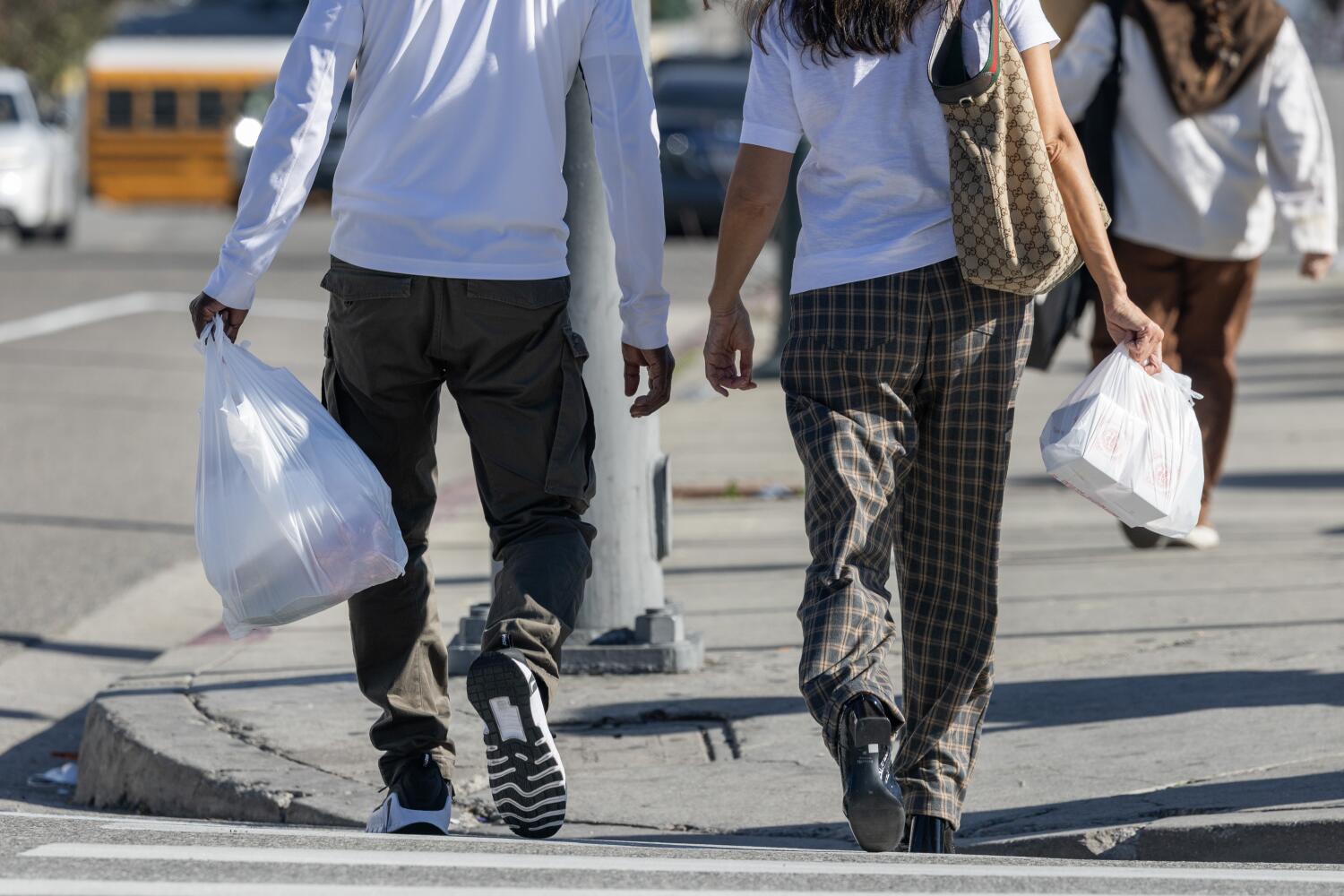
Consider the famous 2014 state ban on single-use thin plastic bags (SB 270). The objective was clear: eliminate the flimsy, lightweight bags that snag on trees and clog storm drains.
Instead of switching entirely to canvas totes, grocery chains and manufacturers exploited a massive loophole in the law. They replaced thin, single-use bags with much thicker, heavier plastic bags, labeling them as "reusable." The law mandated that these new bags had to withstand at least 125 uses.
Imagine a scenario where consumers suddenly change ingrained habits overnight just because a bag is three times thicker. They did not.
Instead of reusing these heavy-duty plastic bags 125 times, shoppers treated them exactly like the old ones: they used them once to carry groceries to their car, and then they threw them away. Because these bags require significantly more plastic resin to manufacture, the state inadvertently increased the total mass of plastic entering the waste stream.
According to data tracking waste disposal metrics in California, the state generated more plastic bag waste by weight years after the ban took effect than it did before the law was passed. The policy achieved the exact opposite of its stated goal. It replaced a high volume of light plastic with a slightly lower volume of incredibly dense, immortal plastic.
The Mechanical Reality of the Recycling Lie
The next layer of the lazy consensus is the belief that if we just mandate higher recycling targets, the system will fix itself. California’s recent legislative focus, including SB 54, hinges heavily on the concept of Extended Producer Responsibility (EPR) and forcing materials to be recyclable or compostable by 2032.
This sounds revolutionary on paper. In practice, it ignores the laws of thermodynamics and chemistry.
The public has been conditioned to believe that plastic recycling works like aluminum or glass recycling. It does not. Aluminum can be melted down and re-engineered infinitely with zero loss in quality. Plastic degrades every single time you heat it.
- Mechanical degradation: When a plastic bottle is melted down, the polymer chains shorten. This reduces the tensile strength and flexibility of the material.
- The downcycling trap: A plastic bottle rarely becomes another plastic bottle. It gets downcycled into a lower-value item, like synthetic carpet fibers or fleece jackets.
- The final destination: You cannot recycle a fleece jacket. The material has reached its terminal point. It will eventually end up in a landfill or an incinerator, shedding microplastics every time it is washed.
The vast majority of plastic types cannot be recycled mechanically at all. Petrochemical companies have created thousands of distinct plastic formulations, each requiring different melting points and chemical additives. Sorting them at scale is an economic and logistical nightmare.
When state laws demand that producers make packaging "recyclable," they are chasing a mirage. Making a package theoretically recyclable in a laboratory does not mean a municipal sorting facility can actually process it at a profit. If there is no buyers' market for degraded, mixed-resin post-consumer plastic, it goes straight to the dump.
Dismantling the Consumer Blame Premise
People often ask variations of the same question: "If the government bans plastic, won't businesses innovate and find better alternatives?"
The premise of this question is flawed because it assumes that alternative packaging materials are inherently benign. Switching blindly from plastic to other materials frequently introduces new, unforeseen environmental costs that are often worse for the planet.
Let us run a comparative breakdown of alternative materials.
| Material | Energy/Carbon Footprint | Water Consumption | End-of-Life Reality |
|---|---|---|---|
| Plastic | Relatively low manufacturing energy. Lightweight, reducing transport emissions. | Low water usage during production. | Persistent for centuries; breaks into microplastics. |
| Glass | Extremely high melting temperatures required; heavy weight spikes shipping emissions. | Moderate. | Infinitely recyclable, but heavy and breakable; high transport fuel costs. |
| Aluminum | High initial mining and refining energy, but highly efficient to recycle. | High mining impact. | The golden standard of recycling markets; high recovery rate. |
| Paper/Cardboard | Lower carbon footprint if sustainably sourced, but highly energy-intensive. | Extremely high water consumption and chemical bleaching. | Biodegradable, but generates methane if trapped in an anaerobic landfill. |
If a supermarket replaces all plastic packaging with glass, the total weight of their freight skyrockets. This requires more trucks on the road, higher diesel consumption, and a massive spike in greenhouse gas emissions. If they switch entirely to paper, we face accelerated deforestation and massive industrial water pollution from paper mills.
The problem is not just the material. The problem is our collective obsession with single-use velocity.
True Disruption Happens at the System Level
If performative bans and weekend cleanups are useless, how do we actually fix this? We stop focusing on consumer guilt and start focusing on infrastructural design.
We must end the single-use infrastructure entirely for specific sectors. This is not accomplished by banning a material, but by mandating standardized, closed-loop delivery architectures.
Think back to the mid-20th century milk delivery system. The milk bottle was not a product owned by the consumer; it was a vessel owned by the dairy. You used the milk, placed the empty glass bottle on your porch, and the distributor picked it up, washed it, sterilized it, and refilled it.
This is the only system that works at scale. We need standardized container geometries across entire industries.
Imagine a system where every major beverage manufacturer—from Coca-Cola to local kombucha brewers—is legally required to use the exact same standardized glass or high-density durable container. It does not matter who manufactured it.
When you finish a drink, you drop the container into a universal reverse-vending machine at any transit hub or grocery store. The containers are sorted mechanically by shape, washed at regional sterilization hubs, and shipped back to the nearest bottling plant.
This eliminates the degradation problem of plastic recycling because you are not melting the material down. You are washing a durable asset.
The downside to this approach is obvious: it destroys corporate branding differentiation. Pepsi cannot have its distinct silhouette; Budweiser cannot have its unique bottle design. It requires a level of state-enforced industrial standardization that makes corporate marketers furious. It requires massive up-front capital investment to build regional washing and distribution logistics.
But it cuts through the nonsense. It targets the core mechanic of the crisis: the creation of new waste.
Stop Participating in the Farce
The next time you read an opinion piece urging citizens to spend their Saturday mornings picking up litter from a concrete drainage ditch to offset the failures of state policy, recognize it for what it is. It is theater. It is an emotional sedative designed to make you feel like you are contributing to a solution while the industrial machines continue to pump out millions of tons of virgin polymers per hour.
California’s legislative strategy is a masterclass in optics over outcomes. It penalizes the consumer, creates complex regulatory loops that consultants profit from, and leaves the fundamental mechanics of the throwaway economy completely untouched.
Stop falling for the moral narrative. If we want to clean up the streets, we do not need more volunteers with trash grabbers. We need to cut off the supply of disposable assets at the industrial source. Until we standardize infrastructure and hold producers entirely liable for the physical lifecycle of their vessels, every cleanup day is just a PR victory for the companies producing the waste.