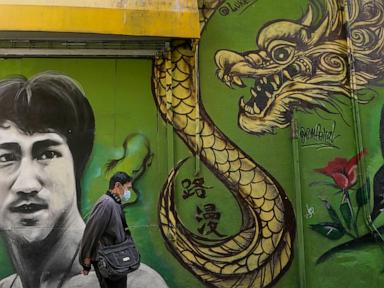
Most people know Bruce Lee as the guy who leveled bad guys with lightning-fast kicks and high-pitched battle cries. He was the definitive martial arts superstar, a pop culture hurricane who single-handedly kicked open Hollywood's doors for Asian actors. But if you think his impact stops at action cinema, you're missing the bigger picture.
Governor Gavin Newsom just signed a law officially designating May 17 as Bruce Lee Day. This isn't just another arbitrary commemorative day on the calendar. It marks a historic milestone. Lee is now the first Chinese American in California history to be honored with an annual statewide day of recognition.
State Assemblymember Matt Haney of San Francisco championed the legislation, Assembly Bill 2455, pushing it through until it hit the governor's desk. The official celebration kicks off on May 17, 2027. If you're wondering why this specific date matters, or why a man who died over fifty years ago is still reshaping California policy, the story runs deep.
The Significance of May 17
Politicians don't just pick dates out of a hat for civic honors. May 17 carries immense historical weight for the Lee family.
Lee was born in San Francisco Chinatown back in 1940 while his parents were touring the United States with the Cantonese Opera Company. Because of that geographical fluke, he secured U.S. citizenship. His family moved back to Hong Kong just a few months later, where Lee grew up as a child actor and dove headfirst into Wing Chun kung fu.
Fast forward to 1959. At 18 years old, after getting into one too many street fights in Hong Kong, his parents packed him up and sent him back to America. On May 17, 1959, an eighteen-year-old Lee stepped off a ship and back into San Francisco.
That single day altered the trajectory of modern martial arts and global cinema. He arrived with $100 in his pocket and a fierce determination to prove himself. That move led him to open martial arts schools in Seattle, Oakland, and Los Angeles, eventually catching the eye of Hollywood executives. May 17 represents the precise moment Lee chose California, and the moment California became the launchpad for his global philosophy.
Breaking the Hollywood Color Barrier
To understand why California is taking this step, you have to look at the grim reality of the 1960s entertainment industry. Asian actors were practically invisible. When they did get screen time, they were forced into demeaning, racist caricatures or subservient roles.
Lee broke into the scene as Kato in the 1966 television series The Green Hornet. Even though his martial arts prowess stole the show, he faced blatant discrimination. The studio paid him significantly less than his white co-stars. Worse, executives consistently tried to force him into silent, stereotypical helper roles.
Instead of playing along, Lee fought back. He refused to accept parts that stripped Asian men of dignity. When Hollywood studio executives wouldn't give him leading roles because they claimed American audiences wouldn't accept an Asian lead, he changed strategy. He left California for Hong Kong, made a string of massive hits like The Big Boss and Fist of Fury, and forced Hollywood to come crawling back.
His masterpiece, Enter the Dragon, proved the executives dead wrong. It grossed hundreds of millions of dollars globally and completely rewired how Western audiences perceived martial arts. He didn't just play a hero; he became an icon of interracial solidarity and strength for audiences of all backgrounds.
The Philosophy of the Intercepting Fist
If you only focus on the movies, you miss the intellectual engine that drove him. Lee wasn't just an athlete; he was a philosopher who studied at the University of Washington. He grew frustrated with the rigid, traditional structures of classical martial arts, viewing them as a "bound suit" that restricted real human expression.
He created his own martial arts philosophy called Jeet Kune Do, which translates to "The Way of the Intercepting Fist."
Instead of adhering to strict stances or dogmatic styles, Jeet Kune Do focuses on absolute practicality and adaptability. His most famous piece of advice sums up this worldview perfectly:
"Be like water making its way through cracks. Do not be assertive, but adjust to the object, and you shall find a way around or through it. If nothing within you stays rigid, outward things will disclose themselves."
This philosophy is exactly why modern mixed martial artists view Lee as the grandfather of modern MMA. He preached taking what is useful, rejecting what is useless, and adding what is specifically your own. It's a mindset that applies just as easily to business, art, and daily life as it does to a fistfight.
What Bruce Lee Day Actually Changes
This isn't a paid state holiday where banks close and mail delivery stops. Instead, Bruce Lee Day functions as a permanent legal directive aimed at education and cultural preservation.
The law encourages public schools, libraries, and civic institutions across California to integrate Lee's history and philosophy into their programming. It aligns directly with May's Asian American, Native Hawaiian, and Pacific Islander (AANHPI) Heritage Month.
We aren't just talking about watching old movie clips in class. The Bruce Lee Foundation, led by Lee's daughter Shannon Lee, is working alongside cultural groups like the Chinese Historical Society of America to design actual educational blueprints. Students will learn about the historical context of the Chinese Exclusion Act, the civil rights struggles of the 1960s, and how Lee used cross-cultural solidarity to fight systemic bias.
Bringing His Legacy to Life
You don't have to wait until 2027 to engage with this legacy. If you want to move past the superficial movie star image and understand the actual man, there are concrete ways to do it right now.
- Read his personal writings: Pick up Striking Thoughts or Artist of Life. These books compile his private journals, letters, and essays on everything from psychology to willpower. You'll quickly realize his physical dominance was entirely dictated by his mental discipline.
- Support local cultural institutions: Visit the Chinese Historical Society of America in San Francisco Chinatown. They run deep-dive exhibits on Lee's early life and the community that shaped him.
- Apply the philosophy of adaptability: Look at your current routine. Where are you being too rigid? Where are you forcing a traditional method when a practical, fluid approach would work better? Channel that "be like water" mindset into your career or personal goals.
California finally recognized Bruce Lee because he represents the ultimate California story: an outsider who arrived with nothing, refused to accept the limitations society placed on him, and permanently reshaped global culture through sheer force of will.
Assemblymember Matt Haney Announces Bill to Create Annual “Bruce Lee Day” in California
This press broadcast features Assemblymember Matt Haney and Shannon Lee discussing the direct cultural and legislative impact of establishing this historic day in California.