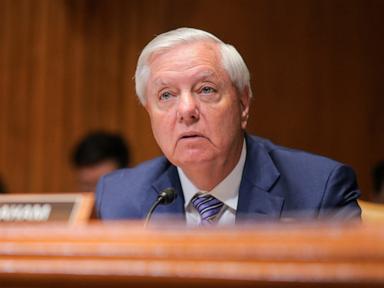
The mainstream media treats political funerals as sacred moments of national unity. They print schedules, list dignitaries, and detail the locations of separate services from Washington to South Carolina with the dry solemnity of a court stenographer. They want you to believe the upcoming memorials for the late Senator Lindsey Graham are about grief, legacy, and patriotism.
They are lying to you. Meanwhile, you can read other events here: The Ghost in the Strait (And Why the World Stopped Panicking About Oil).
A Washington funeral is not a sanctuary of sorrow. It is a highly transactional trade show. The gathering at the Washington National Cathedral on July 28 is not an event designed to look back at a five-term senator's career. It is a live-action theater where the next era of conservative power will be brokered, dissected, and distributed.
If you view this memorial through the lens of human emotion, you miss the entire point of how power operates in the Beltway. To explore the full picture, check out the excellent report by The Washington Post.
The Myth of the Bi-Partisan Truce
Every obituary written since July 11 has beaten the same tired drum: Lindsey Graham was the ultimate political chameleon who bridged the gap between old-school internationalism and the America First movement. The media projects that his funeral will be a beautiful, rare moment where both factions put down their knives to honor a fallen colleague.
Step inside the actual rooms where these events are planned, and the reality is far more cynical.
Alliances are not being remembered; they are being audited. Attendance at this memorial is a compliance check. For the MAGA apparatus, appearing at the National Cathedral is a litmus test of narrative control. For the remaining neoconservative defense hawks, it is a desperate stand to claim Graham’s hawkish foreign policy legacy before it is completely erased from the party platform.
When national and international leaders descend on Washington, they are not there to weep. They are there to network during a highly volatile transition period. The timing of the delay in funeral arrangements—publicly blamed on "accommodating foreign dignitaries"—is a logistical smokescreen. It provides breathing room for the real negotiations happening behind closed doors regarding the future of the Senate Appropriations Committee and Western military aid allocations.
The Campaign War Chest Illusion
Commentators are already obsessing over the financial vacuum left behind. Graham died with millions of dollars sitting in his active campaign account, right in the middle of a reelection cycle. The naive assumption among casual observers is that this money represents a massive inheritance for his political successor or a ready-made weapon for his sister, Darline Graham Nordone, should she seek a full term.
Federal election law does not work that way.
"Campaign funds cannot be passed down like a family heirloom or transferred directly to a relative's new campaign apparatus."
Under Federal Election Commission rules, those millions are legally locked in a state of suspended animation. They can be refunded to donors, donated to charities, or transferred to party committees in heavily regulated increments, but they cannot be used to instantly fund a successor's sudden primary run.
The corporate donors who filled Graham's coffers are not mourning a statesman; they are panicking over unspent capital. The memorial services double as an emergency summit for political action committees (PACs) and defense contractors to figure out how to claw back their investments or redirect those funds to compliance-friendly candidates before the August 11 special primary deadline.
The Dynastic Charade in Columbia
Look closely at what happened in South Carolina within forty-eight hours of Graham's passing. Governor Henry McMaster bypassed seasoned legislators, constitutional experts, and sitting congressmen to appoint Darline Graham Nordone to her late brother’s seat.
The media swallowed the narrative hook, line, and sinker, branding it a "fabulous tribute" and a touching nod to a brother who once acted as his sister's legal guardian.
This is sentimental nonsense masking a brutal tactical maneuver.
Appointing a grieving family member with zero legislative experience is the oldest trick in the gubernatorial playbook. It accomplishes two things that have nothing to do with tribute:
- The Ultimate Placeholder: It temporarily freezes the field. By placing an unvetted relative in the seat, the governor avoids angering rival factions within the state's Republican party who are starving for a promotion.
- Sympathy Shielding: It insulates the party from immediate criticism. You cannot easily attack the policy platform or the qualifications of a newly appointed senator when she is standing at a podium with glassy eyes, talking about her brother's legacy.
The endorsement from Donald Trump urging her to run for the full term isn’t born out of deep affection for the Graham family genealogy. It is a cold calculation to lock down a loyal vote in an open primary state without having to gamble on an unpredictable local politician who might develop an independent streak.
The August 11 Compressed Chaos
The most glaring flaw in the mainstream reporting of this entire sequence is the complete failure to understand the sheer operational madness of the upcoming South Carolina special primary.
The state election commission has set a hyper-compressed schedule: a filing period opening July 21 and a primary on August 11. That is a three-week sprint for a United States Senate seat.
This timeline creates an intentional structural barrier. It explicitly disenfranchises non-establishment candidates who do not possess immediate, millions-of-dollars name recognition or an existing statewide field operation.
Furthermore, this timeline flatly violates the spirit, if not the letter, of federal voting protections. Under the Military and Overseas Voters Act (MOVE), states are required to transmit ballots to military personnel and overseas citizens at least 45 days before a federal election. Holding a primary exactly 31 days after a vacancy occurs makes literal compliance with that 45-day window mathematically impossible.
While the media focuses on the floral arrangements at the Washington National Cathedral, the actual machinations of this election are a bureaucratic nightmare that strips away the democratic process in favor of backroom party control.
The Flawed Premise of Legacy
We love to ask: "What will his legacy be?"
It is the wrong question. In modern politics, legacy is an artificial product manufactured by public relations teams and cemented during televised funerals. Graham’s true operation was about the accumulation and execution of raw leverage. He survived shifts in the political winds because he understood that in Washington, loyalty is a depreciating asset and adaptability is the only currency that matters.
To honor him with a rigid, traditional, sanitized memorial is actually a disservice to the ruthless pragmatism that defined his career. The real tribute isn't the speeches given by politicians who stabbed him in the back five years ago or will forget his sister’s name five months from now. The real tribute is the fact that even in death, his empty seat is being used as a chess piece to consolidate executive control over the legislative branch.
Stop looking at the podium on July 28. Look at who is whispering to whom in the pews. That is where the actual future of the Senate is being written, and it has absolutely nothing to do with mourning.
For a deeper dive into the immediate political fallout and the mechanics of the upcoming South Carolina race, check out this breakdown of the Trump endorsement and primary timeline, which details how local officials are scrambling to manage the compressed election schedule.
http://googleusercontent.com/youtube_content/1