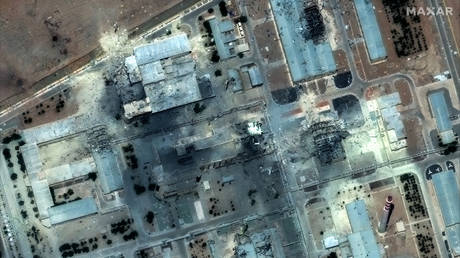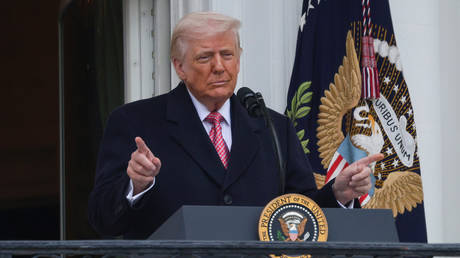
The convergence of extreme kinetic threats and overtures for diplomatic resolution represents a classic application of the Madman Theory, refined through the lens of modern economic warfare and regional containment. When a state actor publicly threatens "total destruction" while simultaneously signaling that a "peace deal is near," they are not providing contradictory data points; they are tightening a vice. This strategy relies on the Asymmetry of Risk, where the cost of miscalculation for the target—in this case, Iran—is existential, while the cost for the aggressor is primarily political or economic.
The Triad of Coercive Diplomacy
Effective coercion in the Middle East operates on three distinct, interconnected pillars. Each pillar serves a functional purpose in forcing a target toward a specific decision-making bottleneck.
- The Kinetic Overhang: This is the explicit threat of military action. For a threat to be credible, it must be perceived as both capable and probable. By using rhetoric that suggests a lack of restraint, the aggressor aims to bypass the target's internal defense calculations, moving the conversation from "will they attack?" to "how do we stop them from attacking?"
- Economic Strangulation: Sanctions and maritime interdictions serve as the baseline pressure. This is a slow-burn mechanism designed to degrade the target’s domestic stability, making the "near" peace deal appear as the only viable escape route for the regime's survival.
- The Diplomatic Out-Ramp: Without a clear path to de-escalation, a cornered adversary has every incentive to lash out. The claim that a deal is "near" functions as a psychological release valve, offering the target a face-saving exit strategy that aligns with the aggressor's terms.
Deciphering the Destruction Paradox
The paradox of threatening annihilation while promising peace is a deliberate attempt to induce Cognitive Dissonance within the Iranian leadership. Standard diplomatic protocol suggests a linear progression: tension, negotiation, then resolution. The current framework ignores this linearity. It employs a "Maximalist Opening Move" to reset the baseline of what is considered a "fair" deal.
In game theory terms, this is a game of Chicken with an added layer of information asymmetry. If the United States signals that it is willing to accept a "crash" (war), the burden of swerving (conceding) falls entirely on Tehran. The mention of a "near" deal is the steering wheel being shown to the opponent, indicating exactly where they need to turn to avoid the collision.
The Cost Function of Regional Deterrence
Regional stability is maintained through a delicate balance of power, but the introduction of high-decibel rhetoric alters the Cost Function for all stakeholders involved.
- For Iran: The cost of defiance includes the potential loss of nuclear infrastructure, the collapse of proxy networks (the "Axis of Resistance"), and direct threats to the clerical leadership. The benefit of a deal is the immediate cessation of these existential risks.
- For Regional Allies: States like Saudi Arabia and the UAE must calculate the risk of Iranian retaliation on their own soil. A credible U.S. threat provides a security umbrella, but an erratic one creates a "Security Dilemma" where these states might seek their own independent de-escalation with Tehran to avoid being caught in the crossfire.
- For the United States: The primary cost is the "Credibility Tax." If a threat of destruction is issued and not followed by action or a significant concession, the value of future threats diminishes. This creates a binary outcome requirement: either a transformational deal is signed, or a kinetic demonstration of power becomes necessary to maintain the global standing of U.S. hard power.
Structural Bottlenecks in the Negotiation Path
Despite the rhetoric of a "near" deal, several structural bottlenecks remain that cannot be solved by simple verbal threats. These are the physical and political realities that dictate the pace of any actual resolution.
The Verification Gap
Any deal involving nuclear or ballistic capabilities requires a verification regime that Iran historically views as an infringement on sovereignty. Threatening destruction does not change the technical difficulty of monitoring underground facilities like Fordow. The friction here is not just political; it is a matter of sensor placement, data transparency, and physical access.
The Proxy De-Coupling Problem
A deal with Tehran is often viewed through a bilateral lens, but Iran's primary leverage is its network of regional proxies. The United States demands a cessation of proxy activity, but for Iran, these groups are defensive depth. Moving from "threat" to "deal" requires a mechanism for Iran to drawdown these groups without feeling exposed to an Israeli or Saudi-led conventional attack.
The Logic of Temporal Pressure
Timing is a critical variable in this analytical framework. The claim that a deal is "near" creates an artificial deadline. In negotiation science, this is known as Exploding Offer Logic. By suggesting that the window for peace is closing, the aggressor forces the target to make a decision before they have fully processed the risks or consulted with their own hardline internal factions.
The second function of this timing is to signal to domestic and international audiences that the aggressor is the "reasonable" party. By offering peace, they frame any subsequent military action as a "last resort" necessitated by Iranian intransigence. This provides the necessary political cover for large-scale kinetic operations.
Resource Allocation and Strategic Posturing
The deployment of carrier strike groups and B-52 bombers to the Central Command (CENTCOM) area of responsibility is the physical manifestation of the verbal threat. This is not merely a show of force; it is a shift in Resource Allocation that carries a high opportunity cost elsewhere, such as the Indo-Pacific.
- Logistical Readiness: The presence of these assets shortens the "OODA Loop" (Observe, Orient, Decide, Act). It allows for a transition from posturing to strike in a matter of minutes, rather than days.
- Signaling to Markets: Global oil markets react to the threat of destruction in the Strait of Hormuz. By balancing these threats with talk of a deal, the aggressor manages market volatility, preventing a price spike that would damage the global economy and undermine the sanctions regime's effectiveness.
The Failure Modes of High-Stakes Brinkmanship
While structured as a masterclass in leverage, this strategy has two primary failure modes that must be monitored with clinical precision.
- The Miscalculation of Thresholds: If the aggressor underestimates the target's "Pain Threshold," the threat of destruction may trigger a preemptive strike from the target. If Iran believes an attack is truly inevitable regardless of their actions, their logical move is to strike first to maximize their limited advantages.
- The Credibility Collapse: If the "near" deal fails to materialize and no kinetic action follows, the target's baseline behavior will become more aggressive. They will have learned that the high-decibel threats are hollow, effectively neutralizing the aggressor's primary diplomatic tool for the foreseeable future.
Tactical Roadmap for Regional Stakeholders
The current situation demands a pivot from reactive monitoring to proactive risk management. For entities operating within the sphere of influence of this conflict, the following logic applies:
- Harden Secondary Infrastructure: Do not wait for a kinetic event. The most likely Iranian response to high-level threats is "Grey Zone" activity—cyberattacks on financial systems or maritime harassment.
- Diversify Supply Chains: Move away from reliance on the Strait of Hormuz for critical components or energy needs. The "threat of destruction" has already priced in a risk premium that will not dissipate even if a deal is signed tomorrow.
- Monitor Internal Iranian Power Dynamics: Watch for shifts in the influence of the IRGC (Islamic Revolutionary Guard Corps) relative to the diplomatic corps. If the IRGC gains dominance in the internal discourse, the "near" deal is a fabrication or an impossibility, regardless of what is stated in Washington.
The path forward is not found in the rhetoric, but in the movement of hardware and the tightening of the economic noose. The deal is only "near" if the alternative is perceived by Tehran as a total loss of state control.