The Comfort of Failure
Every urban planner loves a good funeral. Watch them gather around a stalled infrastructure project, shaking their heads with calculated sorrow, diagnosing the corpse before it even hits the ground.
When the media ran postmortems claiming an African city’s urban cable car experiment failed to cure its gridlock, the conventional transit establishment sighed in relief. Subways remain too expensive. Bus rapid transit lanes turn into parking lots for delivery vans. Light rail projects swallow municipal budgets whole and deliver decades of concrete-dusted delays.
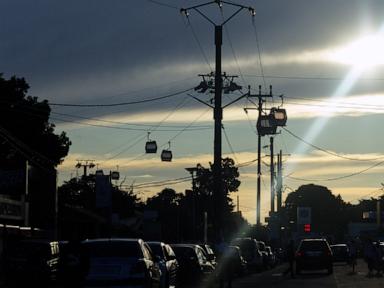
The pundits pointed to the stalled cabins dangling over traffic as proof that aerial transit is a gimmick. They blamed topography, politics, and maintenance costs. They told you that steel ropes and hanging gondolas belong at ski resorts, not in the gritty heart of a metropolis choking on tailpipes.
They are completely wrong.
The mistake was never the cable. The mistake was treating an aerial network like a novelty act instead of a heavy-duty backbone.
I have watched cities spend tens of millions of dollars on asphalt widening projects that simply invite more gridlock, only to balk when a cable system costs a fraction of that and actually routes people over the chaos. The lazy consensus says cable cars failed because they are too small, too slow, or too vulnerable to wind.
That is not an engineering critique. That is an excuse for maintaining the status quo of highway asphalt and diesel smog.
Anatomy of a Smear Campaign
Let us look at how urban transit narratives get written. A city tries something bold. Bureaucracy starves it of operational funding. Maintenance schedules get botched by political turnover. Ridership suffers because stations are dropped in the wrong neighborhoods to appease local zoning boards.
Then, the think tanks swoop in with their spreadsheets.
They compare a single cable line running at half-capacity to a century-old subway system carrying millions. They ignore the math of acquisition costs. Land expropriation for underground rail eats up to eighty percent of a transit budget before a single tunnel boring machine touches dirt. Cable cars skip the land grab entirely. You buy air rights and drop pylons.
Yet the detractors argue that capacity is capped. A gondola cabin holds ten people. A subway train holds a thousand.
This is true. It is also completely irrelevant.
What is the capacity of a three-lane highway choked with single-occupant sedans moving at four miles per hour? Zero. A system that moves ten people per cabin every thirty seconds straight over a mountain range or an un-bridgeable slum delivers a higher throughput than a multi-lane expressway gridlocked in permanent paralysis.
La Paz proved this decades ago. Medellín proved it. When you float transit above the choke points, you stop fighting the terrain and start using it. The African city in question did not fail because cable cars are a bad idea. It failed because it adopted a pilot mindset for a structural problem.
The Economics of Gravity
Let us define the core misunderstanding here: Capital Expenditure versus Operational Agility.
Traditional transit planning suffers from sunk cost fallacy on a municipal scale. Once a city commits to a light rail line, politicians are forced to defend it through years of budget overruns, community displacement, and crumbling fiscal health. If the route turns out to be wrong, too bad. You cannot simply pick up a concrete viaduct and move it three blocks east.
Cable systems offer modular flexibility that traditional rail cannot touch. Need to shift a station? You adjust the alignment of the towers. Need to increase capacity? You speed up the line speed or shorten the headway between cabins.
The financial footprint is microscopic compared to tunneling. A kilometer of subway costs upwards of one hundred million dollars in dense urban environments. A kilometer of cable transit can often be installed for a fraction of that, sometimes dropping below ten million depending on terrain.
Yet, critics fixate on maintenance. They talk about wind shear and power outages.
Every mode of transit breaks down. Subways flood during heavy rains. Buses catch fire. Overhead catenary wires for light rail snap under ice or extreme heat. The difference is that when a cable car stops, passengers are evacuated via backup generators or auxiliary drives within minutes. When a subway train stalls three miles underground in a flooded tunnel, you have a humanitarian crisis.
We accept the catastrophic risks of subterranean engineering because it looks respectable in a civil engineering textbook. We mock aerial transit because it looks like a ski resort.
The Real Problem is Class, Not Concrete
Strip away the engineering debates, and the real resistance to urban cable cars becomes obvious.
Optics.
Aerial transit is transparent. You can look down into neighborhoods, and neighborhoods can look up at you. For decades, urban planning has been obsessed with segregation. Highways create concrete walls between wealthy commercial districts and working-class informal settlements. Subways hide commuters underground, sweeping urban poverty out of sight and out of mind.
Cable cars refuse to hide.
They cut directly across the skyline, linking marginalized hill communities directly to central business districts without asking permission from rich landowners along the highway routes. They democratize altitude.
When an elite transit board reviews a proposed cable line that runs from a sprawling hillside informal settlement straight to the financial district, they do not see an efficient transport solution. They see a direct visual link between two worlds they prefer to keep separated by hours of traffic.
The administrative friction that kills these projects is rarely technical. It is spatial politics. Municipal leaders want grand monuments to their tenure—shiny steel trains running down wide avenues where tourists can take photos. They do not want quiet, efficient wire ropes humming above rooftops, carrying the working class past their penthouse balconies.
How to Build an Aerial Network That Actually Survives
If you want to deploy cable transit in a modern city and avoid the humiliating postmortems written by armchair transit analysts, you have to throw out the playbook.
Stop treating cable cars as tourist attractions or transit experiments. Treat them as heavy transit corridors.
- Own the Right of Way Permanently: Do not lease air rights. Municipalities must secure permanent airspace corridors with the same legal rigor they apply to subsurface subway tunnels.
- Integrate Fare Systems: A cable car that requires a separate paper ticket is a doomed novelty. It must plug directly into the citywide contactless payment card, sharing transfers seamlessly with buses and informal minibuses.
- Decentralize Maintenance: Do not rely on overseas vendor monopolies for routine parts. Build local technical academies that train regional engineers to splice cables, service gearboxes, and repair cabin doors within hours, not weeks.
- Design for Cargo: Passenger volume is only half the economic equation. Modern cabins should feature modular flooring that allows for freight, mail, and medical supply transport during off-peak hours.
The next time a city tries to bypass traffic gridlock by throwing billions of dollars at asphalt or deep tunnels, remember the cable. It is quiet. It is electric. It respects gravity.
The cities of the future will not be built by digging deeper into the dirt. They will be built by looking up.