Every tech blog on the internet is hyperventilating right now.
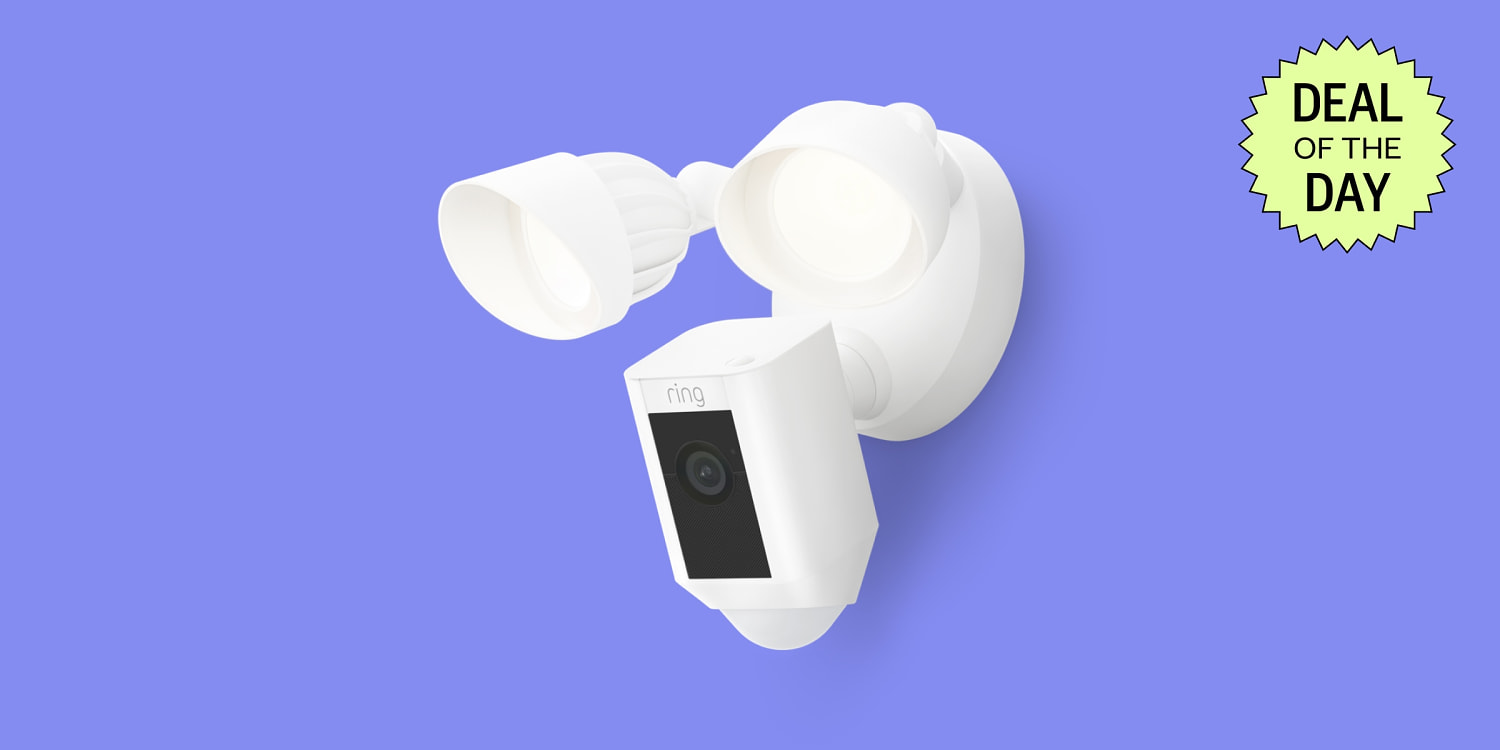
A popular smart floodlight camera is sitting at half price. Headlines scream about historic lows, absolute bargains, and the ultimate opportunity to secure your perimeter on a budget. Meanwhile, you can explore related events here: Inside the Desperate Software Pivot Driving Microsoft to Chase Anthropic.
Stop cheering.
You are not buying a security device. You are buying a recurring subscription wrapped in aluminum and cheap plastic, subsidized by your personal data and fueled by manufacturer lock-in. When a gadget is discounted by fifty percent, the hardware is never the product. You are the product, and your monthly credit card bill is the invoice. To understand the full picture, check out the excellent analysis by MIT Technology Review.
I have spent the last fifteen years auditing enterprise surveillance setups and tearing down consumer smart home infrastructure. I have watched companies build billion-dollar empires by convincing everyday homeowners that true safety comes bundled with a mobile app notification and a monthly fee. It is a brilliant financial magic trick. It makes you feel protected while siphoning money out of your pocket year after year.
Let us dismantle the lazy consensus surrounding this so-called mega-deal.
The Hardware Loss Leader Illusion
Look at the manufacturing economics of consumer internet of things hardware. A floodlight chassis, an LED array, an image sensor, a Wi-Fi chip, and a microphone cost a specific baseline amount to source, assemble, ship, and warehouse. When a corporation slashes that price in half overnight, they are willingly taking a financial loss on the physical unit.
No publicly traded company engages in philanthropy. They do it because they know the math.
Once that camera is screwed into your exterior junction box, your switching costs become virtually infinite. You are locked into their proprietary app, their cloud storage servers, and their pricing tiers. The moment you stop paying the ransom for your own video history, your expensive floodlight degrades into a glorified porch light with a lens.
Imagine a scenario where a car manufacturer sells you a sedan at a fifty percent discount, but disables the brakes, the radio, and the trunk unless you pay a monthly access fee. You would call it extortion. In the smart home space, consumers call it Black Friday.
The Network Tax Nobody Talks About
Proponents of cloud-tethered Wi-Fi cameras love to talk about convenience. They talk about opening an app on your phone while sitting at a coffee shop three towns over and watching a delivery driver drop off a box.
What they fail to mention is the invisible toll this exact workflow takes on your home network and your privacy.
Every single time a stray cat wanders past your driveway at three in the morning, your Wi-Fi camera wakes up, compresses a video stream, and uploads it across your internet connection to a remote server farm. If you have four or five of these devices deployed around your home, you are constantly chewing through upstream bandwidth.
More importantly, you are streaming raw, unredacted footage of your family, your children playing in the yard, and your neighborhood routines directly to corporate servers. Companies change their terms of service. Law enforcement agencies request footage without warrants through expedited digital portals. Data breaches happen with terrifying regularity.
Convenience is the currency you use to pay for centralized surveillance. When you buy into a closed ecosystem, you trade local sovereignty for the ability to watch your porch while waiting in line for a latte.
The False Security Epidemic
Let us address the core marketing pitch of these devices. Does a bright light and a camera stop crime?
Criminologists and physical security professionals have studied perimeter deterrence for decades. The data is clear. A flashing blue LED or a motion-activated floodlight might deter an amateur, opportunistic porch pirate who is already hesitant. But a professional, determined intruder does not care about your camera. They wear hoodies, they pull down brims, they bypass Wi-Fi signals with cheap deauthentication tools, or they simply smash the unit off the wall with a heavy object before you even realize your phone is buzzing.
Worse, these cameras create a profound psychological vulnerability known as the false security effect. Homeowners install a couple of Wi-Fi floodlights, pay their monthly subscriptions, and assume their perimeter is impenetrable. They neglect physical hardening. They leave side doors unlocked. They fail to secure vulnerable ground-floor windows because they trust an app notification to save them.
When a device encourages you to ignore fundamental physical security practices while charging you rent for the privilege, it is not making you safer. It is making you complacent.
The True Cost of Ownership
Let us run the real numbers over a five-year lifecycle.
Take the discounted purchase price of the camera. Now, add the mandatory or functionally necessary cloud subscription fee. Over sixty months, that subscription quickly surpasses the upfront cost of the hardware several times over.
By year three, you have paid more for the software license to view your own footage than you did for the physical electronics bolted to your brickwork. By year five, you have funded a small corporate expansion for a tech conglomerate that could decide to sunset the device model at any moment. When a company decides to sunset a hardware line—a common practice in the smart home industry—your fifty-percent-off bargain instantly becomes electronic waste.
Compare this to a professional-grade local setup.
A hardwired Power over Ethernet security camera connected to a local Network Video Recorder operates entirely offline. It does not require an internet connection to record. It does not phone home to foreign servers. It does not charge a monthly subscription fee. The data stays on your property, encrypted behind your own hardware keys.
Yes, a proper PoE deployment requires running cable through your attic or soffits. It requires upfront capital and a bit of manual labor. It is not as simple as twisting a lightbulb into a socket. But it is an asset you own outright, one that will function for a decade without asking you for another cent.
Open Standards Versus Walled Gardens
The technology sector loves proprietary silos because interoperability destroys recurring revenue.
If manufacturers built cameras that spoke open standards like ONVIF and RTSP natively, you could buy hardware from Brand A, record it to a Network Video Recorder from Brand B, view it through software from Brand C, and store the backups on a local Network Attached Storage drive. You would have total freedom.
Instead, companies build walled gardens. They design their software to reject third-party connections. They make it intentionally difficult to pull your own video streams off their hardware without routing through their servers.
When you purchase into these ecosystems during a flash sale, you are voting with your wallet to support digital feudalism. You are telling manufacturers that you prefer being a tenant in their software ecosystem over being an owner of your own home infrastructure.
How to Actually Secure Your Perimeter
If you want real security without falling for the marketing trap of discounted cloud gadgets, shift your strategy entirely.
First, focus on physical hardening before electronic monitoring. Upgrade your exterior doors to solid core timber or metal frames. Install three-inch screws in your strike plates so a shoulder check cannot pop the frame. High-end cameras cannot save you if your back door opens with a single kick.
Second, if you deploy cameras, buy open-ecosystem hardware that supports local recording. Look for cameras that utilize Power over Ethernet and support standard streaming protocols. Pair them with a local Network Video Recorder or open-source software like Frigate or Blue Iris running on dedicated hardware in your basement or utility closet.
Third, if you must use wireless convenience devices because running cable is structurally impossible, isolate them on a separate Virtual Local Area Network on your home router. Do not let cheap IoT devices share network space with your personal computers, your work laptops, or your financial documents. Treat every internet-connected smart gadget as an untrusted guest on your network.
Admitting that these discount sales are traps requires a shift in perspective. It means accepting that cheap hardware always hides expensive dependencies.
Stop renting your perimeter. Build a system you actually own, keep your data off corporate servers, and stop funding the subscription economy with every blink of a floodlight.