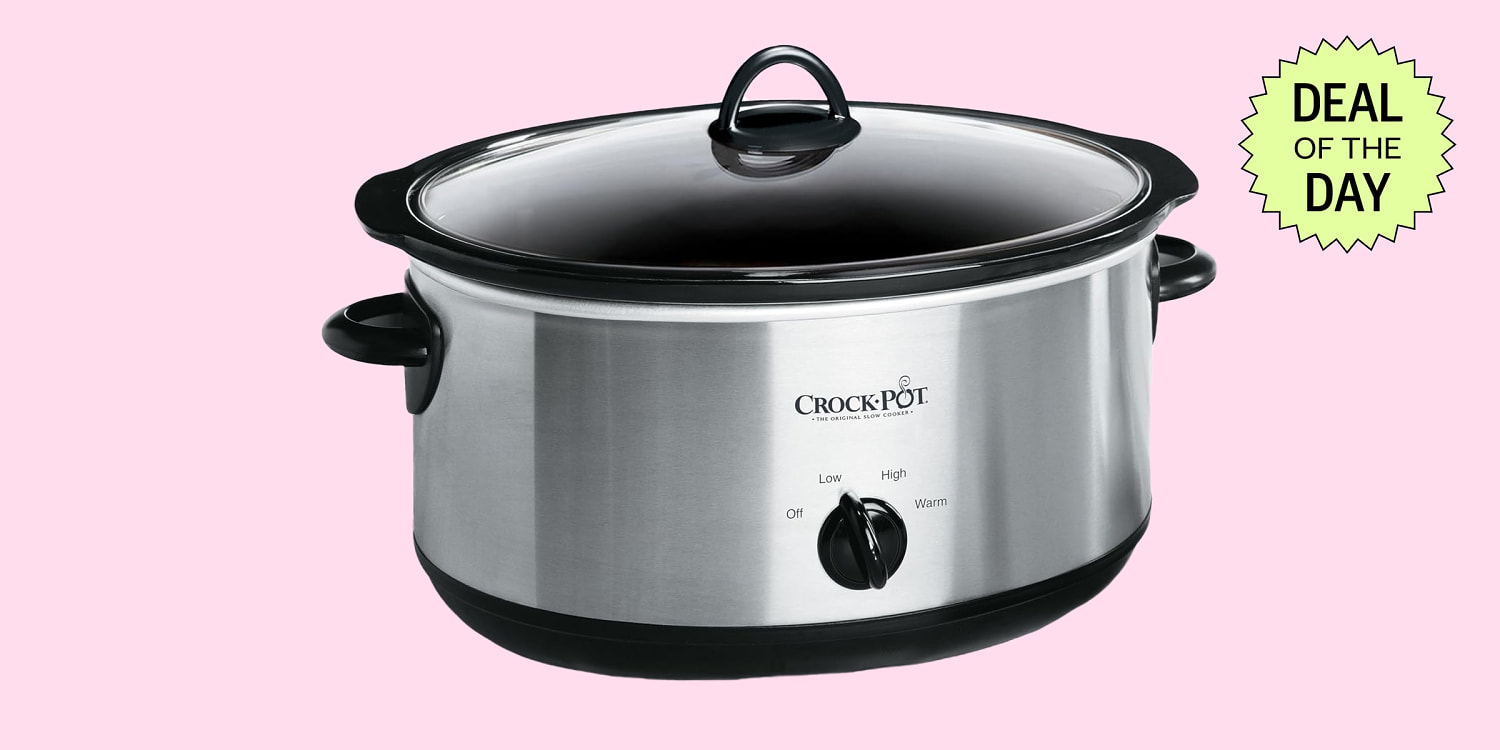
A sub-$40 slow cooker looks like a triumph of frugality. Cold weather hits. Soup season arrives. You spot a bargain on a classic Crock-Pot, toss it in your cart, and congratulate yourself on outsmarting inflation.
Except you didn't outsmart anything. You bought a thermodynamic compromise disguised as a convenience appliance.
Shopping guides love a seasonal discount. They treat a low sticker price as proof of value, especially when the weather turns chilly and comfort food becomes the default pitch. That is lazy retail journalism. It assumes that any heated pot filled with broth and root vegetables delivers the same culinary return, provided the price tag is low enough.
It doesn't. Cheap slow cookers fail at the exact things people buy them to do, and they often ruin the very meals they promise to simplify.
The Myth of "Set It and Forget It" Heat
Most people misunderstand what a slow cooker actually does. They think of it as a gentle, patient version of a stovetop pot or a Dutch oven.
In reality, a classic slow cooker is an electric heating element wrapped around a heavy ceramic insert, sitting inside an uninsulated or minimally insulated metal shell. Heat transfers primarily from the bottom and lower sides. There is no active air circulation like an oven, and there is no direct flame control like a burner.
Even more revealing is how the "Low" and "High" settings work on standard models. On a vast number of traditional slow cookers, both settings eventually reach roughly the same simmering temperature—around 200°F to 212°F (93°C to 100°C), right near a boil. The difference isn't a lower peak heat. The difference is how fast it gets there.
That distinction matters enormously for soup.
Soup relies on controlled extraction and texture preservation. When you want rich gelatin from bones or connective tissue, collagen converts to gelatin most cleanly in a steady, sub-boiling environment—roughly 180°F to 195°F (82°C to 90°C)—over several hours. Push liquid into a rolling simmer or gentle boil for too long, and two things happen:
- Proteins tighten and squeeze out moisture, turning chicken breast stringy and beef chuck dry despite sitting in liquid.
- Emulsified fats and agitation can turn a clear broth cloudy, while delicate vegetables like potatoes or zucchini disintegrate into mush before tougher ingredients finish softening.
A budget slow cooker gives you blunt instrument control. You get minimal temperature precision, uneven hot spots along the lower walls, and zero ability to sear ingredients in the same vessel unless you dirty another pan first.
I have tested dozens of budget small appliances over the years, and I have watched home cooks buy cheap slow cookers every autumn only to shove them into the back of a hall cabinet by January. They blame themselves for "bad recipes" when the hardware was fighting them from hour one.
Where Cheap Slow Cookers Actually Shine—and Where They Fail
Let's be honest about the trade-offs. Dismissing every sub-$40 slow cooker outright ignores real kitchen constraints.
If you cook for one or two people, live in a small apartment, or need a hands-off way to hold a pot of chili or pulled pork on game day without tying up your range, a basic Crock-Pot can earn its keep. It uses relatively modest wattage compared to running a full-sized oven for four hours, and it keeps food hot safely without constant babysitting.
The problem starts when people treat a cheap slow cooker as the default answer to winter cooking.
Cheap appliances rarely save money when they force you to buy better ingredients to rescue mediocre heat control.
Consider what happens when you put a $14 cut of chuck roast or a whole chicken into an entry-level unit. If the cooker overshoots into a lively simmer on an eight-hour run while you are at work, collagen still breaks down eventually, yet muscle fibers tighten and lose tenderness. You end up with meat that shreds only because it gave up, not because it stayed succulent.
And what about soup specifically? A great soup depends on flavor concentration and layered texture. Because a covered slow cooker traps almost all steam, almost no liquid evaporates. That sounds helpful until you realize that water doesn't cook off to concentrate your stock. If you start with too much broth or watery vegetables, you end up with a thin, one-note liquid that tastes diluted no matter how much salt you add at the end.
Serious culinary references—from Harold McGee's On Food and Cooking to the test kitchen methodologies popularized by J. Kenji López-Alt—emphasize the same physical realities: heat transfer rate, moisture retention, and temperature control dictate food structure far more than appliance nostalgia does. Ignoring physics because a pot is on sale doesn't change how proteins denature.
Dismantling the Common Soup-Season Questions
When soup season rolls around, search engines fill up with predictable questions. Most of them start from a flawed premise.
"Is a slow cooker better than a Dutch oven for soup?"
Better by what metric? If your metric is hands-off scheduling while you're away for nine hours, a slow cooker wins on convenience and safety. If your metric is flavor depth, browning, evaporation control, and texture, a heavy enameled cast-iron Dutch oven—used on the stovetop or inside a low oven—wins easily.
A Dutch oven lets you sweat aromatics, bloom spices, deglaze fond stuck to the bottom, and simmer gently in one pot. With a basic slow cooker, skipping the sauté step leaves raw, flat notes in your broth, while doing it in a skillet first creates extra dishes that chip away at your "time-saving" bargain.
"Can you really make good soup in a cheap slow cooker?"
Yes, if you pick the right soups and adjust your technique.
Thick, hearty stews, split pea soup, bean soups, and brothy noodle soups made with hardy greens added at the very end work reasonably well. Cream-based soups, seafood chowders, and delicate vegetable soups are much trickier. Dairy can separate or curdle under prolonged heat, seafood turns rubbery fast, and delicate greens wilt into olive-drab sludge if cooked too long.
If you use a budget slow cooker for soup, treat it like a gentle warmer and braiser for sturdy bases—not a magic wand that fixes rushed prep or watery ingredients.
"Do expensive slow cookers cook better than cheap ones?"
Often, yes—though not always for the reasons marketing claims. Higher-end models frequently offer better insulation, more accurate temperature regulation, true simmer/keep-warm logic, and removable inserts that can go straight onto a burner or into an oven.
Even then, a slow cooker has inherent design limits. A countertop slow cooker is still fundamentally a covered vessel trapping steam. No price tag turns a slow cooker into a pressure cooker or a wide-mouthed stockpot.
A Thought Experiment in Kitchen Economics
Imagine a scenario where you buy a $35 slow cooker in November. You use it once a week through February—that's 16 meals. On half of those nights, the soup is slightly overcooked or under-seasoned because steam couldn't escape and the heat ran hotter than expected, so you order takeout or grab extra bread and cheese to make the meal feel complete.
Even spending just $8 extra per meh meal across eight nights adds $64 in workarounds. Your $35 "deal" just cost nearly $100 in mediocre dinners and patch-up spending.
Now picture a different approach. Instead of buying a single-purpose bargain appliance out of seasonal habit, you evaluate what your kitchen actually lacks. Do you lack a heavy pot with real thermal mass? Do you lack time management in the evening? Or do you just want hot soup ready when you walk through the door?
Unconventional Rules That Actually Work
If you want better soup this winter—whether you own a slow cooker or not—drop the conventional seasonal script and follow these rules instead:
- Reduce your liquid by 15% to 20% in a slow cooker. Because almost no moisture escapes under a tight lid, recipes written for stovetops or ovens often leave slow-cooker soup too soupy. Hold back part of the broth and add it at the end only if needed.
- Toast spices and aromatics dry or in a skillet first. Raw cumin, thyme, curry powder, and onions cooked purely in warm liquid lack the Maillard complexity and essential-oil release that give soup real backbone. Two minutes of dry heat or quick pan-searing changes everything.
- Add tender ingredients at the finish line. Peas, spinach, kale, fresh herbs, lemon juice, and dairy belong in the last 5 to 15 minutes. Cooking them for six hours destroys brightness and texture.
- Build a flavor bomb base on the weekend. Instead of cooking a full pot of soup slowly all day on a Tuesday, simmer a concentrated stock or flavorful base on Sunday, chill it, and assemble fresh soups in 20 minutes on weeknights. Faster, cleaner, and far more controllable.
- Don't buy seasonal hype just because the price drops. Discounts are clearest when a product is being cleared or pushed for a calendar moment. Buy tools based on how often you will execute their exact strength, not how cozy the ad copy sounds.
The Real Catch With Going Contrarian
Skipping the bargain slow cooker—or using it sparingly rather than worshipping it—comes with a real downside: less hands-off autopilot on busy days.
A good slow cooker lets you walk away for hours without worrying about a burner left on or a pot boiling dry. If you trade that for stovetop or Dutch-oven cooking, you trade some passive convenience for active control. You have to pay attention. You have to stir, taste, and adjust heat.
For some households, especially chaotic ones with unpredictable schedules, passive convenience has real value. A slightly mushy potato at 6:30 PM beats eating cereal at 8:00 PM because nobody had energy to cook.
That is the honest trade-off. Cheap slow cookers aren't evil; they're just limited. Treat them like a limited tool, stop expecting Michelin-level depth from a $35 bargain bin pot, and your winter soups will immediately get better.
Stop shopping by sale tags and start cooking by heat transfer.