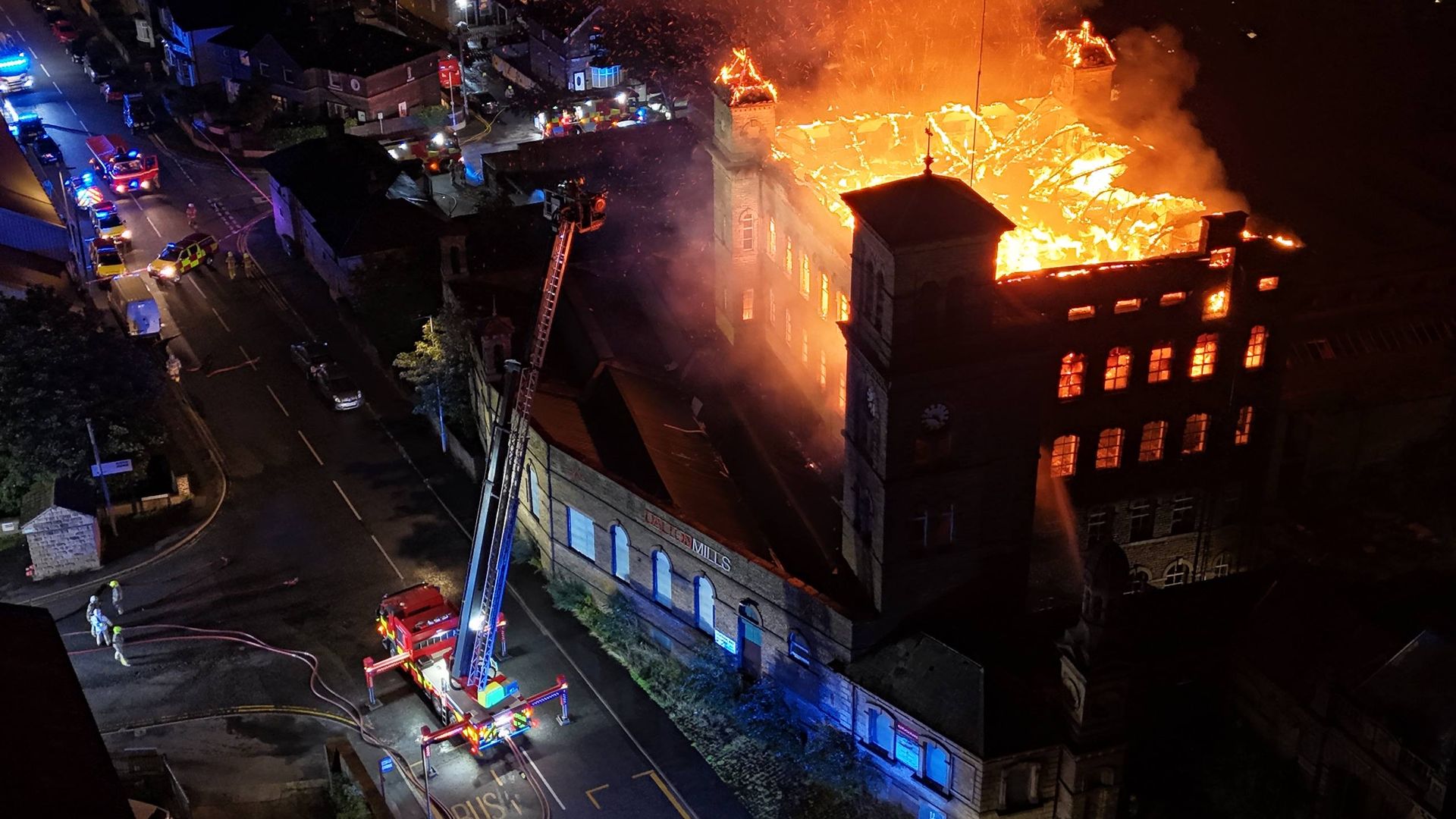
Everyone lost their minds when the flames tore through the old Yorkshire mill. Media outlets wailed about the destruction of a British television icon, sobbing over the loss of a structure that once housed gritty gangsters and aristocrats alike. Preservationists chained themselves to mental constructs of heritage, mourning every scorched brick as if the soul of the Industrial Revolution had just evaporated into the smoggy northern sky.
They are wrong. They are missing the point entirely.
Let us stop pretending that turning every rotting Victorian eyesore into an open-air museum is a viable economic strategy. I have spent two decades advising heritage trusts and property syndicates across the UK, and I have seen councils bankrupt themselves trying to preserve asbestos-riddled concrete blocks just because a television camera rolled past them once.
The Cost of Stasis
The lazy consensus is simple: old buildings equal good, fire equals bad, and saving every square foot of brickwork preserves our collective memory. That is sentimental garbage.
Historic mills like the ones featured in Peaky Blinders and Downton Abbey were never meant to be preserved in amber. They were hyper-efficient, ruthless engines of capitalism. They were built for one purpose: output. When the textile industry collapsed, these structures did not become cathedrals of culture; they became white elephants. They turned into structural liabilities draining municipal coffers through emergency stabilization grants, insurance premiums, and endless safety patrols.
Consider the economics of preservation. Restoring a Grade-listed mill to modern commercial standards costs upwards of three hundred pounds per square foot. The structural integrity is often compromised by decades of moisture penetration, rotting timber floor plates, and contaminated ground soil. When a fire clears the site, it does not destroy heritage. It removes the bureaucratic paralysis. It forces a clean slate where private capital can finally step in without being handcuffed by heritage red tape.
Television Scenery Versus Urban Reality
Fans of period dramas treat these locations as holy ground. They visit industrial towns, snap photos of crumbling brick archways, and lament the lack of investment in local infrastructure. But they refuse to pay for the upkeep.
Cinematic romanticism blinds people to urban reality. A hollowed-out shell of a mill sitting vacant for forty years does not boost local morale. It depresses property values, attracts vandalism, and serves as a physical monument to economic decay. The fire didn't rob the community of its future. The forty years of waiting for a preservation grant already did that.
Let us look at what actually happens when a mill burns down versus when it is preserved.
Preservation usually results in a stalled half-renovation. You get luxury apartments priced entirely out of reach for the locals, surrounded by derelict yards because the developer ran out of cash halfway through stripping the lead roof. A clean-burn demolition funded by an insurance payout allows for modern, carbon-neutral infill housing or functional commercial space that actually creates jobs.
The Heritage Trap
We suffer from a national delusion that age equals sanctity. Not every brick laid in the nineteenth century deserves eternal life. Some buildings were architectural blunders when they were drawn on paper, let alone after a century of industrial soot and structural neglect.
When heritage boards dictate that every cracked archway must be rebuilt using authentic lime mortar and reclaimed handmade bricks, they turn construction into performance art. It prices out sensible development and ensures that northern post-industrial towns remain economic backwaters trapped in a loop of nostalgia.
If you care about these communities, stop mourning the skeleton. Celebrate the clearance.
The most vibrant parts of Manchester, Leeds, and Sheffield did not recover because someone saved every single ruined wall. They recovered because smart developers knocked down what was unsalvageable and built something people could actually use, live in, and work within.
Let the ashes settle. Build something better.