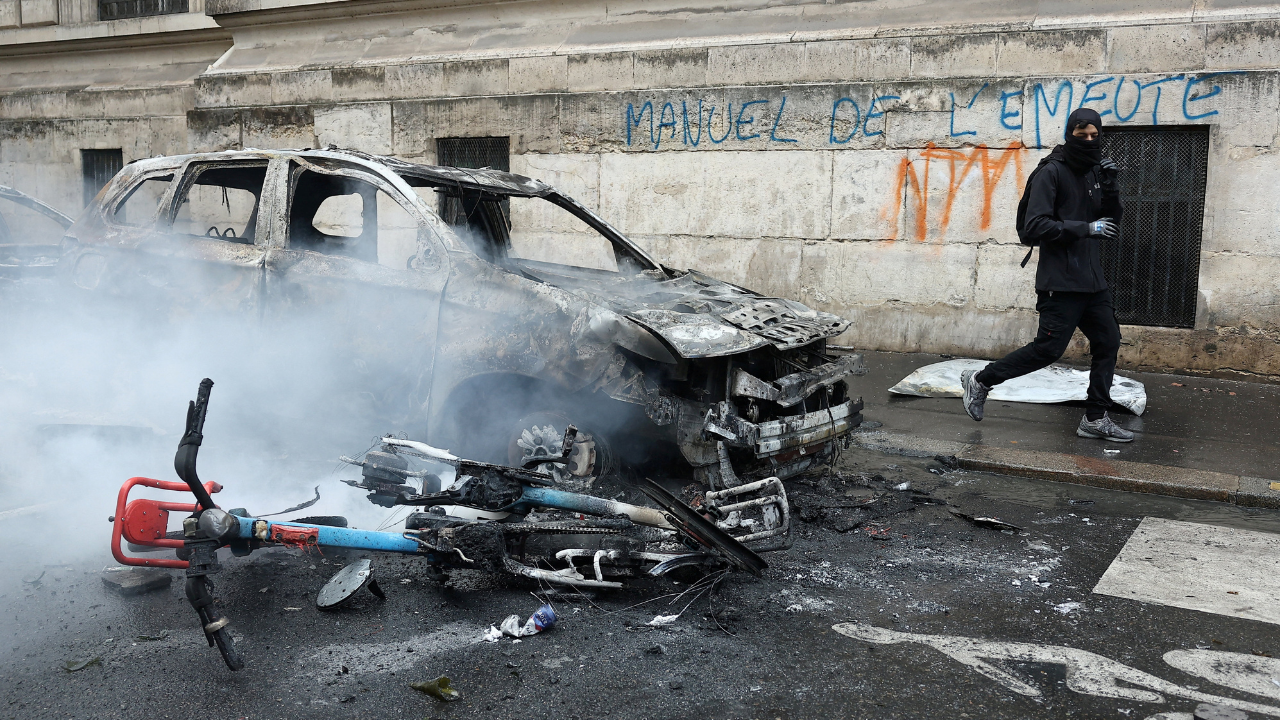
Piles of electric bikes spitting flames and thick black smoke in the middle of a French boulevard aren't just dramatic footage for social media feeds. They're a symptom of what happens when everyday urban convenience collides with street-level anger.
During the wave of France protests over cost-of-living pressures, rising fuel prices, and strained public services in October 2026, shared e-bikes turned into makeshift barricades and street bonfires. Videos from Paris and other cities showed flames shooting up as batteries overheated and ruptured, sending toxic fumes across neighborhoods already choked with tear gas and smoke. For commuters, shopkeepers, and city officials alike, a symbol of clean urban transit suddenly looked like another hazard on an already volatile street.
Honestly, anyone who has walked through central Paris or another dense European city knows how ubiquitous shared bikes and scooters have become. They sit on sidewalks, line up at docks, and move thousands of people every day. When unrest breaks out, whatever is heavy, plentiful, and easy to drag into the road gets pulled into the action.
Why Burning E-Bikes Keep Showing Up in France Protests
If you watch clips from recent France protests, you might wonder whether rioters are targeting micromobility companies on purpose or just grabbing whatever is closest. The reality is a mix of convenience and escalation.
Thousands of shared bicycles and electric bikes are scattered across Paris streets and docking stations. Unlike heavy municipal vans or fortified storefronts, a shared bike takes seconds to tip over, link together, or toss onto a burning pile of debris. Reports from the unrest noted bikes being stacked into street barriers, set ablaze, and even thrown onto already burning vehicles.
Smovengo, which operates Paris's Vélib' Métropole bike-sharing network, reported to Reuters that roughly 300 bikes out of a fleet of around 20,000 were damaged or stolen during the weekend clashes. Docked systems aren't immune simply because they use stations rather than free-floating sidewalk parking; once a crowd forms and docks are forced or bypassed, the hardware is right there. Meanwhile, shared-mobility operator Lime indicated it lost roughly 6% of its Paris fleet amid the destruction, and operators such as Dott also saw vehicles caught up in the turmoil.
There's also a visual feedback loop that makes e-bike fires stand out. A standard bicycle frame burns mostly paint and tires. An electric bike carries a lithium-ion battery pack. When heat hits those cells, thermal runaway can trigger intense flames, popping or flare-ups, and dense, acrid smoke that looks far more chaotic on camera than a wooden pallet fire.
Battery Fires Change the Risk for Firefighters and Police
Setting an e-bike on fire isn't just vandalism. It creates a nasty chemical and thermal problem in tight urban spaces.
Lithium-ion batteries store concentrated energy in a compact housing. When damaged or exposed to external fire, internal short circuits can drive temperatures rapidly upward, releasing flammable gases and toxic smoke. For firefighters already dealing with blocked streets, crowds, and ongoing clashes, a pile of burning e-bikes behaves very differently from ordinary street rubbish.
Police face extra hazards too. Smoke plumes reduce visibility, irritating fumes compound crowd-control gases, and flying sparks or sudden flare-ups make clearing barricades slower and riskier. When protesters push e-bikes down stairs or pile them against intersections, they turn everyday street furniture into obstacles that slow emergency response.
What Is Actually Driving the Unrest Behind the Headlines
Focusing only on burning bikes misses why hundreds of thousands of people went into the streets in the first place. The e-bikes are props in a much bigger political and economic fight.
Demonstrations in October 2026 drew massive crowds—with Interior Minister Laurent Nuñez reporting 110 marches nationwide and estimates around 550,000 participants (while organizers claimed closer to 800,000)—driven by frustration over household living costs, rising fuel prices, budget pressures, and underfunded public services like schools. Advocacy groups such as 350.org pointed to squeezed family budgets alongside stalled building renovations and grievances over energy profits.
As tensions flared, the political response sharpened quickly. President Emmanuel Macron condemned the violence and pledged prosecution for looters, while Prime Minister Sébastien Lecornu warned of severe pressure on police amid debates over spending cuts and upcoming electoral dynamics. Officials weighed tighter security deployments and potential partial curfews in certain municipalities, while several foreign governments updated travel advisories urging caution near demonstrations.
In late October 2026, the French Senate also moved forward legislation aimed at making rioters financially liable for unrest damage. That proposal sparked fierce pushback from critics and rights groups like Amnesty International France, who warned that seizing social benefits or allowances could hit vulnerable households hard.
Here's where things get messy in public debate. Peaceful marchers, union members, students, and families showing up over real economic strain often get lumped together in viral clips with smaller groups of violent actors, looters, or fringe agitators. A ten-second clip of a burning e-bike gets millions of views. A ten-minute policy debate over school maintenance or fuel costs barely gets a glance.
The Hidden Cost to Cities and Everyday Commuters
When shared fleets get torched or stolen, the bill doesn't just land on a corporate balance sheet. Regular people feel the squeeze the next morning.
Think about what happens when hundreds of bikes are wiped out over a single weekend. Commuters who rely on bike shares to bridge subway gaps or get to early shifts suddenly face thinner availability. Delivery riders and students lose flexible options. City transit authorities have to coordinate cleanup, inspect damaged docks, and deal with disrupted mobility corridors right when normal routines are trying to restart.
From a business standpoint, micromobility operators operate on tight unit economics. Hardware isn't cheap, batteries are expensive components, and rebalancing fleets across a dense city takes constant labor. Losing 6% of a city fleet in short order—or taking hundreds of hits to a major municipal-style network—forces rapid reallocation of spare bikes, extra maintenance checks, and hard questions about street deployment during high-risk weekends.
- Lost transit capacity: Fewer working bikes on the street means longer waits, crowded buses or trains, and higher out-of-pocket costs for riders switching to taxis or rideshares.
- Street and environmental cleanup: Charred frames, melted plastics, and spent battery casings require proper collection and hazardous-waste handling rather than a quick street sweep.
- Chilled investment and caution: Repeated street damage makes operators more hesitant to expand fleets or keep high density in flashpoint districts during tense periods.
I've watched enough urban policy debates to know that cities love touting "green last-mile mobility" when ribbons are cut, yet rarely plan for how fragile street-level hardware is when civil unrest hits. You can't bolt every shared bike to a bunker, and pulling every bike off the road every time a protest is announced defeats the purpose of public-facing transit. Still, ignoring the vulnerability of dense street fleets is a mistake.
What Operators and Cities Can Actually Do Differently
There's no magic switch that stops street arson during a major political boilover. Still, practical adjustments can cut losses and lower hazards.
Operators can lean harder on dynamic geofencing and proactive fleet thinning ahead of announced mass demonstrations or high-tension weekends. Pulling surplus vehicles out of high-risk central squares before crowds gather reduces raw material for barricades and fires. Battery diagnostics and tamper alerts can also help teams spot compromised units faster after disorder subsides.
Municipalities, meanwhile, need clearer coordination between public-order policing, transit planners, and waste/hazmat crews. If a street is likely to see heavy clashes, clearing loose street furniture and coordinating fleet pauses early keeps emergency lanes open and protects responders from avoidable battery hazards.
Practical Steps If You Live, Work, or Travel in Affected Cities
Whether you're commuting daily, running a local business, or planning a trip to France during periods of social unrest, a little preparation saves a lot of headaches.
- Check official advisories and transit alerts before heading out: Don't rely solely on viral clips to judge a whole city. Monitor local municipal updates, public transit notices, and your home government's travel guidance if you're visiting from abroad.
- Build buffer time into your commute: When streets close, buses reroute, or shared bikes are scarce after weekend clashes, door-to-door times can jump fast. Leave earlier and keep a backup transit route in mind.
- Avoid flashpoint zones and crowds: Even if you support the underlying grievances—or just want to see what's happening—stay clear of clashes, barricades, and burning debris. Tear gas, smoke, and sudden crowd surges don't care who's a bystander.
- Secure storefronts and street-level assets early: If you run a shop or manage property along major protest routes, coordinate shutters, deliveries, and lighting ahead of scheduled marches or weekend demonstrations.
If you're signed in to a Google Account, saving this thread makes it easy to revisit updates or notes later without losing your place.
Watch Self-service bicycles, the new weapon of rioters to see how shared electric bikes were used during the street unrest and why burning batteries pose hazards for responders. This video is relevant because it shows the real-world street tactics and battery fire risks discussed in the article.