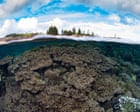
Australia is quietly presiding over the destruction of its most isolated marine sanctuary. Situated roughly 1,500 kilometers east of the Australian mainland, the coral reefs of Norfolk Island are currently facing an unprecedented convergence of environmental disasters. Rising sea temperatures driven by El Niño and chronic agricultural runoff have already introduced a devastating tissue loss disease that infects up to 60 percent of the lagoon’s dominant coral species. Now, a government-approved dredging project at the historic Kingston Pier threatens to bury the survivors under thousands of cubic meters of toxic sediment. Federal environmental regulators authorized this operation by bypassing strict numeric safeguards, placing a fragile, potentially unclassified ecosystem at extreme risk.
The crisis is unfolding away from the public eye. While the Great Barrier Reef captures global headlines and massive conservation budgets, Norfolk Island operates on the margins of bureaucratic attention. The territory’s marine environment is distinct, characterized by high-latitude coral communities that have evolved in cooler, subtropical waters. Local researchers suspect that many of these species are completely unique to the island and remain formally undescribed by science.
To understand how a remote ecosystem ends up on the brink of collapse, one must examine the intersection of global climate patterns, historical infrastructure failures, and modern regulatory shortcuts.
The Invisible Plague in the Lagoon
The crisis did not begin with a dredge head. It started with a changing climate and a legacy of poor land management. In late 2020, marine scientists monitoring the shallow waters of Emily Bay and Slaughter Bay noticed a horrifying transformation.
White bands of dead tissue were peeling away from the large, plate-like Montipora corals that form the backbone of the lagoon reef system.
This was identified as Montiporid White Syndrome. It is a highly aggressive tissue loss disease. Over a multi-year outbreak, researchers documented that the affliction had compromised more than half of the surveyed coral community.
Disease outbreaks on coral reefs are rarely random. They are the predictable outcome of cumulative environmental stress. In the months leading up to the outbreak, the island experienced severe heat stress, with sea surface temperatures climbing well above the historical maximum monthly mean. For a high-latitude reef accustomed to cooler waters, a temperature increase of just one degree Celsius can disrupt the delicate relationship between the coral animal and its symbiotic algae.
The heat stress was only the catalyst. The real accelerant was washing off the island’s hillsides. Norfolk Island lacks advanced wastewater treatment infrastructure, and decades of intensive cattle grazing have left the topsoil highly vulnerable to erosion. When heavy rains hit the island, a toxic plume of sediment, freshwater, fecal bacteria, and agricultural nutrients drains directly into Emily Bay via a convict-built drainage network.
High nutrient levels act as fuel for pathogens. The pollution compromises the immune response of the coral colonies, making them highly susceptible to bacterial infection. The largest, oldest colonies within the lagoon—the very individuals responsible for reseeding the reef—suffered the highest rates of mortality.
A Legacy of Failure at the Pier
Against this backdrop of disease and thermal stress, the Australian federal government introduced a new variable into the ecosystem. The Department of Climate Change, Energy, the Environment and Water approved a plan to dredge up to 6,000 cubic meters of material from the Kingston Pier channel.
The goal of the project is to deepen the channel to allow larger vessels, including cruise ship tenders and supply barges, to dock safely. Mechanized access is a lifesaver for an isolated island economy reliant on imported goods and tourism. Yet the physical reality of the engineering work is entirely at odds with the survival of the adjacent marine environment.
Six thousand cubic meters of dredge spoil is a massive volume for a enclosed lagoon system. To visualize the scale, imagine two and a half Olympic swimming pools filled to the brim with fine, gray silt.
The planned dredge zone sits mere meters away from the healthiest, most resilient coral stands remaining in the entire lagoon. These specific coral communities are positioned just far enough from the eastern drainage channels to have escaped the worst of the agricultural pollution. They represent the biological insurance policy for the island’s marine future.
The physical mechanics of dredging are brutal on marine life. The cutter heads and suction pipes pulverize the seafloor, generating massive plumes of suspended sediment that quickly drift with the tides.
Suspended sediment creates an artificial twilight underwater. The water turns a murky brown, choking out the sunlight that the coral’s symbiotic zooxanthellae require to photosynthesize and produce food. Deprived of light, the corals begin to starve.
Worse than the darkness is the settlement. When the suspended silt loses velocity, it settles out of the water column and lands directly on the coral structures. Corals are animals, not plants, and they possess a limited ability to clear debris from their tissues by secreting mucus and sloughing it off. This clearing mechanism requires an immense amount of metabolic energy. When a coral is already starving from a lack of sunlight, and its immune system is exhausted from fighting white syndrome, the added burden of clearing millimeters of fine silt is lethal. The sediment smothers the living tissue, causing rapid suffocation and providing a perfect breeding ground for opportunistic infections.
The Regulatory Sieve
The most troubling aspect of the Kingston Pier project is not the engineering itself, but the regulatory framework that authorized it. A deep dive into the federal approval documents reveals a deliberate choice to defer critical environmental safeguards.
In standard environmental management practices for high-value marine ecosystems, approvals are contingent on rigid, numerical thresholds. These are known as hard limits. Best practice dictates that an approval document must explicitly state the exact milligrams per square centimeter of sediment deposition allowed per day before work must legally halt. If the water turbidity crosses a specific quantitative baseline, the machinery stops.
The Kingston approval contains no such numbers.
Instead, the federal government granted the approval based on abstract "trigger values" and "performance indicators," leaving the actual definitions to be worked out later within a secondary Water Quality Management Plan. This secondary document is drafted by the project proponent, often out of the public eye and far removed from independent scientific scrutiny.
By pushing the numerical limits out of the primary approval and into a future management plan, regulators effectively signed a blank check. The thresholds can be adjusted mid-project if the dredging schedule falls behind, removing any real mechanism for legal accountability.
Furthermore, the monitoring requirements focus heavily on water clarity rather than sediment deposition. This is a critical scientific error. Turbidity sensors measure how cloudy the water looks from a distance, but they fail to capture the rate at which heavy silt is settling onto the reef surface. A lagoon can appear relatively clear on the surface while a thick layer of fine sediment is actively burying the coral beneath.
The True Cost of Isolation
The environmental mismanagement of Norfolk Island highlights a broader, systemic failure within national conservation strategies. Remote territories are routinely subjected to a double standard. Regulatory frameworks designed for large-scale mainland projects fail to scale down effectively to small, hyper-localized ecosystems where every square meter of reef counts.
The island cannot afford to lose its marine defenses. The coral reef acts as a natural breakwater, protecting the historic Kingston area—a UNESCO World Heritage convict site—from the full force of the South Pacific ocean swells. If the reef dies and disintegrates, the structural integrity of the shoreline will follow. Increased coastal erosion will threaten the very tourism infrastructure that the dredging project seeks to improve.
A sustainable path forward requires an immediate halt to dredging operations until independent, legally binding numerical limits on sediment deposition are established. These limits must be monitored by autonomous benthic sensors placed directly on the reef edge, with data made accessible to the public in real time. Concurrently, the federal government must invest in modernizing the island's terrestrial infrastructure, addressing the failing septic systems and agricultural runoff that weaken the reef from behind.
Saving the Norfolk Island corals is not an impossible scientific challenge. It is an administrative choice. The reef is currently fighting for survival against global heating and local pollution, and the introduction of unregulated industrial activity in its backyard may well be the final blow. If the federal government continues to rely on loose, deferred regulatory plans, it will achieve its goal of a deeper harbor, but it will do so at the cost of a dead ecosystem. The machinery at Kingston Pier will clear a path for ships, leaving behind a barren graveyard of unclassified science.