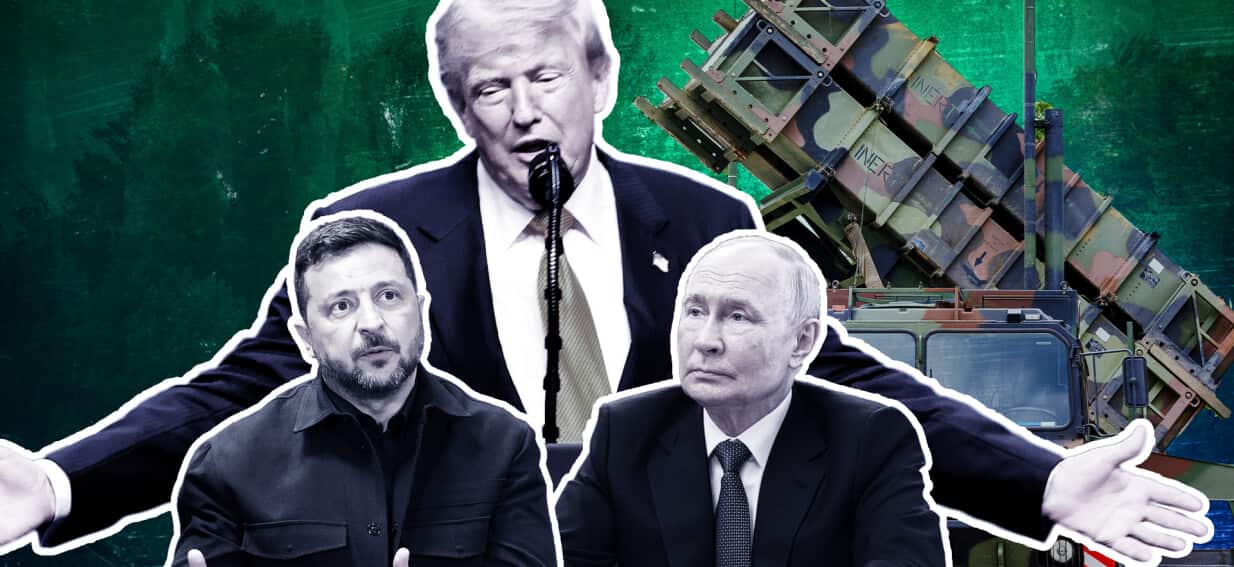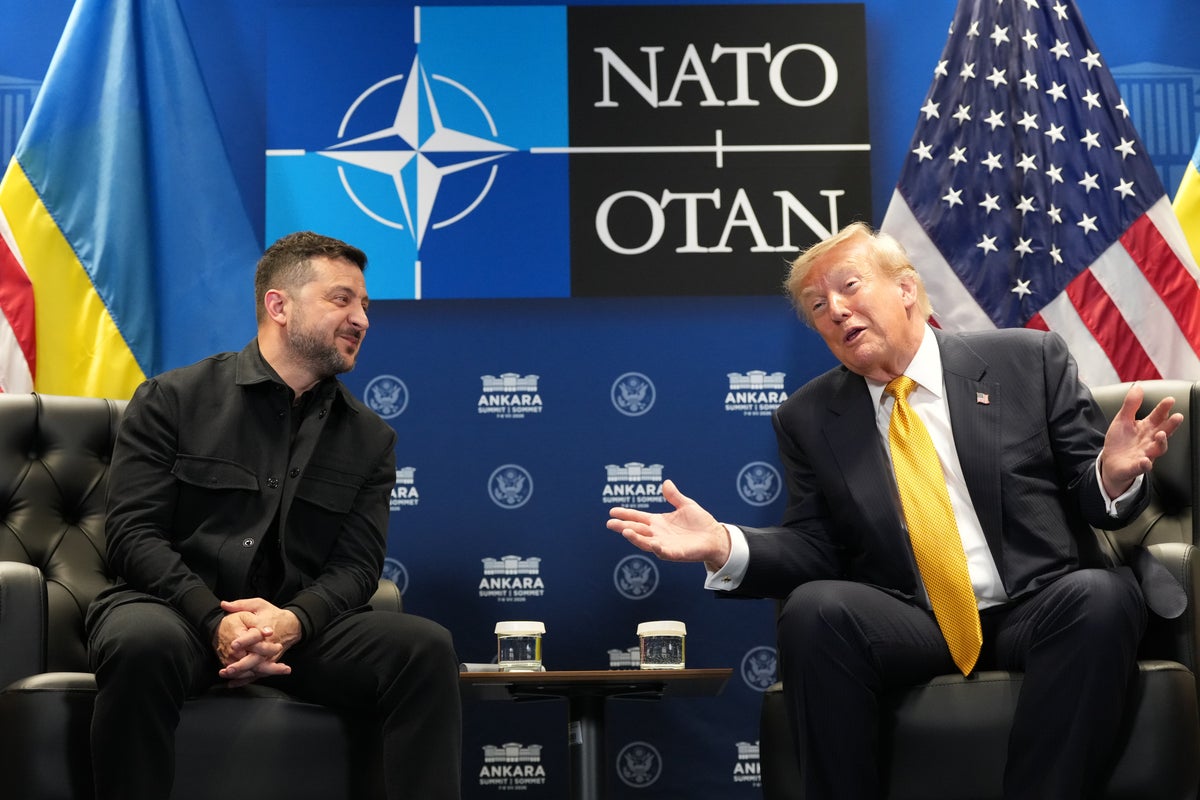
Donald Trump just handed Volodymyr Zelensky a diplomatic victory that is practically useless on the battlefield. Standing alongside the Ukrainian president at the NATO summit in Ankara, Trump announced with characteristic flair that the United States would grant Ukraine a production license to build its own Patriot missile interceptors. "That's pretty cool," Trump told reporters, adding that this way Ukraine could no longer complain about U.S. shortages. But the reality behind the rhetoric is a logistical nightmare that leaves Kyiv just as vulnerable to Russian ballistic strikes today as it was yesterday.
The announcement ignores the grueling realities of modern defense industrial production. Hours after the declaration, it became clear that the corporate giants behind the Patriot system had not even been consulted. Trump admitted he had not informed Lockheed Martin or RTX Corporation about his plan, dismissing the oversight with a casual assurance that they would figure it out. For a nation under daily bombardment, a theoretical manufacturing license does not stop a single Russian Iskander missile.
The Illusion of Immediate Air Defense
Ukraine needs interceptors right now. Russia has spent the summer intensifying its air campaign against Ukrainian energy infrastructure and urban centers, exploiting a critical depletion of Western-supplied munitions. During recent strikes on Kyiv, Ukrainian air defenses managed to down the vast majority of incoming drones, but every single ballistic missile slipped through the net. Intercepting high-velocity, steep-trajectory ballistic targets requires the highly specialized PAC-2 or PAC-3 missiles. Ukraine has run out of them, and Washington is not eager to send more from its own dwindling stockpiles.
Trump was explicit about the reason behind the licensing pivot. The United States simply does not have enough Patriots to give away without compromising its own national security interests, especially given recent deployments in the Middle East. By shifting the burden of production to Ukraine, the administration attempts to solve a domestic supply crisis through a press release.
But building advanced air defense missiles is not like assembling drones in a converted warehouse. The Patriot system relies on a tightly wound global supply chain that is already stretched to its absolute limit. Proclaiming that Ukraine can simply manufacture these weapons overlooks the fact that the underlying industrial base is failing to meet current global demand.
The Four-Year Blueprint and the German Precedent
To understand why Trump's promise rings hollow, look at Germany. Raytheon and MBDA Missile Systems established a joint venture to produce Patriot missiles in Europe, obtaining the necessary licenses under strict regulatory oversight. Germany is a stable, highly industrialized nation at peace, yet its production line is not expected to deliver its first interceptor until 2028. It takes four years under ideal conditions to build out the precision machinery, source the specialized components, and train the technicians required to handle complex solid-fuel rocket motors and radar-guidance arrays.
Ukraine does not have four years of quiet preparation. The moment construction begins on a high-tech defense facility inside Ukraine, it becomes the highest priority target on the Russian General Staff's strike list.
The Security Dilemma of Domestic Production
- Target Acquisition: Russia possesses satellite reconnaissance and active intelligence networks inside Ukraine that can pinpoint heavy industrial construction within days.
- Resource Diversion: To protect a nascent Patriot factory from being destroyed before it produces a single missile, Kyiv would have to deploy its few remaining active Patriot batteries to guard the construction site.
- The Paradox: Ukraine would have to strip air defenses away from major cities and front-line troops to protect an empty factory that will not yield a usable weapon for years.
Unnamed sources familiar with the diplomatic discussions have already suggested that the missiles might actually have to be manufactured in Germany or Poland to avoid Russian airstrikes. If the production occurs outside Ukraine, the entire narrative of a sovereign Ukrainian manufacturing breakthrough collapses. It merely becomes another prolonged European industrial project, burdened by international bureaucracy and financial disputes.
Corporate Resistance and Intellectual Property Realities
Defense executives in Washington did not greet Trump's announcement with enthusiasm. For Lockheed Martin and RTX Corporation, the Patriot system represents billions of dollars in proprietary technology and decades of research and development. The U.S. government owns significant rights to the technology, but the private contractors control the actual manufacturing processes, specialized tooling, and trade secrets required to make the systems function.
The defense industry operates on long-term capital investments and predictable contracts. Forcing these companies to hand over blueprints to a foreign nation during an active conflict introduces an unprecedented level of corporate risk.
U.S. Patriot Interceptor Stockpile Depletion (Estimated)
[██████████████████░░░░░░░░░░] 60% Remaining
*Significant portions expended in Middle East operations and Ukraine aid since 2022. Full replenishment not projected until 2029.
The risk of intellectual property theft or capture by enemy forces is a constant concern for Pentagon planners. If a manufacturing facility inside Ukraine were compromised, or if a partially completed missile assembly fell into Russian hands during a successful offensive, Moscow would gain access to the crown jewels of Western air defense. Russian engineers could reverse-engineer the guidance systems, developing counter-measures that would render the entire NATO air defense umbrella obsolete overnight. This is not a hypothetical concern for the defense contractors; it is a clear danger to their core business model and Western security architecture.
Moscow Drops the Euphemisms
The reaction from the Kremlin was immediate and cold. Just days before the Ankara summit, Kremlin spokesperson Dmitry Peskov explicitly abandoned the term "special military operation," declaring that Russia is now in a "real war" because of Western intervention. Trump's move, despite its lack of immediate practical utility, has been seized upon by Russian state media as definitive proof that Washington is deepening its involvement in the conflict.
Russian Foreign Minister Sergey Lavrov blasted the administration, claiming the United States has disqualified itself from acting as an honest broker for peace. This marks a sharp shift in tone from early summer, when the Kremlin expressed quiet optimism that a second Trump term might lead to a swift, Moscow-favorable settlement.
Instead, the Kremlin faces an American administration that is praising Ukrainian long-range drone strikes on Russian oil refineries. Trump openly embraced the escalation in Ankara, arguing that pressure could force Putin to the negotiating table. By combining this aggressive rhetoric with the Patriot announcement, the administration has alienated its contacts in Moscow without giving Kyiv the actual hardware needed to survive the resulting Russian anger.
The Real Winner of the Ankara Summit
If the Patriot license is a phantom weapon, the broader diplomatic theater in Ankara still tells a significant story. Zelensky walked into the meeting facing a historically volatile U.S. president who had previously accused him of gambling with World War III. He walked out with public praise, an open door for defense cooperation, and a potential deal for the United States to purchase Ukrainian-made combat drones.
Ukraine has become a global leader in low-cost, highly effective drone warfare. Trump's interest in buying Ukrainian drones shows that the transactionality of American foreign policy can cut both ways.
"We would buy their drones, and we make drones, we make great drones, but they have an ability to make a lot of them," Trump remarked during the press conference.
This dynamic reveals the true nature of the current U.S.-Ukraine relationship. It is no longer based on shared democratic idealism, but on hard-nosed utility. Trump likes defensive weapons because they look less escalatory on paper, and he likes deals where the United States can acquire cheap, combat-tested technology.
The Logistics Crisis Nobody Wants to Face
The fundamental problem remains unsolved. The Center for Strategic and International Studies notes that the United States has expended nearly half of its own Patriot interceptor stockpiles, and the current domestic production rate cannot keep pace with global consumption. It will take until at least 2029 for American factories to fully replenish what has been lost.
Dangling a license before a beleaguered ally is a brilliant political move. It quietens congressional critics who demand more aid for Ukraine, and it allows the administration to claim it is giving Kyiv everything it asked for. If Ukraine continues to suffer devastating missile strikes, the blame can be shifted away from Washington and onto the slow pace of Ukrainian industrial implementation.
The defense industry cannot be run by political decree. Until the factories are built, the supply chains secured, and the defense contractors fully integrated into the plan, the Patriot license remains a piece of paper. Ukraine continues to fight a twentieth-century industrial war with twenty-first-century promises, while the missiles keep falling on Kyiv.