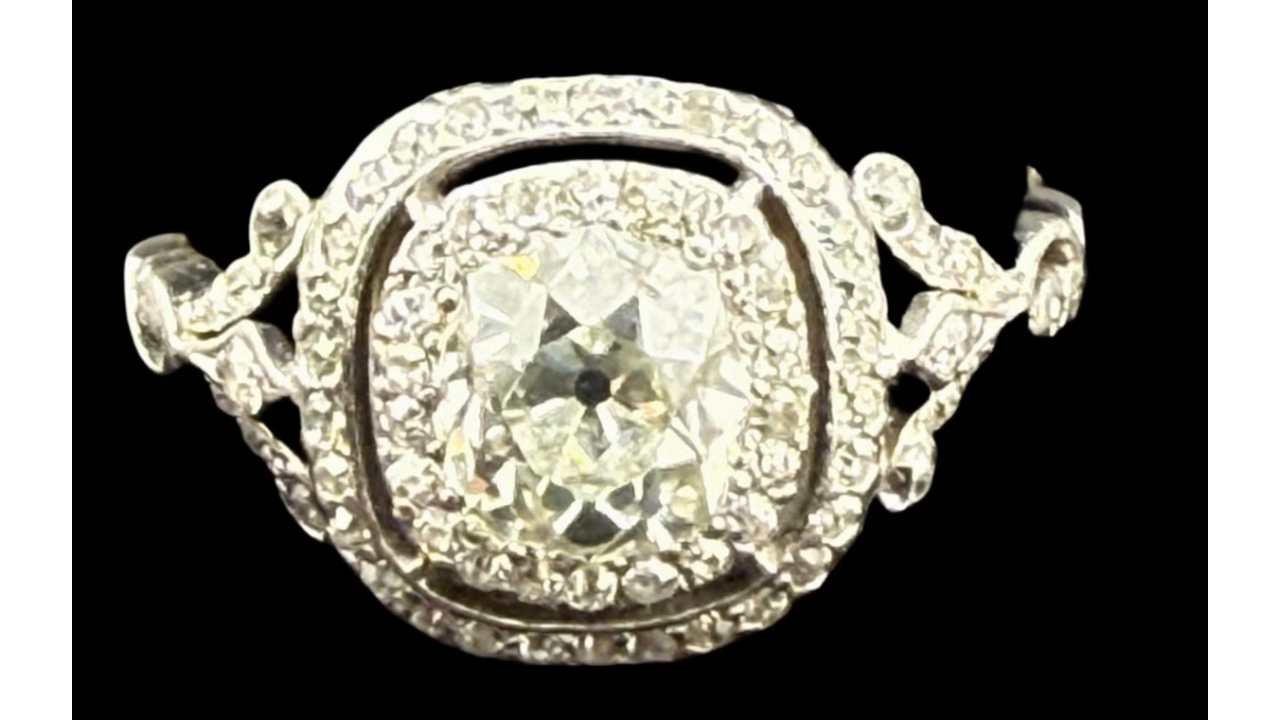
A rare diamond ring owned by Titanic survivor Lucy, Lady Duff Gordon, fetched £150,000 at auction after staying in her family for generations. The sale underscores a grim reality in high-end memorabilia markets: tragic history creates unmatched commercial value. While standard early 20th-century jewelry struggles to command five-figure sums, direct provenance tied to the 1912 maritime disaster amplifies market valuations exponentially. Collector interest remains driven not merely by gemological quality, but by the dark romance of surviving history’s most famous shipwreck, transforming personal heirlooms into liquid, high-yield historical assets.
The Cold Math of Disaster Collecting
Feminist pioneer, fashion trailblazer, and high-society tastemaker Lucy, Lady Duff Gordon—known professionally as "Lucile"—was already a titan before she stepped onto the deck of the RMS Titanic. Yet in the auction room, design heritage takes a back seat to survival.
Art history places Lucile as a visionary who liberated women from restrictive corsetry, introduced the concept of the modern catwalk show, and dressed international royalty. But strip away the Titanic connection, and early Edwardian jewelry of similar craftsmanship typically clears £10,000 to £20,000 at top auction houses. The staggering £150,000 hammer price reveals a 600 percent premium attached strictly to the April 15, 1912 tragedy.
Memories fade. Provenance endures.
The market for disaster artifacts operates on a distinct set of rules compared to standard fine art or vintage jewelry. When evaluating items from famous catastrophes, traditional appraisal metrics—carat weight, metal purity, designer signature—become secondary considerations. Auction houses look at three primary drivers:
- Direct proximity to the event: Items carried on board or retrieved from survivors carry maximum valuation.
- Generational chain of custody: Unbroken family ownership eliminates authentication disputes.
- The narrative weight of the owner: Prominent historical figures amplify the baseline catastrophe premium.
The Shadow of Lifeboat Number One
To understand why this specific ring captured global attention, one must look past the sparkle of the diamonds into the fierce controversy that trailed Lady Duff Gordon for the rest of her life.
Lady Duff Gordon and her husband, Sir Cosmo Duff Gordon, escaped the sinking vessel on Lifeboat No. 1. The craft had a capacity of 40 people. It launched with only 12 passengers aboard—seven crew members and five wealthy aristocrats.
Public outrage erupted almost immediately upon their rescue by the Carpathia. Accusations swirled that Sir Cosmo had bribed the crew members five pounds each not to return for swimmers freezing in the North Atlantic. Though the British Inquiry ultimately cleared the couple of wrongdoing, concluding the money was a charitable gift to crewmen who had lost all their belongings, the court of public opinion was far less forgiving. The moniker "Money Boat" stuck forever.
That scandal infused every asset tied to the Duff Gordons with a complex, tabloid-fueled notoriety. When a piece of jewelry sits on a velvet display cushion in a contemporary showroom, buyers are not just purchasing gold and stone. They are buying a physical link to a infamous moment of human drama, moral dilemma, and survival guilt.
How Tragedy Replaces Gemology
Consider the physical object itself. Edwardian ring design favored delicate platinum settings, milgrain borders, and lace-like openwork. It was an era of understated elegance.
Had this ring belonged to an anonymous duchess who died peacefully in her sleep at an estate in Surrey, it would serve as an interesting note in a catalog of period jewelry. It would be priced for its metal, the clarity of its center stones, and its stylistic representation of the pre-war period.
Instead, the market treats the item as a primary historical source.
Standard Edwardian Ring Valuation Path:
Materials + Craftsmanship + Brand/Maker = Base Auction Estimate

Titanic Provenance Valuation Path:
Base Estimate x Historical Trauma Multiplier x Unbroken Chain of Custody = Realized Hammer Price
This math explains why damaged pocket watches stopped at 2:20 AM sell for six figures, or why faded menus listing the final lunch aboard ship command prices higher than rare Renaissance prints. Trauma converts mundane objects into secular relics.
The Ethics of Monetizing Catastrophe
Privately held historical artifacts present an ongoing dilemma for families and collectors alike. For generations, the Duff Gordon ring remained tucked away in family safes, handed down as a personal connection to a terrifying night.
Holding onto family heirlooms eventually clashes with economic realities. Estate taxes, wealth redistribution among heirs, and skyrocketing insurance premiums force long-held treasures into the public square.
When private items transition to public auctions, institutional buyers often find themselves outbid by private collectors. Museums struggle with tight acquisition budgets, meaning objects of profound historical interest routinely disappear into private safe-deposit boxes or residential vaults.
This private hoarding of history raises uncomfortable questions:
- Access: Does private ownership rob the public of tangible touchpoints to historical events?
- Preservation: Are private collectors equipped to maintain fragile century-old textiles, metals, and papers compared to archival institutions?
- Commericalization: Where does legitimate historical preservation end and the exploitation of human suffering begin?
There are no clean answers. The market does not concern itself with ethics; it concerns itself with scarcity.
The Future of the Titanic Speculative Market
The pool of authentic items directly connected to the Titanic is shrinking. As time moves forward, items held in long-term family trusts are either donated to public archives or sold off to settle complex multi-generational estates.
Fewer items entering the market means prices will continue their upward trajectory. Investors now view historical artifacts of this caliber as alternative assets—hedge instruments against inflation that carry zero correlation to traditional stock markets. A rare diamond ring tied to a world-altering disaster retains its cultural currency regardless of global interest rate shifts or real estate cycles.
Lady Duff Gordon built a global fashion empire on flair, spectacle, and an acute understanding of human desire. She understood the power of a strong narrative better than most of her contemporaries. It is a striking twist of fate that more than a century after the night that defined her legacy, her personal belongings continue to command the spotlight, proving that in the theater of high-stakes auctions, tragic history remains the ultimate luxury item.