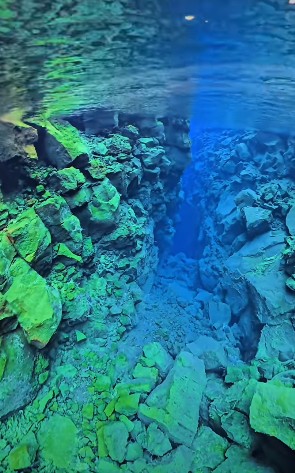
The Brutal Truth About Swimming Between Tectonic Plates
Water temperature hovers at a punishing two degrees Celsius. Visibility stretches past one hundred meters through glacial meltwater so pure it filters through underground lava fields for decades before emerging. Swimming between tectonic plates in Iceland's Silfra fissure sounds like an ethereal bucket-list adventure on social media, yet the physical reality involves immediate sensory shock, restrictive drysuits, and an unforgiving environment where survival requires strict adherence to safety protocols.
Thousands of travelers flock to Thingvellir National Park every year to drift along the exact boundary where the North American and Eurasian continental plates slowly pull apart. Travel blogs romanticize the experience as a magical glide through crystal-clear blue voids. They fail to mention the bone-deep chill that sets in within minutes, the heavy gear that turns simple movement into physical labor, or the precise geological mechanisms that created this flooded fault line.
The Mechanics of a Continental Rift
Geology rarely offers such clear, visible proof of its subterranean violence. The Atlantic Ocean expands by roughly two centimeters every year as the North American plate drifts west and the Eurasian plate marches east. This constant, grinding separation creates massive structural fractures across the Earth's crust.
Silfra represents just one of several fissures slicing through Thingvellir. Most fractures remain dry, choked with loose rock and vegetation. Silfra filled with water because it intersects an underground spring fed by the Langjokull glacier, situated roughly fifty kilometers away.
Meltwater trickles down into porous volcanic basalt. The stone acts as a natural filtration system over a journey lasting between thirty and one hundred years. By the time the water reaches the subterranean chambers feeding Silfra, all suspended particles have vanished. This absolute purity explains the astonishing optical clarity. Divers and snorkelers look down into a subterranean abyss that feels less like a body of water and more like floating in mid-air.
Yet beauty masks extreme hostility. The water temperature stays locked between two and four degrees Celsius year-round. Human skin exposed directly to these conditions suffers rapid loss of function. Numb lips, aching fingers, and involuntary muscle spasms occur almost immediately without proper thermal insulation.
Preparing for the Cold
No one swims Silfra in a traditional bathing suit. Attempting open-water immersion here without specialized heavy gear borders on suicidal due to the high risk of rapid-onset hypothermia.
Participants must squeeze into drysuits. Unlike wetsuits, which trap a thin layer of water against the skin to be warmed by body heat, drysuits seal the wearer inside a waterproof barrier. Heavy thermal undersuits provide the primary insulation. Thick latex gaskets squeeze tightly around the neck and wrists to prevent water ingress.
The physical transition from civilian to polar explorer involves awkward choreography. Boots are integrated into the suit, making walking feel like wading through mud. Neoprene gloves keep hands dry, but they inflate with air and reduce dexterity. Adjusting a snorkel mask or clearing a regulator requires patience when fingers lose their fine-motor control within minutes of immersion.
Buoyancy control presents another hidden hurdle. The thick thermal layers trap immense volumes of air. Without proper weighting, snorkelers bob on the surface like corks, unable to descend beneath the ripple line to inspect the narrow canyon walls up close. Guides force participants through rigid safety briefings for good reason. A minor gear leak means freezing glacial water floods the undersuit, ending the excursion instantly.
The Reality of the Drift
Once in the water, the sensory overload takes over. The current moves at a gentle pace, roughly one kilometer per hour, carrying swimmers down a narrow gorge roughly sixty meters long known as the Big Crack.
To the left stands the jagged rock face of the North American continent. To the right rises the Eurasian plate. Geologically, you float in a no-man's-land of aquatic void, suspended directly above the Mid-Atlantic Ridge.
The light dances across the rocky floor in sharp, cobalt patterns. Sunlight penetrates deep into the canyon, revealing every nuance of the volcanic rock formations left behind when the valley collapsed during earthquakes centuries ago. Algae struggles to grow in the mineral-poor, freezing water, preserving the stark, metallic gray and black tones of the basalt.
Panic often strikes novice participants during the first minute. The cold air trapped inside the drysuit shifts unpredictably, and the sensation of absolute weightlessness combined with bottomless visibility can trigger vertigo. Experienced guides watch the group closely, scanning for erratic breathing patterns or panicked hand signals. Those who manage to calm their nervous systems discover a haunting silence. Surface noise disappears entirely, replaced only by the steady rhythm of one's own breath echoing inside the regulator or snorkel tube.
Beyond the Viral Snapshot
Social media transforms rare geological events into commodified backdrops for digital clout. Short-form videos highlight smiling travelers holding waterproof cameras in front of azure chasms, captioning the moment with effortless enthusiasm.
The industry built around Silfra manages high volumes of tourists with military precision. Tour operators run groups through strict departures every single day, matching gear sizes, checking drysuit seals, and herding participants along wooden boardwalks before they drop into the current. The commercialization of extreme environments creates an illusion of safety. People assume that because a tour company provides the gear and charges an admission fee, the environment has been tamed.
Nature refuses domestication. The water remains brutally cold. The rock walls remain jagged and unyielding. A broken seal on a drysuit delivers an unromantic, immediate reminder that you are swimming in melted ice perched atop an active continental rift zone.
Respect for the environment separates those who appreciate the geology from those who merely collect a photograph. Understanding the centuries-long journey of the water, the slow grinding pull of the tectonic plates beneath your floating body, and the absolute intolerance of the subarctic cold transforms a simple tourist excursion into a sobering encounter with planetary scale.
The lips still go numb. The fingers still ache. But beneath the surface spectacle lies a rare, unfiltered window into the violent, beautiful machinery of a living planet tearing itself apart.