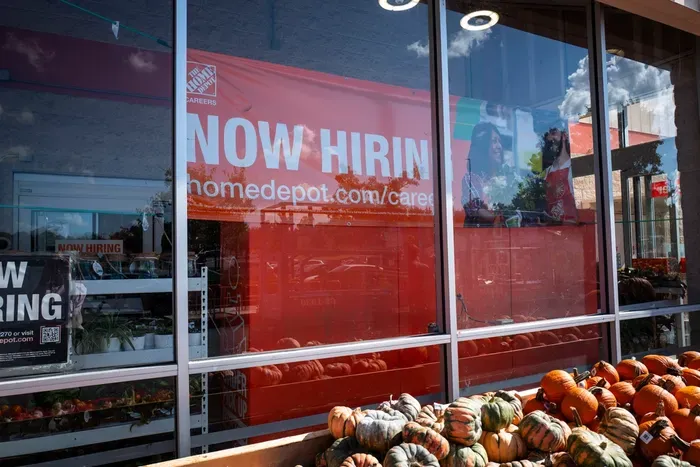
The upcoming March jobs report will likely show a surface-level strength that masks a deepening structural rot in the American labor market. While economists and talking heads focus on the headline nonfarm payroll number—expected to hover between 200,000 and 230,000—the real story lies in the erosion of full-time stability and the surge of "ghost" job listings that distort the reality of the hunt. We are witnessing a divergence where the data looks healthy on a spreadsheet, but the actual experience of workers and recruiters on the ground is one of friction and mounting anxiety.
The Mirage of Payroll Growth
For months, the Bureau of Labor Statistics (BLS) has released numbers that exceed expectations, only to quietly revise them downward weeks later. This isn't necessarily a conspiracy, but it is a failure of modern modeling to capture a post-pandemic economy that refuses to follow the old rules. In March, we expect to see another "beat" driven by sectors like healthcare and government.
However, these figures ignore the quality of the work. If you lose a $95,000 corporate role and take two part-time service jobs to keep your mortgage current, the BLS counts that as a net gain of one job. The economy didn't get stronger. You just got more tired. This "hustle-inflation" is the silent engine behind the resilience everyone keeps praising.
The household survey, which often paints a grimmer picture than the establishment survey, has shown a persistent decline in full-time employment over the last six months. Pay attention to the gap between these two data sets in the March release. If payrolls go up while the number of people holding full-time jobs goes down, the "strong" labor market is a statistical illusion.
The Ghost Listing Epidemic
Ask anyone looking for work right now, and they will tell you the same thing: the market feels dead. Yet, job boards are flooded. This is the era of the ghost listing. Companies keep ads live to project growth to investors, to keep a "talent bench" warm, or to placate overworked internal staff by making it look like help is on the way.
Internal data from recruiting firms suggests that up to 30% of active listings have no immediate intent to hire. When the March report drops, the "job openings" or JOLTS data will be used to argue that there are still 1.4 jobs for every unemployed person. That ratio is a lie. It relies on the assumption that every digital posting represents a vacant desk and a budget to fill it. In reality, the "hidden" unemployment rate—those who have given up or are trapped in roles far below their skill level—is ticking upward.
The White Collar Recalibration
Software engineering, middle management, and administrative roles are taking a quiet beating. The "Year of Efficiency" that started in Big Tech has spread like a virus to finance and manufacturing. Companies are not just laying people off; they are deleting the roles entirely.
When you see the March unemployment rate—likely to stay around 3.8% or 3.9%—understand that this number is suppressed by people falling out of the labor force entirely or transitioning into the "1099" economy. The gig economy has become the ultimate safety net, but it’s a net made of thin glass. It provides no benefits, no path to promotion, and zero stability.
Wages vs The Cost of Existing
The Federal Reserve is obsessed with average hourly earnings. They want to see wage growth cool to around 3% to 4% to feel confident that inflation is dead. From their 30,000-foot view, rising wages are a "risk." For the person paying $2,400 for a two-bedroom apartment, those same rising wages are a lifeline that is currently being cut.
The March report will likely show wage growth cooling. The Fed will cheer. The worker will lose. We are entering a phase where "real" wages—pay adjusted for the actual cost of living, not just a basket of consumer goods—are stagnating again. The cost of insurance, childcare, and housing remains stubbornly high, regardless of what the price of a gallon of milk does.
The Seasonal Adjustment Trap
Every March, the BLS applies seasonal adjustment factors to account for the end of winter and the ramp-up of construction and retail. These filters are based on historical patterns that may no longer exist. The weather has been erratic, and consumer spending patterns have shifted permanently toward digital services over physical goods.
If the March report shows a massive spike in construction, be skeptical. High interest rates have put a chokehold on new residential starts. Any "growth" seen there is likely a statistical artifact or a temporary blow-off of backlogged projects, not a sign of a blossoming industry.
Why the Participation Rate is a Warning
The labor force participation rate has been stuck. While the "prime-age" participation (25-54) is decent, we are seeing a mass exodus of older workers who are retiring because they’ve been pushed out, and a worrying delay in younger workers entering the fray.
The lack of movement here suggests a stagnant pool. If people aren't moving between jobs, the economy loses its dynamism. We are seeing a "lock-in" effect where people stay in jobs they hate because they are terrified of the "ghost" market outside. This kills productivity. A workforce that is too scared to quit is a workforce that isn't innovating.
Small Business Stress
Small businesses are the traditional engine of March hiring. This year, they are the canary in the coal mine. Access to credit has dried up as regional banks tighten their belts. If the March report shows a contraction in hiring for firms with fewer than 50 employees, it’s a signal that the broader economy is finally feeling the weight of the Fed's rate hikes.
Large corporations have the cash reserves to weather a storm; the local hardware store or the boutique marketing agency does not. When small businesses stop hiring, the "soft landing" narrative starts to look like a controlled crash.
The Global Context
We cannot look at the U.S. March report in a vacuum. China is exporting deflation, and Europe is flirting with a recession. The U.S. labor market is currently the only thing keeping the global economy from a synchronized downturn. This puts an immense amount of pressure on these monthly prints.
If the March data comes in weak—truly weak, under 150,000—expect a pivot in the narrative. The "inflation is the enemy" talk will vanish overnight, replaced by a desperate scramble to prevent a spike in unemployment. The Fed is walking a razor's edge, and the March report is the wind that could knock them off.
The Real Indicators to Watch
Forget the 200k headline. If you want to know what is actually happening to the American worker, look at these three metrics on Friday morning:
- The U-6 Unemployment Rate: This includes "marginally attached" workers and those working part-time for economic reasons. It is the closest thing we have to a "misery index" for the underemployed.
- Average Weekly Hours: If this number drops, even by 0.1, it’s the equivalent of thousands of layoffs. It means employers are cutting back on hours because they don't have the demand to justify a full week.
- Permanent Job Losers: Watch if this specific category within the unemployed rises. Temporary layoffs are one thing; permanent cuts are a sign of structural retreat.
The March report isn't a scorecard for the President or a green light for the stock market. It is a snapshot of a system that is being stretched to its breaking point. The numbers will say we are fine. The reality is far more fragile.
Stop looking at the quantity of jobs and start looking at the quality of the life those jobs provide. If the jobs being created can't pay for a basic middle-class existence, then the number of them doesn't matter. You can't build a sustainable economy on a foundation of part-time gig work and ghost listings.
The Federal Reserve and the Treasury are betting that they can cool the market without breaking it. March will show that the market is already broken; we’ve just been too distracted by the headlines to notice the cracks in the floorboards. The era of easy growth is over, replaced by a grinding reality where "employment" is a technicality and financial security is a luxury.
Check the U-6 rate. It will tell you more than a thousand press releases.