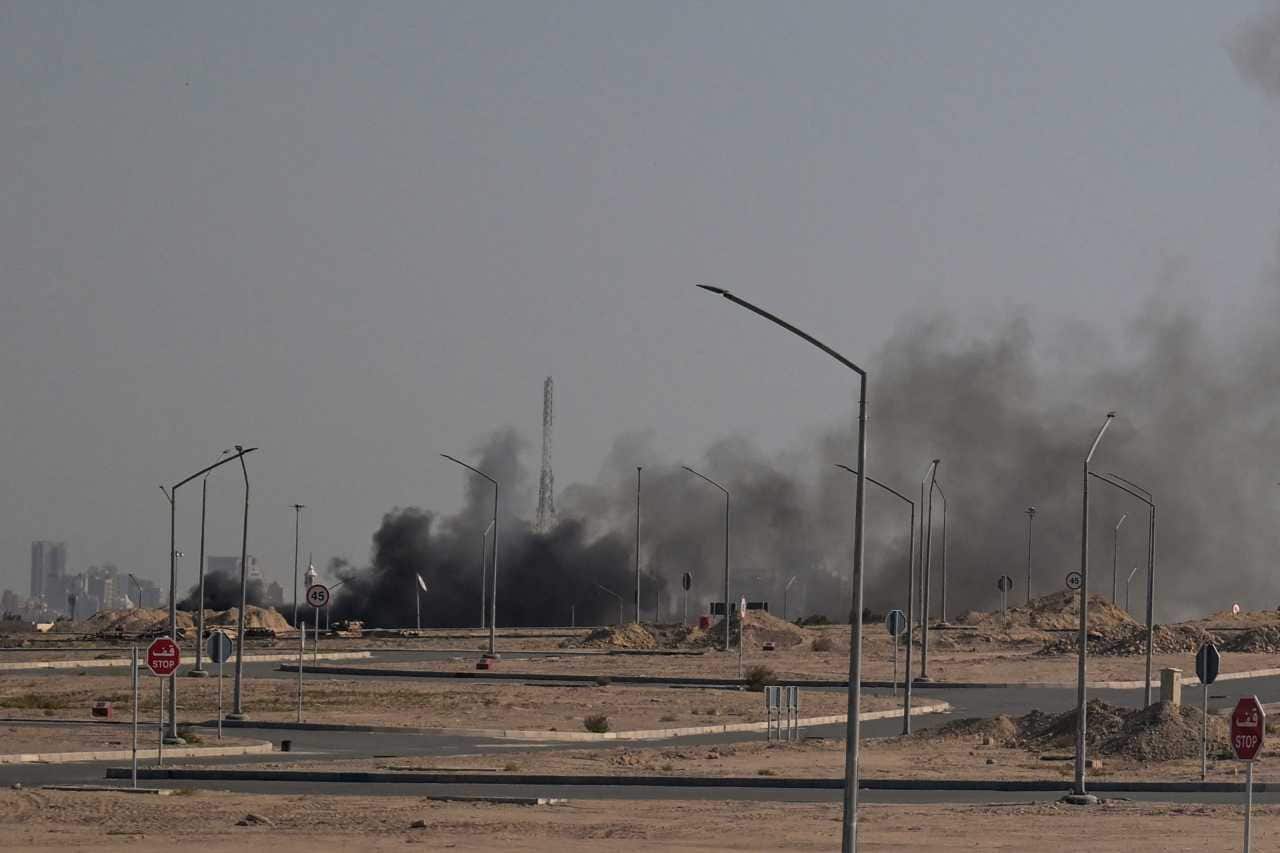
A security breach at Kuwait International Airport has left an Indian national dead, exposing deep-seated vulnerabilities in Gulf aviation infrastructure and the precarious reality of the migrant workforce keeping these hubs running. While initial reports framed the incident as an isolated security lapse, a closer look reveals a systemic failure in perimeter control and contractor oversight. The victim, an outsourced logistics worker, was caught in the crossfire of a security failure that highlights the stark divide between high-tech passenger terminals and the poorly guarded industrial zones feeding them.
This is not just a story about a localized tragedy. It is a stark reminder of how Gulf nations rely on millions of underprotected foreign laborers to maintain their global transit status, often while ignoring basic workplace safety and security protocols on the tarmac.
Breach at the Gateway
The incident occurred during the early hours of the morning at a secondary cargo access point. A lone assailant, bypassing standard biometric checkpoints used by official airport personnel, managed to enter the restricted airside zone. The target was not a commercial airliner or a passenger lounge, but the sprawling logistics and ground handling sector where hundreds of foreign nationals shift cargo, fuel planes, and manage baggage.
Security forces neutralized the attacker within minutes, but the response came too late for a thirty-four-year-old worker from Kerala, India.
Initial official statements focused heavily on the swift containment of the threat, standard public relations damage control aimed at preserving the reputation of a critical economic artery. Kuwait International Airport handles over fifteen million passengers annually and serves as a vital logistics node for the northern Gulf. Any perception of vulnerability risks damaging airline confidence and escalating insurance premiums for regional carriers.
Yet, the focus on rapid containment misses the critical question. How did an unauthorized individual penetrate a multi-layered security perimeter designed to meet international civil aviation standards?
The Airside Security Illusion
Aviation security is traditionally built on the concept of concentric rings. The outer ring consists of perimeter fencing and vehicle checkpoints, while the inner rings protect passenger boarding areas and aircraft. In many major Gulf hubs, immense financial resources are poured into the passenger-facing interior. Biometric gates, advanced X-ray imaging, and heavy police presence create an environment of absolute control.
The perimeter tells a different story.
The Vendor Vulnerability
The vulnerability often lies where the airport meets its third-party contractors. Gulf airports rely heavily on a complex web of outsourcing companies to handle everything from catering to aircraft maintenance. These sub-contractors employ thousands of low-wage workers who enter the airport through dedicated cargo gates.
- Subcontractor Churn: High turnover rates among logistics providers make consistent background checks difficult to maintain.
- Physical Weak Points: Cargo gates frequently handle heavy commercial traffic, leading to periods of congestion where security personnel may rush inspections to prevent supply chain delays.
- Asset Mismanagement: Temporary ID badges and vehicle passes are frequently used, creating opportunities for forgery or theft.
When a security system relies on underpaid contract guards to verify the credentials of underpaid contract laborers, the human element becomes the primary point of failure. The attack in Kuwait demonstrates that a perimeter is only as strong as its least scrutinized access point.
The Human Cost of High Growth
To understand why this Indian national was in the line of fire, one must examine the broader demographics of the Gulf Cooperation Council (GCC) aviation boom. India provides the largest share of the workforce for the construction, logistics, and service sectors in Kuwait. According to official diplomatic data, over one million Indian citizens reside in Kuwait, outnumbering the local citizen population in the labor force.
These workers migrate under the Kafala system, a sponsorship model that binds a worker’s legal status entirely to a single employer.
This power imbalance creates an environment where workers rarely complain about hazardous conditions or security deficits. If a ground handler feels an unlit cargo area lacks adequate security patrols, raising the issue risks termination and immediate deportation. The system rewards silence and penalizes whistleblowing.
+-------------------------------------------------------+
|                 The Kafala Dependency Cycle           |
+-------------------------------------------------------+
|  1. Worker incurs debt to recruitment agency in India |
|  2. Arrives in Kuwait under employer sponsorship       |
|  3. Works in high-risk airport logistics environment |
|  4. Unable to protest poor security without deportation|
+-------------------------------------------------------+
The Indian government has repeatedly sought to negotiate better welfare protections for its citizens in the region. Progress remains slow because the economic leverage lies squarely with the host nations, who can easily source labor from other developing economies if costs or regulatory compliance demands rise.
Regional Precedents and the Threat Landscape
This attack is not an isolated anomaly in the history of regional transit hubs. Over the past decade, airports across the Middle East have faced evolving threats that shift away from traditional hijacking toward perimeter infiltration and drone disruption.
In 2018, infrastructure attacks in the region proved that ground operations are highly susceptible to asymmetrical threats. While those incidents involved state-aligned actors using remote technology, the Kuwait breach represents a low-tech, high-impact failure. A single individual with a blade or a small firearm can cause catastrophic disruption if they reach the tarmac.
Consider the layout of a modern airfield. A passenger jet refueling on the apron is incredibly vulnerable. Thousands of gallons of highly flammable aviation fuel are pumped through ground hydrants, managed by workers who possess minimal protective gear and no means of defense. If an attacker penetrates this zone, the potential for a mass-casualty event extends far beyond the death of a single worker.
The Cost of Silence
Following the incident, the Indian Embassy in Kuwait issued a standard brief expressing condolences and promising to expedite the repatriation of the victim's remains. This predictable diplomatic choreography avoids addressing the underlying structural issues.
True security reform requires more than replacing a fence or adding a few cameras. It demands a fundamental shift in how the people who run these airports are valued and protected. Until logistics workers are integrated into the primary security framework rather than treated as a separate, disposable tier of personnel, the perimeters of these multi-billion-dollar transit hubs will remain compromised.
Aviation safety cannot be divided into first-class passengers and third-class workers. The breach in Kuwait proved that when the perimeter fails, the consequences are felt on the tarmac first.