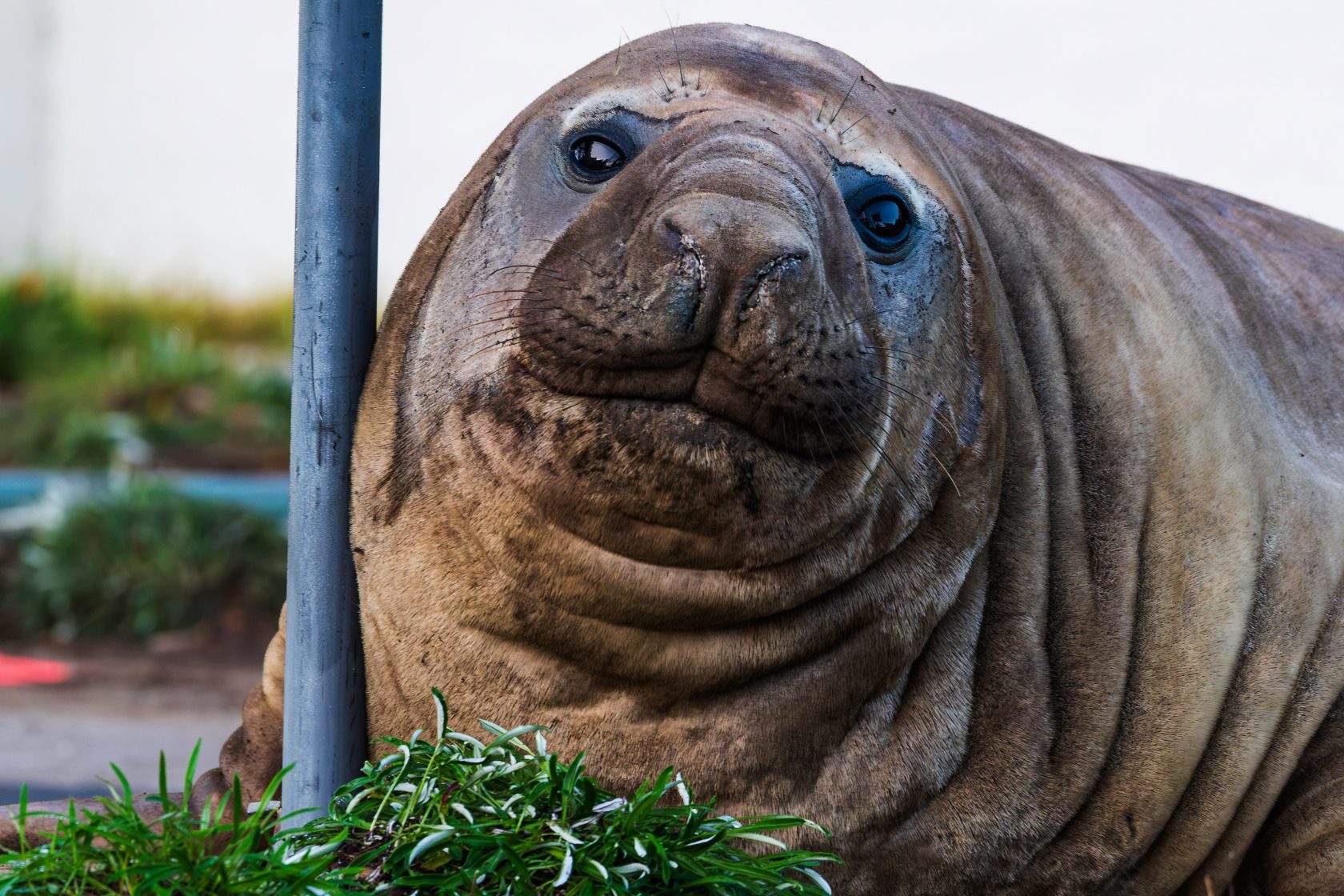
Neil, the one-ton southern elephant seal currently dominating social media feeds for flattening fences and trapping Tasmanian residents in their homes, is not a quirky local mascot. He is a displaced apex predator caught in a dangerous cycle of human entitlement. While millions of TikTok viewers laugh at footage of the five-year-old mammal play-fighting with traffic cones and denting sedans, wildlife authorities are quietly preparing for a disaster. The viral spectacle masks a stark reality: public obsession is actively pushing this animal toward a death sentence.
Behind the lighthearted headlines lies a complex ecological anomaly and a severe breakdown in wildlife management. Neil was born in southern Tasmania in October 2020. This was an geographical misstep. His species belongs thousands of kilometers south in the brutal, freezing waters surrounding sub-Antarctic islands like Macquarie and Heard. Because he lacks a map or a colony, Neil treats the coastal towns near Hobart as his personal home. He returns twice a year to rest, fast, and shed his fur during his annual moult. You might also find this similar coverage insightful: Inside the Afghan Shadow War That New Delhi and Islamabad Are Fighting.
He is completely alone.
The Isolation of a Displaced Giant
In a normal sub-Antarctic colony, a young male elephant seal spends his adolescence surrounded by hundreds of peers. They spar. They test each other's strength. They learn the brutal physics of dominance through constant, grueling social interaction. As highlighted in detailed reports by Al Jazeera, the results are widespread.
Neil has none of that.
Marine ecologists note that Neil’s infamous interactions with infrastructure are not acts of malicious destruction, nor are they endearing comedic routines. They are the desperate coping mechanisms of a lonely teenager. Lacking other young bulls to wrestle, Neil targets stationary objects. Traffic bollards, plastic cones, and the hoods of parked four-wheel drives serve as stand-ins for rivals. When onlookers film him sleeping pressed tightly against suburban fences, they are not witnessing a cute sunbather. They are looking at a social creature seeking the physical counter-pressure normally provided by a huddle of other seals.
The problem is that Neil is growing. Fast.
He currently tips the scales at roughly 1,000 kilograms. He is capable of stopping traffic simply by lying across an intersection, a feat that recently brought Seven Mile Beach to a standstill. Yet, he is still a juvenile. If Neil survives the gauntlet of adolescence—a statistical long shot, given that nearly 90 percent of male elephant seals die before reaching breeding age—he will eventually weigh up to three and a half tonnes and measure five meters in length. A one-ton seal on a suburban lawn is an administrative headache. A three-ton bull defending his territory on a public boat ramp is a lethal hazard.
The Toxic Cost of Viral Stardom
The internet has transformed Neil into an anti-authoritarian folk hero. Accounts dedicated to tracking his movements have amassed well over a million followers. This level of exposure has created an unsustainable influx of amateur paparazzi and tourists who treat a wild predator like a theme park attraction.
Wildlife biologists from Tasmania’s Department of Natural Resources and Environment are observing an alarming shift in human behavior. People are routinely violating the mandatory 20-meter safety perimeter. Some have gone so far as to carry their human infants within arm's reach of the seal to secure a photo for Instagram.
This is collective madness. Elephant seals can move with astonishing bursts of speed when agitated. They possess massive jaws, sharp teeth, and a predatory instinct that can surface instantly if they feel cornered.
The current trajectory mirrors a recent international tragedy. In 2022, a young walrus named Freya captivated onlookers in Norway by sunbathing on boats and docks. Despite repeated warnings from experts, crowds refused to keep their distance, prioritizing selfies over safety. Citing an unmanageable risk to human life caused entirely by public negligence, Norwegian authorities euthanized Freya.
Tasmanian officials have explicitly stated that euthanasia remains the absolute last resort for Neil if a member of the public is severely injured or if his habituation renders him entirely unmanageable. The fans who claim to love Neil are the ones putting the target on his back.
The Moving Bubble of Cohabitation
Managing a wandering ocean giant in a suburban environment requires an evolving strategy. Rangers currently utilize padded poles, temporary plastic barriers, and local blackouts on location data to keep crowds away. But these are temporary stopgaps for a permanent biological urge. Neil will continue to haul out on these exact beaches for the rest of his life.
A growing contingent of local advocates is pushing back against the threat of lethal intervention. They argue that the burden of adaptation must fall on humans, not the wildlife.
A viable management framework requires the implementation of dynamic, restricted-access zones. Instead of closing entire beaches or cutting off major coastal transit roads—which paralyzes local economies—authorities should enforce a strict, moving safety bubble directly around the exact coordinates Neil occupies at any given moment. Within this immediate radius, parking and pedestrian traffic from non-residents must be legally prohibited, backed by heavy fines.
This approach shifts the focus from managing the seal to managing the human population. If the public cannot be trusted to respect a wild animal voluntarily, the state must mandate that respect through law enforcement.
Neil did not choose to be born away from his kind, nor did he ask for the burden of internet celebrity. He is simply trying to exist as an elephant seal in a world paved over by concrete and cars. If we cannot adjust our infrastructure and curb our obsession with internet clout to accommodate his seasonal visits, his viral story will end exactly how Freya's did.