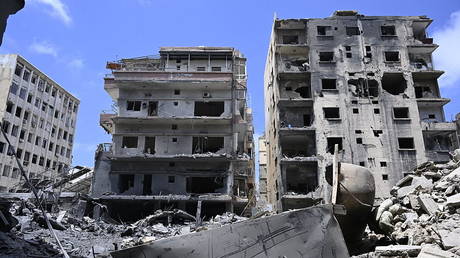
The world is burning at a rate not seen since the aftermath of the Second World War. Armed conflicts globally have reached a terrifying historic peak, driven not by a single monolithic geopolitical rift, but by the fragmentation of international authority and the monetization of localized violence. For decades, the global security framework relied on superpower deterrence and international institutions to contain brushfires. That system has broken down. Today, a toxic mix of shifting alliances, weak states, and hyper-accessible military technology means wars are easier to start, cheaper to maintain, and infinitely harder to extinguish.
The Illusion of the Long Peace
For years, mainstream geopolitics championed the idea of a declining trend in global violence. Statistical models suggested that large-scale warfare was becoming an anachronism.
That theory is dead.
The data now staring down international policymakers paints a grim picture. We are witnessing an explosion in the absolute number of active conflicts worldwide. What changed was not human nature, but the guardrails that kept state and non-state actors in check.
During the Cold War, a conflict anywhere on the map was instantly viewed through a bipolar lens. Washington or Moscow would step in, fund their proxies, but ultimately dictate the boundaries of the engagement to prevent a thermonuclear escalation. When the Soviet Union collapsed, a brief unipolar moment allowed the United States and its allies to enforce a semblance of order, however flawed and unevenly distributed.
That unipolar world has dissolved into a multipolar free-for-all. Middle powers like Turkey, the United Arab Emirates, Iran, and Saudi Arabia now project power independently, often ignoring the wishes of traditional superpowers. They fund factions, deploy advanced drone technology, and secure resource pipelines to advance their own regional agendas. This interventionism creates a layer-cake of conflict where local grievances are hijacked by regional rivalries, making peace negotiations nearly impossible.
The Fractured State and the Rise of the Entrepreneur of Violence
To understand why conflicts are proliferating, one must look at the structural decay of the nation-state itself across vast swaths of the global south. A sovereign state requires a monopoly on the legitimate use of physical force. In dozens of countries, that monopoly has evaporated.
Instead of traditional armies clashing across defined borders, modern conflict is characterized by fluid, asymmetric warfare involving a dizzying array of actors. Cartels, ethnic militias, religious extremists, and private military corporations operate simultaneously.
- The Privatization of Force: Private military companies offer state-level capabilities to the highest bidder, divorced from any democratic accountability or treaty obligations.
- Logistical De-escalation Barriers: In the past, running a rebellion required a massive state sponsor to provide tanks, heavy artillery, and secure communication networks. Today, a few thousand dollars can purchase commercial off-the-shelf drones, encrypted satellite communication terminals, and 3D-printed weapon components.
- Criminal Franchising: Insurgent groups no longer rely solely on ideological fervor or foreign handouts. They fund their operations through illicit mining, drug trafficking, human smuggling, and cyber extortion.
When war becomes profitable, the incentive to achieve peace disappears. For a warlord in the Sahel or a militia commander in the eastern Democratic Republic of Congo, a functioning state is a financial threat. Conflict is their business model. They are entrepreneurs of violence, and business is booming.
The Paralysis of the International Machinery
At the center of this systemic failure sits the United Nations Security Council, an institution explicitly designed in 1945 to prevent the resurgence of global conflict. It is currently locked in a state of permanent paralysis.
The veto power, once used as a tool of last resort to prevent direct superpower confrontation, has become a mechanism for impunity. Major powers routinely block resolutions aimed at curbing atrocities or enforcing ceasefires when those actions conflict with their strategic interests or those of their client states.
This institutional deadlock has stripped the international community of its primary tool for conflict resolution. Peacekeeping missions are sent into environments where there is no peace to keep, armed with mandates that restrict them to being passive observers of their own irrelevance. Regional bodies, such as the African Union or ASEAN, are frequently hamstrung by internal divisions and a rigid adherence to the principle of non-interference, leaving a diplomatic vacuum that is quickly filled by ammunition shipments.
Technology as a Force Multiplier for Chaos
The nature of hardware used in modern warfare has drastically altered the cost-benefit analysis of aggression. The democratization of precision strike capabilities has leveled the playing field between institutional militaries and irregular forces.
Consider the deployment of low-cost loitering munitions. A decade ago, executing a precise kinetic strike on critical infrastructure hundreds of miles away required a billion-dollar air force and a sophisticated logistics train. Today, a militia can launch a swarm of suicide drones manufactured using consumer electronics and fiberglass.
This technological shift does more than just alter tactical outcomes on the battlefield; it fundamentally shifts psychology. It lowers the barrier to entry for entering a war. Governments and rebel groups alike now believe they can achieve rapid, decisive victories through technological asymmetric advantages. They are almost always wrong, and the result is a grinding war of attrition that bleeds civilian populations dry.
The information environment has also been weaponized to sustain conflict. Algorithmic amplification on social media platforms allows combatants to radicalize populations, spread disinformation, and recruit fighters globally at zero cost. Wars are fought simultaneously in the mud and on the server. Cyber warfare routinely targets civilian infrastructure—power grids, hospitals, financial systems—expanding the theater of war far beyond the physical front lines.
The Human and Economic Toll of Permanent Instability
The macro-level statistics of conflict tell only half the story. The compounding effect of these simultaneous wars is pushing the global humanitarian infrastructure to its absolute breaking point.
Displacement figures have shattered every record set since the mid-twentieth century. Millions of people are on the move, fleeing violence that offers no prospect of a peaceful resolution. This mass migration strains the resources and political stability of neighboring countries, creating a domino effect of radicalization and economic hardship that can trigger fresh conflicts down the line.
Global Conflict Metrics: A Downward Trajectory
+-----------------------------------+-----------------------------------+
| Metric                            | Current Status                    |
+-----------------------------------+-----------------------------------+
| Active State-Based Conflicts      | Highest since 1945                |
| Civilian Casualties from Explosives| Increasing exponentially          |
| UNHCR Displaced Persons Count     | Exceeding 120 million             |
| UN Humanitarian Funding Gap       | Widening to unprecedented margins |
+-----------------------------------+-----------------------------------+
International aid budgets are completely inadequate to meet the demand. Funds are diverted from long-term development goals to emergency survival operations, trapping entire regions in a cycle of dependency and despair. The destruction of agricultural networks and the blockading of trade routes have weaponized hunger on a scale that international law is powerless to stop.
The Failure of Conventional Diplomacy
The traditional playbook for ending wars is obsolete. Diplomats still operate under the assumption that conflicts can be resolved by getting the main leaders into a room, signing a treaty, and shaking hands. This approach fails to recognize the decentralized nature of modern violence.
Signing a peace agreement with a nominal rebel leader means nothing if that leader cannot control the various factions, criminal elements, and local commanders operating under their banner. Furthermore, traditional mediation fails to account for the external spoilers—the regional powers providing covert funding, or the transnational corporations extracting cheap resources from conflict zones.
Sanctions, the preferred diplomatic weapon of the West, have proven largely ineffective at stopping wars. Instead of crippling regimes, comprehensive sanctions often foster black markets, enrich corrupt elites who control smuggling routes, and devastate the civilian population. Authoritarian regimes have built sophisticated networks to bypass financial restrictions, trading gold, narcotics, and oil outside the Western financial system.
The international community must face the uncomfortable reality that the current global security architecture cannot fix this crisis because it is built on assumptions that no longer apply to the modern world. The global surge in conflict is not a temporary blip or a collection of isolated unfortunate events. It is the predictable output of a systemic structural failure. Until the underlying mechanisms of state fragility, unaccountable regional intervention, and the financial profitability of warfare are directly confronted, the list of active combat zones will continue to grow, and the post-WWII ideal of collective security will remain a historical footnote.


