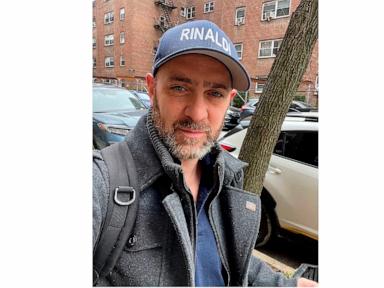
The arrest of a political candidate for deploying synthetic media marks a dark milestone in American elections. On June 24, 2026, Queens prosecutors arrested Jonathan Rinaldi, a perennial candidate who ran for New York City Council last year, charging him with multiple counts of forgery and criminal possession of a forged instrument. He did not just stretch the truth. He allegedly used generative software to completely fabricate endorsements from local public schools, police precincts, and established media outlets, creating an alternate reality for unsuspecting voters. This is the first time a candidate faces prison time for manufacturing campaign materials with artificial intelligence.
The case exposes a massive gap in how our legal system handles automated deception. For years, experts warned that synthetic software would distort presidential races. They looked in the wrong place. The real damage is happening at the hyper-local level, where community news outlets are thin, campaign budgets are small, and a single deepfake can alter the balance of power.
The Prompt Engineering of a Criminal Charge
Political theater has always relied on exaggeration, but the charges against Rinaldi reveal a deliberate pivot into outright forgery. According to the Queens District Attorney, Rinaldi did not just post misleading memes. He actively instructed software platforms to alter reality.
Subpoena records and search warrants paint a clear picture of how the 47-year-old candidate operated behind his keyboard. In October 2025, Rinaldi allegedly pulled a legitimate photo from a rival’s social media account, which showed a routine meeting with city sanitation officers. He then ordered Google Gemini to superimpose that image onto a completely fake article bearing the masthead of the Amsterdam News.
The instructions were explicit. He told the software to change the headline to suggest his opponent was being questioned by police. When the program made a typo, he typed in a correction, demanding the tool fix the spelling to make the smear look authentic.
He went further. He targeted local institutions that are legally barred from participating in political campaigns.
The prosecution’s complaint details how Rinaldi uploaded AI-generated videos that appeared to show police officers from the 112th Precinct and young children from P.S. 101 making formal statements supporting his candidacy. To an ordinary voter scrolling Facebook on a Tuesday night, the videos looked like standard campaign dispatches. They were entirely fake. The officers did not exist. The children’s voices were synthesized by an algorithm.
The Myth of the Sophisticated Deepfake
We often assume that political disinformation requires state-sponsored hacker groups or million-dollar labs. It does not. The tools used in the Queens race are available to anyone with an internet connection and a credit card.
Rinaldi allegedly used Sora, an advanced video generation application, to blast out a post claiming his opponent had suddenly dropped out of the race. He typed a few lines, hit enter, and watched the software build a fictional breaking news broadcast complete with simulated anchors and scrolling tickers.
This is cheap deception. It is fast, efficient, and requires zero technical skill.
When local reporters first confronted Rinaldi about the obviously distorted images last year, he used a classic modern defense. He claimed his accounts were hacked. Then he kept posting them. After his arrest, he shifted his defense to the First Amendment, telling reporters outside the courthouse that the prosecution was an attack on free speech.
He is wrong. The law has long established that the First Amendment does not protect forgery or the fraudulent duplication of official corporate logos and government branding.
By plastering the logos of the New York Post, CNN, and the Daily News onto his manufactured articles, Rinaldi crossed from political hyperbole into criminal territory. He even utilized face-swapping software to paste his own face onto old photographs, making it look like he was shaking hands with former elected officials who had never met him.
Local Politics is Uniquely Vulnerable
National campaigns have teams of lawyers, rapid-response press operations, and millions of dollars to combat false narratives. Local races have none of these protections. A candidate for City Council or State Assembly might only have a handful of volunteers and a shoestring budget.
In these small-scale environments, voters rely heavily on trusted local institutions. A perceived nod from the local police precinct or a neighborhood public school carries immense weight. When a candidate fakes those nods, they poison the well of local trust.
The Queens Jewish Alliance discovered this firsthand when Rinaldi allegedly took their authentic endorsement sheet, digitally erased the name of the incumbent candidate, and typed his own name into the slot before sharing the forged document across Instagram and Facebook. The organization scrambled to issue corrections, but the digital lie had already traveled far beyond their email list.
The structural decay of local journalism makes this problem significantly worse. Over the past two decades, community newspapers have folded by the hundreds. The few that remain are understaffed and struggle to monitor every neighborhood race.
When a fake news article using a real paper’s logo begins circulating on WhatsApp or Facebook groups, there is often no reporter available to debunk it in real time. The illusion stands because there is no counter-weight.
The Failed Promise of Digital Disclosures
Lawmakers are scrambling to catch up, but their solutions are fundamentally flawed. Last year, New York State passed a budget provision requiring political advertisements to disclose the use of materially deceptive media. The rule sounds good on paper. In reality, it is completely useless against a candidate determined to cheat.
A criminal actor is not going to voluntarily put an AI warning label on a forged document. The entire point of the forgery is to deceive. Expecting a candidate to self-report their deepfakes is like expecting a bank robber to sign the security log on their way out the door.
Technology companies have promised that their own detection tools will solve the issue. They claim their systems can spot synthetic patterns that the human eye misses. This is wishful thinking.
Independent testing by computer science departments across New York shows that these detection tools are wildly inconsistent. An image that one program flags as 99 percent synthetic will pass through another program as completely authentic.
Worse, the software changes every week. By the time a detection tool learns to identify the flaws in today's video generators, a new software update rolls out that eliminates those exact imperfections. The defense is permanently playing catch-up to the offense.
The Shift to Criminal Forgery Statutes
The Queens District Attorney did not wait for new, untested AI legislation to bring down Rinaldi. Instead, the office relied on traditional, decades-old criminal statutes. They charged him with third-degree forgery and criminal possession of a forged instrument.
This strategy is significant. It sets a precedent that the law does not care what tool you use to create a counterfeit document. Whether you use an old-fashioned printing press, a photocopy machine, or a highly advanced generative model, the act of fabricating a document to deceive the public remains a crime.
Rinaldi faces up to two years in prison if convicted of the top counts.
This case will serve as a warning label for the 2026 midterm elections and beyond. Candidates across the country are watching to see if the legal system can actually enforce boundaries on digital campaign tactics. If Rinaldi walks away with a slap on the wrist, it will signal open season for campaign operatives looking to automate their opposition research and fabricate endorsements out of thin air.
The traditional guardrails of political campaigns have collapsed. We can no longer trust our eyes when reviewing candidate literature, and we can no longer assume that a verified logo means a verified source. The battle for electoral integrity is no longer about competing ideas or policy positions. It is a baseline fight to protect the concept of objective reality at the ballot box.
Campaign trail deception has evolved from spinning facts to inventing them completely, and the automated tools to do so are now firmly in the hands of the desperate and the unprincipled.