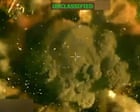
The United States military, acting under orders from President Donald Trump, executed a lethal kinetic strike in Venezuela that killed Héctor Rusthenford Guerrero Flores, the notorious leader of the transnational street gang Tren de Aragua. Coordinated with the current Venezuelan administration, the precision strike targeted a compound in the southeastern state of Bolívar, destroying a localized command structure and ending the run of a criminal enterprise leader who had a five-million-dollar bounty on his head. The operation marks a profound shift in American foreign intervention. For years, Washington treated Latin American syndicates as law enforcement problems; now, they are treated as military targets.
While the dramatic overhead footage of an exploding green-roofed building satisfies the hunger for political theater, it conceals a complex geopolitical reality. The elimination of the man known as Niño Guerrero does not dismantle the gang he built. Instead, it creates a volatile power vacuum across a fragmented criminal network that stretches from the Andes to the American heartland.
The Metamorphosis of a Prison Gang into a Pentagon Target
To understand why the American military just dropped a bomb on a Venezuelan gang leader, one must look at how Tren de Aragua operates. The group did not follow the traditional trajectory of international cartels. They did not secure vast fields of coca or control primary shipping lanes to dominate the wholesale drug market.
Instead, they commodified human migration.
Originating over a decade ago within the lawless walls of the Tocorón prison in Aragua, Venezuela, the syndicate grew by exploiting the desperate exodus of millions of citizens fleeing economic collapse. Guerrero Flores ran this empire from a lavish prison suite, complete with a private zoo, a casino, and a swimming pool. The prison was not his cage; it was his fortress.
When the Venezuelan state finally raided the prison, the leadership dissolved into the migrant streams. They established deeply embedded cells in Peru, Chile, Colombia, and eventually, the United States.
The business model relied on micro-economies: human smuggling, sex trafficking, local extortion, and retail-level drug distribution.
By avoiding the large-scale international maritime shipping routes dominated by traditional cartels, Tren de Aragua flew under the military radar for years. The gang embedded itself directly into communities, establishing a footprint in American cities like Houston, Chicago, and New York. This rapid, hyper-localized expansion transformed them from a localized menace into a prominent domestic political target.
The Venezuelan Cooperation Factor
The most striking detail of the operation is not the strike itself, but the partnership that facilitated it. The Trump administration confirmed that the strike was executed alongside Venezuelan authorities, a development that would have been unthinkable a short time ago.
The geopolitical landscape of Caracas changed dramatically following the U.S. operation that removed Nicolás Maduro from power to face drug charges in Washington. The interim administration, led by Delcy Rodríguez, operates under a completely different set of pressures. Cooperation with the United States military serves as a mechanism for the current Venezuelan government to establish international legitimacy and secure its own stability.
| Factor | Historical Reality | Present Reality |
|---|---|---|
| U.S.-Venezuela Relations | Total diplomatic freeze, mutual hostility | Direct military and intelligence coordination |
| Tren de Aragua Status | Tolerated prison fiefdom under old regime | Hunted domestic insurgent group |
| U.S. Operational Strategy | Sanctions and judicial indictments | Kinetic drone strikes and direct intervention |
For Venezuela, Tren de Aragua had transformed from a useful tool for domestic social control into a direct threat to state sovereignty. The gang controlled lucrative illegal gold mining operations in Bolívar, the very region where Guerrero Flores was targeted. By granting the United States Southern Command the airspace and intelligence access required to execute a kinetic strike, the Venezuelan government eliminated a powerful domestic rival while currying favor with a volatile Washington.
The Myth of the Silver Bullet
Decapitation strikes are a staple of American counter-terrorism strategy, but their efficacy against decentralized networks remains highly questionable. Tren de Aragua is not a corporate hierarchy where the removal of the chief executive halts operations. It functions as a loose franchise system.
Local cell leaders, known as pranes, run independent operations under the collective brand. They share intelligence and financial pipelines, but they do not rely on daily operational orders from a central command post. The death of Guerrero Flores will not stop an extortion racket in Lima, nor will it disrupt a sex trafficking ring in New York.
[Guerrero Flores (Central Brand/Finance)]
                 │
  ┌──────────────┼──────────────┐
  ▼              ▼              ▼
[Peru Cell]   [Chile Cell]  [U.S. Cells]
(Extortion)   (Trafficking) (Retail Drugs)
In fact, historical precedent suggests that the sudden removal of a paramount leader triggers immediate internal warfare. When a criminal syndicate loses its unifying figure, mid-level enforcers invariably fight for control of lucrative territories. This fragmentation rarely leads to a reduction in crime. More often, it produces an escalation of visible, chaotic violence as factions attempt to assert dominance.
The administration’s rhetoric frames the strike as a definitive victory that will immediately secure American streets. This perspective ignores the reality of how these organizations adapt. The structural drivers of the crisis—unregulated migration paths, vulnerable populations open to exploitation, and the high profitability of local vice markets—remain entirely unchanged by a drone strike in the South American jungle.
The Geopolitical Precedent of Narcoterrorism
By designating Tren de Aragua as a foreign terrorist organization and utilizing presidential authority to launch military strikes on foreign soil against non-state actors, the White House has rewritten the rules of regional engagement. This is no longer an immigration debate or a law enforcement challenge; it is an active conflict zone.
The administration has already conducted numerous strikes on small vessels in the Pacific and Caribbean, resulting in more than two hundred casualties. Expanding this kinetic campaign to land targets inside sovereign nations signals a broader willingness to use military force across the hemisphere.
This strategy carries significant long-term risks. Treating transnational gangs as military armies gives them a perverse form of political status while committing American resources to an open-ended global campaign. If drone strikes are the chosen tool for a Venezuelan gang, there is little logical reason not to deploy them against Mexican cartels or Central American syndicates. This path shifts the burden of domestic security away from structural border enforcement and community policing, placing it squarely on the shoulders of the Pentagon.
The strike in Bolívar successfully eliminated a brutal criminal figure who evaded justice for more than a decade. It stands as a demonstration of American technical capability and a testament to a radically altered geopolitical alignment in Caracas. But an explosion in a distant jungle does not automatically translate to safety on domestic street corners, because real security is built through systematic investigative work, border integrity, and the tedious dismantling of local financial networks, not through the fleeting clarity of a missile strike.