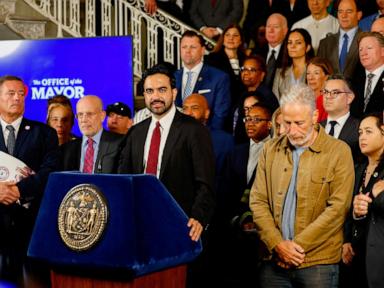
New York City Mayor Zohran Mamdani's administration has launched a public digital portal containing roughly 170,000 pages of long-withheld municipal records concerning the 2001 terrorist attacks, exposing clear evidence that local officials understood the air around Ground Zero was hazardous while publicly insisting it was safe. For a quarter-century, first responders, downtown residents, and office workers have asked how a government could urge citizens back into a toxic cloud of pulverized concrete, asbestos, glass, and benzene. Now, the paper trail is finally public.
The release includes the frequently cited Harding Memo, written weeks after the towers fell, which explicitly weighed potential civil liability against the looming reality of widespread human exposure. It also features sixty-eight boxes of archives that somehow remained lost in city storage until 2025 despite persistent Freedom of Information Law requests. While past administrations managed to stall lawsuits and stonewall public records requests through bureaucratic attrition, this massive data dump alters the historical record permanently. More people have now died from illnesses linked to the disaster than perished on the day itself.
The Mechanics of Institutional Amnesia
Bureaucratic secrecy rarely relies on cartoonish villainy. Instead, it operates through an intricate web of semantic gymnastics, delayed testing, and compartmentalized urgency. When municipal authorities faced the immediate aftermath of the World Trade Center collapse, the overriding imperative from the executive branch focused entirely on economic stabilization. Wall Street had to reopen. Lower Manhattan had to pulse with commerce again.
Internal memos reveal an administration acutely aware of airborne carcinogens floating through residential neighborhoods, yet public briefings painted a picture of pristine safety. Air monitoring data from late 2001 and deep into 2002 showed persistent spikes in asbestos and benzene. Yet, official press releases minimized these threats, treating hazardous particulate matter as an aesthetic annoyance rather than a biological time bomb.
To understand how this system protects itself, look at how Freedom of Information laws are blunted. When activists and journalists filed requests years ago, agencies responded with slow-walked redactions, misplaced files, and astronomical fee estimates designed to drain legal budgets. The discovery of sixty-eight forgotten boxes of records in municipal holding rooms illustrates a passive-aggressive model of concealment. If you do not officially catalog a box, it technically cannot be produced.
Anatomy of the Cover-Up
The newly uncovered files pull back the curtain on an internal struggle between municipal health advisors and political leadership. Environmental protection units collected samples showing alarming toxicity levels across Lower Manhattan window sills, ventilation systems, and street corners. These findings frequently clashed with the narrative being broadcast from City Hall.
Consider the treatment of asbestos data within the archive. Certain reports display readings that hovered near regulatory thresholds, while others registered massive spikes without any accompanying written analysis. This absence of context is telling. When data lacks interpretation, it becomes difficult for everyday citizens to weaponize it in a court of law or use it to back up claims for medical compensation. Ambiguity serves the institution.
For instance, consider a hypothetical scenario where an office worker returns to a building four blocks from the site three weeks after the collapse. The air smells slightly metallic. Building management hands out standard paper dust masks, assuring tenants that municipal authorities have given the green light. Without internal agency emails showing that regional testers privately warned supervisors about unfiltered HVAC intakes, that worker has no way of knowing the risk was systemic rather than incidental. The newly public files provide precisely that missing link.
The Cost of Accountability
Releasing 170,000 pages of text does not magically restore lung capacity to a retired firefighter or erase tumors from a former schoolteacher who lived near TriBeCa. It does, however, alter the legal architecture surrounding victim compensation. For years, proving presence in the official exposure zone required navigating a labyrinth of red tape. The portal aims to deploy dedicated personnel to help survivors cross-reference these newly unsealed documents with federal assistance programs.
Yet, institutional reluctance runs deep. The settlement of long-standing lawsuits brought by advocacy groups like 9/11 Health Watch forced the city's hand, proving that voluntary transparency remains an oxymoron in municipal politics. Governments rarely confess unprompted. They yield only when cornered by sustained litigation, political turnover, and undeniable evidence.
The documents now live on a public server, searchable by anyone with an internet connection. Thousands of pages remain backlogged, awaiting redaction of personal data before rolling out over the coming year. The full scope of what officials knew, and when they knew it, will take forensic accountants and epidemiologists months to fully map out.
The tragedy of September 11 did not end when the fires finally went out. It calcified into chronic illness, stretched across decades, and was compounded by the institutional betrayal of the very leaders sworn to protect the citizenry. The truth is finally accessible on a website, but the silence that protected the powerful for twenty-five years leaves a permanent scar on the city's conscience.