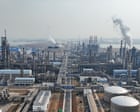
Independent refiners in China, colloquially known as teapots, are currently facing a slow-motion collision with reality. For decades, these small-scale operators in Shandong province acted as the flexible lungs of the Chinese economy, inhaling cheap, often sanctioned crude and exhaling the fuel that powered the nation’s industrial expansion. But the era of easy margins is over. Surging global crude prices, coupled with a predatory regulatory crackdown from Beijing and a structural shift in domestic fuel demand, have left these refineries gasping for air. This is no longer just a story about fluctuating oil prices; it is a fundamental restructuring of how the world’s largest oil importer manages its energy security.
The teapots are failing because the very "loopholes" that allowed them to thrive—tax evasion, environmental corner-cutting, and the processing of "bitumen blend" to bypass import quotas—are being systematically closed. While the market focuses on Brent crude benchmarks, the real story is the narrowing spread between the discounted oil these refiners rely on and the high operational costs of running aging, inefficient hardware.
The Myth of the Independent Teapot
To understand the current strain, one must first strip away the romanticism of the "independent" label. These are not artisanal startups. They are massive industrial complexes that, at their peak, accounted for nearly a fifth of China’s total refining capacity. They gained prominence after 2015 when Beijing granted them the right to import crude oil directly, breaking the monopoly held by state-owned giants like Sinopec and PetroChina.
The arrangement was a marriage of convenience. The state needed the teapots to provide competition and ensure fuel availability in the provinces, while the teapots needed the state’s blessing to exist. However, that relationship has soured. As China moves toward a "dual carbon" goal and seeks to consolidate industrial power, the teapots have become an inconvenience. They are seen as "low-end" capacity—polluting, difficult to monitor, and prone to financial instability.
Current market conditions have exacerbated this friction. When crude prices climb, state-owned enterprises (SOEs) can lean on their integrated supply chains and massive cash reserves to weather the storm. The teapots have no such safety net. They operate on razor-thin margins, often buying on the spot market rather than through long-term contracts. When the price of a barrel jumps, their working capital evaporates.
The Sanctioned Crude Trap
For years, the teapots survived by becoming the "laundromats" of the global oil trade. They were the primary destination for crude from Iran, Venezuela, and, more recently, Russia. Because these barrels are often sold at a significant discount to circumvent international sanctions, the teapots could maintain profitability even when their equipment was less efficient than the state-of-the-art mega-refineries on the coast.
This strategy is hitting a wall. The discounts on Russian ESPO and Urals crude have narrowed as competition for those barrels increases from Indian refiners. At the same time, the logistics of handling "shadow fleet" tankers have become more expensive and riskier. Beijing has also intensified its scrutiny of "bitumen blend" imports—a common tactic where refiners mislabeled crude oil to avoid paying consumption taxes or using up precious import quotas.
The crackdown is tactical. By tightening the screws on tax compliance and quota management, the government is effectively picking winners and losers. The goal is to force smaller, "tea-kettle" sized operations to shut down or be absorbed by larger private conglomerates like Rongsheng or Hengli, which operate massive, integrated petrochemical complexes that align with the national strategy.
The Demand Destruction Nobody Wants to Admit
While supply-side pressures are immense, the shift in Chinese domestic consumption is the silent killer. The narrative for twenty years was simple: China’s appetite for diesel and gasoline was an insatiable upward curve. That curve has flattened.
The rapid adoption of electric vehicles (EVs) in China is not just a trend for the middle class in Shanghai; it is a structural shift that is hollowing out the demand for gasoline. Simultaneously, the transition of the heavy trucking fleet to Liquefied Natural Gas (LNG) has gutted diesel demand. Teapots, which are primarily configured to produce transport fuels rather than high-value petrochemicals, are findng themselves with a product that fewer people want.
In the past, a teapot refinery could simply export its excess production. But the Chinese government tightly controls export quotas, favoring the state-owned giants. This leaves the independents trapped in a domestic market where supply is high and demand is tepid. They are being squeezed from both ends: the raw material is too expensive to buy, and the finished product is too cheap to sell.
Financial Fragility and the Shadow Banking Link
The strain is manifesting in the credit markets. Most teapot refineries in Shandong are deeply interconnected through a complex web of "cross-guarantees." If one refinery defaults on its debt, it can trigger a domino effect across the entire provincial refining sector.
Local banks, once eager to fund the engines of the provincial economy, are becoming wary. As the central government emphasizes "high-quality growth" over raw volume, the political cover for bailing out struggling independent refiners is thinning. We are seeing a shift from a "too big to fail" mentality to a "too inefficient to survive" reality.
The financial pressure is also limiting their ability to upgrade. To survive in the modern era, a refinery must be able to pivot toward petrochemicals—producing the raw materials for plastics, fibers, and specialized chemicals. This requires billions of dollars in capital expenditure. Most teapots are so busy trying to cover their next cargo of crude that they cannot afford the technology needed to stay relevant.
The Geopolitical Ripple Effect
If the teapots continue to shutter or reduce runs, the impact will be felt far beyond Shandong. These refineries are the primary "swing" buyers in the global oil market. When they pull back, it creates a supply glut in specific grades of crude, particularly the medium-sour barrels coming out of the Middle East or the discounted grades from sanctioned nations.
Their struggle also signals a change in China’s broader energy strategy. Beijing is prioritizing stability and central control over the chaotic energy of the private sector. The "reign of the teapots" was a period of wild-west growth that served its purpose. Now, the state wants a disciplined, transparent, and consolidated energy sector that can withstand external shocks without the unpredictability of hundreds of independent actors.
The survival of the remaining teapots depends on their ability to merge and modernize. But for many, the math simply doesn't work anymore. The cost of environmental compliance, the loss of tax loopholes, and the volatility of the global oil market have created a perfect storm.
The New Order of Chinese Energy
The consolidation of the refining sector is part of a broader "national champion" strategy. By moving capacity from small, inland refineries to massive, coastal integrated sites, China is attempting to maximize efficiency and reduce its carbon footprint per unit of GDP. This is a logical move for a superpower, but it is a death sentence for the independent operators who built the previous era.
The volatility we see today isn't a temporary market fluctuation. It is the friction of a massive industrial pivot. The teapots are not just strained; they are being phased out by design. Those that remain will look nothing like the "teapots" of the last decade. They will be larger, state-aligned, and heavily regulated.
Refinery margins in Shandong have turned negative on multiple occasions over the past year. In a rational market, these facilities would close. In China, they stay open as long as they can access credit, but even that well is running dry. The next stage of this crisis will likely involve a series of forced mergers and "zombie" refineries finally being allowed to go dark.
Check the shipping data for the Port of Qingdao. When the tankers start to linger offshore with no buyers, you know the teapots have finally run out of room to maneuver.