We are witnessing the collapse of the fragile June ceasefire, and honestly, the situation is spinning out of control much faster than Washington wants to admit.
If you are just reading the standard headlines, you are missing the real story. The official narrative is all about projection: Donald Trump is holding Situation Room meetings, warning of "devastating strikes," reinstating a naval blockade, and threatening to obliterate Iran's power grids and bridges unless they crawl back to the negotiating table.
But look past the tough talk. Behind the scenes, a much uglier reality is emerging for the US military footprint in the Persian Gulf. Iran isn't just taking punches; they are hitting back in a way that has fundamentally compromised America’s strategic posture in the region.
The Illusion of Absolute Air Dominance
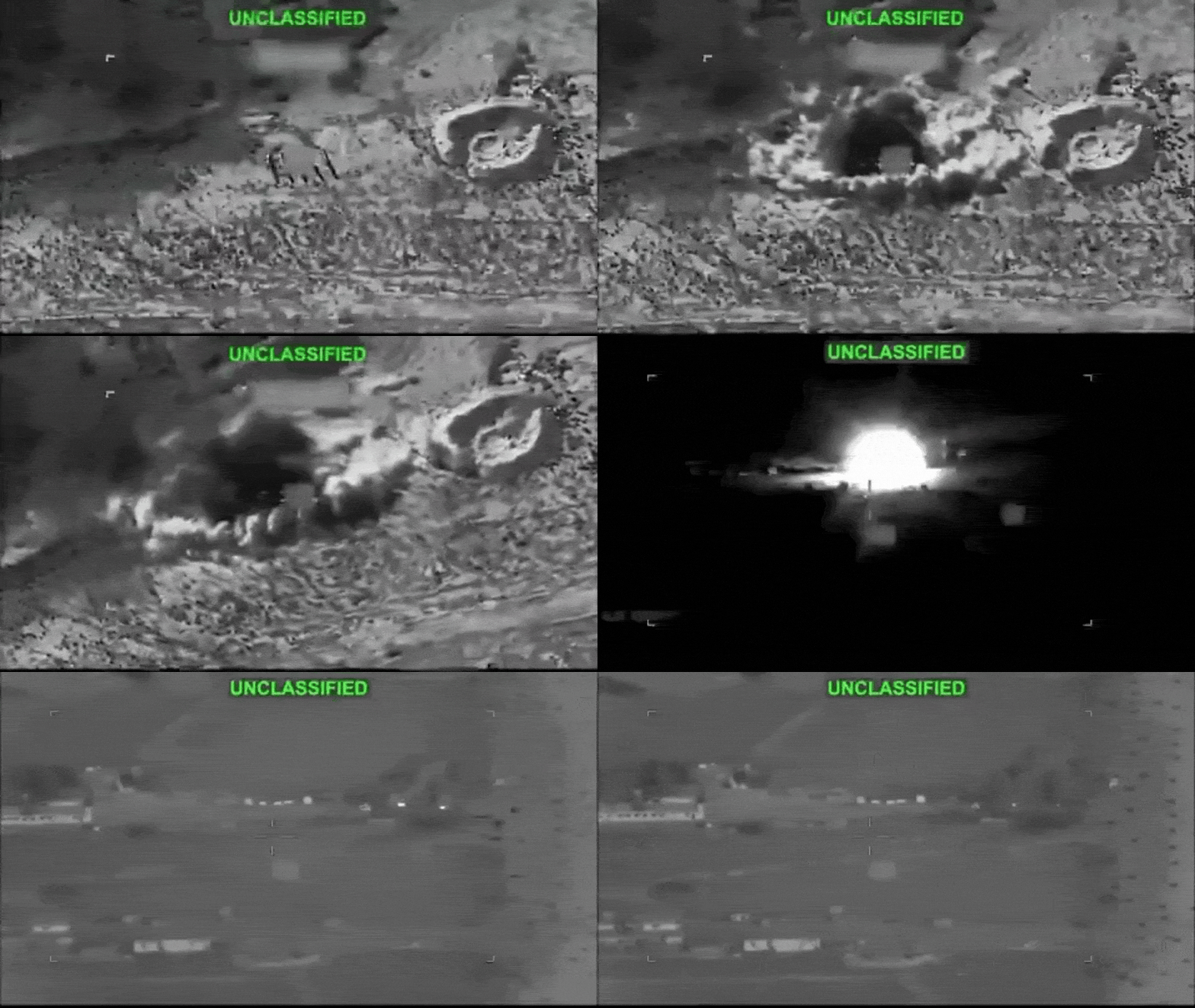
On paper, US Central Command (CENTCOM) is running textbook operations. They just wrapped up another massive, seven-hour wave of precision strikes using fighter jets, drones, and naval vessels to pound military targets near the Strait of Hormuz and along the Iranian coast. They hit missile batteries, drone launch pads, and radar systems.
Trump is playing his classic high-stakes hand, telling Fox News, "Next week comes the power plants, next week comes the bridges, unless they get to the table and negotiate."
It sounds like total dominance. It isn't.
While the US can bomb coastal defense sites at will, they aren't stopping the bleeding. The core issue is that Iran has built a military doctrine designed to absorb these exact kinds of airstrikes and immediately retaliate using low-cost, highly effective asymmetric weapons.
Every time CENTCOM drops a million-dollar precision bomb on a launch pad, the Islamic Revolutionary Guard Corps (IRGC) fires off a swarm of cheap one-way attack drones and cruise missiles. They aren't trying to win a dogfight; they are trying to make the regional US presence too expensive and painful to maintain. And right now, that strategy is working.
What the Pentagon Isn’t Telling You About US Bases
Here is the bombshell that mainstream news is burying: the US bases designed to project power in the Middle East are taking a beating.
For years, the network of outposts across the Gulf Cooperation Council (GCC) states was considered safe, untouchable ground. Not anymore.
A quiet acknowledgment is spreading through military circles that many of the 13 major US installations near Iran have been rendered practically uninhabitable due to relentless Iranian missile and drone barrages.
- Bahrain: The headquarters of the US Fifth Fleet has seen its sirens blaring repeatedly as incoming fire tears through logistics and fuel depots. Satellite imagery has revealed massive, charred craters right where critical military structures used to stand.
- Kuwait: The Ali Al-Salem airbase has sustained heavy structural damage, and the IRGC has openly claimed successful hits on command-and-control facilities.
- Jordan and Qatar: From Jordan's Azraq air base to Qatar's massive Al-Udeid, air defenses are being pushed to their absolute limits to intercept incoming drone waves.
The damage has reportedly topped $800 million in just the opening weeks of the conflict. The Pentagon has tried to downplay casualties, but the physical reality is undeniable.
We are seeing reports of US personnel being evacuated from heavily targeted bases and quietly put up in local civilian hotels and commercial office spaces just to keep them out of the line of fire.
It’s a massive logistical nightmare. You can't run a high-tech military campaign out of a holiday resort. It degrades combat readiness, scatters personnel, and creates a terrible optic: the global superpower's forces hiding in civilian hotels to escape regional missile fire.
The Strait of Hormuz is a No-Win Chokepoint
The whole war is fundamentally about transit and trade.
The US wants a free-flowing, open maritime highway. Iran wants to control the gateway, asserting they have the right to regulate traffic through the Strait of Hormuz.
To force Tehran’s hand, the US reinstated its maritime blockade.
But Iran’s response is incredibly simple and highly disruptive: "If we can't export, nobody does."
The IRGC openly warned that if the US tries to choke off their ports, they will target other regional energy export routes serving Western interests. Energy exports will be "for everyone or for no one."
This isn’t an empty threat. We've already seen civilian tankers hit by cruise missiles and container ships disabled.
The economic calculus here is highly asymmetric. Iran can suffer through economic isolation—they've been doing it for decades under heavy sanctions. But the global economy, and specifically Trump’s domestic political standing ahead of upcoming congressional elections, cannot easily survive a prolonged, massive spike in oil prices.
Every time a tanker is hit, Brent crude jumps. It is a direct lever that Tehran can pull to inflict pain on Western markets without ever having to match the US militarily.
The Broken Diplomatic Backchannel
So, how do we get out of this? Honestly, the path back to sanity is looking incredibly narrow.
The 14-point memorandum of understanding signed back in June was supposed to be the blueprint for a lasting peace. Instead, it has collapsed into mutual recriminations.
Trump claims Iran walked out of the room and immediately launched a drone at a civilian ship right after agreeing to a "perfect deal."
On the other side, Iranian negotiators like Mohammad Bagher Ghalibaf are declaring that "the era of one-sided deals is over."
The middleman, Oman, has tried to host secret talks to find a compromise on managing the shipping lanes, but those efforts fell apart under intense US pressure.
Right now, both sides are trapped in an escalation cycle where backing down looks like weakness. Trump’s political brand is built on project-of-force dominance. The Iranian regime, especially following the massive public displays of mourning and anger during the funeral processions for the late Ayatollah Ali Khamenei, cannot afford to look like they are buckling under American pressure.
If you are waiting for a sudden diplomatic breakthrough, don't hold your breath.
Expect more airstrikes, more drone attacks on regional bases, and continued volatility in global oil markets. The US may have the bigger bombs, but Iran has proven it has the home-court advantage and the willingness to take a punch to make the US presence unbearable.
If you have business or investment exposure tied to global shipping or energy, now is the time to hedge your risks and diversify your supply chains away from the Gulf chokepoints. This crisis is going to get worse before it gets any better.