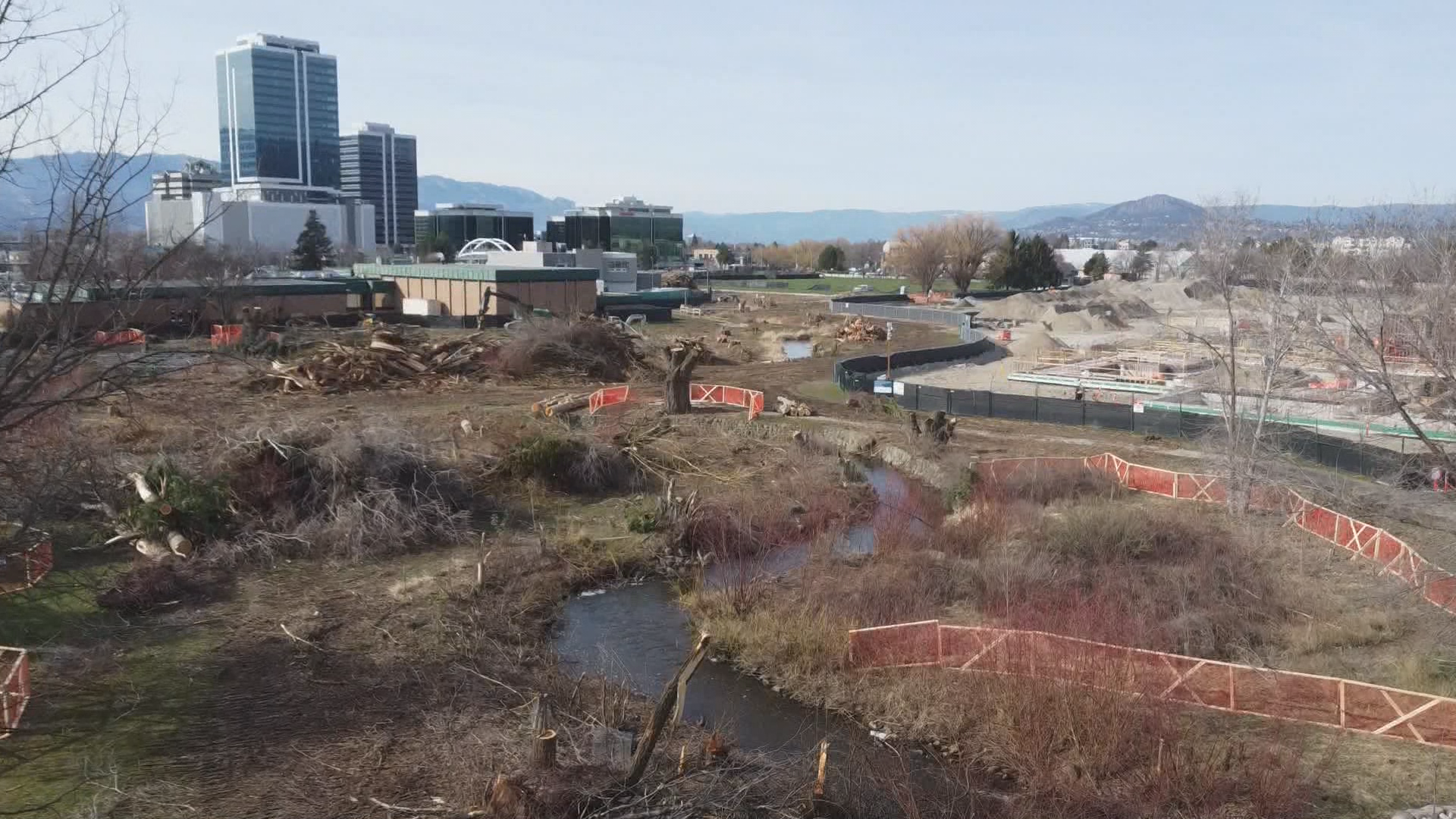
Residents in Kelowna are waking up to a skyline that looks increasingly skeletal. The recent removal of a significant swath of mature trees across the city has triggered the predictable wave of local heartbreak, but the grief masks a much harder reality. This isn’t just a matter of "disappointed residents" or a temporary lapse in aesthetic judgment by the municipal government. It is a structural failure of urban planning. When a city chooses chainsaws over conservation, it is usually because the budget for maintenance has been cannibalized by the demands of rapid, high-density development.
The city claims these removals are necessary for infrastructure upgrades, safety, or disease management. While those reasons often hold a grain of technical truth, they ignore the compounding debt being placed on the local environment. Every mature tree lost represents decades of carbon sequestration, natural cooling, and stormwater management that a sapling cannot replace for another thirty years.
The Infrastructure Trap
Cities often view trees as "soft" infrastructure, which is a polite way of saying they are negotiable. When a new water main needs to go in or a sidewalk needs widening to accommodate a growing population, the tree is the first thing to go. It is cheaper to cut a tree down than it is to engineer a solution around its root system.
This is the hidden ledger of urban expansion. Kelowna is currently one of the fastest-growing metropolitan areas in Canada. That growth requires pipes, wires, and pavement. In the rush to meet housing targets, the biological assets of the city—the very things that make the Okanagan livable during a blistering summer—are treated as obstacles rather than essential utilities.
The Heat Island Effect is Not a Theory
If you walk down a street in the Mission or downtown Kelowna after a major clearing, the temperature difference is immediate. It is measurable. Asphalt and concrete absorb solar radiation and radiate it back out long after the sun goes down. Mature trees provide a service called evapotranspiration. They effectively act as natural air conditioners.
When a city removes a significant number of trees, it effectively signs a contract for higher energy bills for its citizens. Residents will run their AC units longer and harder to combat the rising ambient heat. This creates a feedback loop. More energy use leads to more emissions, which leads to a hotter climate, which makes the remaining trees more stressed and prone to the very diseases the city uses as justification for cutting them down.
Why the Replacement Program is a Shell Game
Municipalities love to point to "replacement ratios." You might hear a city official state that for every one tree removed, two or three will be planted in its place. On paper, this looks like a net gain. In the real world, it is a deficit.
A 50-year-old maple or oak has a massive leaf surface area. It provides a specific volume of shade and habitats for local fauna. Replacing that with three "whips"—the thin, spindly saplings often used in municipal planting—does nothing for the current generation of residents. Those saplings have a high mortality rate in urban environments. They are often planted in "tree coffins," small concrete pits with poor drainage and compacted soil that prevent them from ever reaching their full potential.
The math simply doesn't add up. You cannot trade a grandfather for three toddlers and expect the same level of productivity or wisdom.
The Liability Defense
Follow the money and you will eventually find the insurance adjusters. Over the last decade, Canadian municipalities have become increasingly terrified of "hazard trees." A single limb falling on a parked car or, worse, a pedestrian, can result in massive legal payouts.
As a result, the threshold for what constitutes a "dangerous" tree has dropped significantly. Arborists employed by the city are often pressured to be "risk-averse." If there is a 5% chance a tree might fail in a windstorm, the safest move for the city’s legal department is to remove it entirely. This is defensive forestry. It prioritizes the avoidance of litigation over the health of the urban forest.
The result is a sanitized, barren landscape where the only trees left are the ones too young to be a threat. It is a victory for the legal team and a tragedy for the neighborhood.
Engineering the Solution
If Kelowna wants to stop being the subject of "disappointed resident" headlines, it needs to change how it values its assets. Trees should be listed on the city’s balance sheet as capital assets, right next to the fire trucks and the paving machines.
Flexible Pavement and Root Bridging
There are technologies available that allow for infrastructure growth without the need for clear-cutting. Structural soils, which allow roots to grow under pavement without buckling the surface, are used in cities like Toronto and Vancouver with varying degrees of success. Suspended pavement systems—often called Silva Cells—provide the soil volume a tree needs to thrive while still supporting the weight of a sidewalk or a parking lot.
These systems are expensive. They cost significantly more than a standard concrete pour. But until the city is willing to pay the premium for "hard" infrastructure that respects "soft" infrastructure, the chainsaws will keep running.
The Private Land Gap
While the public outcry focuses on city-owned land, a silent massacre is happening on private property. As older homes on large lots are bought by developers and turned into multi-family units, the backyards—and the massive trees within them—are being erased.
Kelowna’s tree protection bylaws are often criticized for being too lenient. If the penalty for cutting down a protected tree is $500, but removing it allows a developer to squeeze in an extra townhouse worth $700,000, that fine is simply a cost of doing business. It’s an entry on a spreadsheet.
To truly protect the canopy, the fines must be punitive enough to force a redesign of the project. If a developer knew that killing a 100-year-old pine would cost them $50,000 in municipal penalties, we would suddenly see a lot more "creative" architecture that works around the natural landscape.
The Cost of Silence
The psychological impact of losing a neighborhood's greenery is often dismissed as sentimental. It isn't. Numerous studies in environmental psychology have shown that access to mature trees reduces stress, lowers blood pressure, and increases social cohesion in urban environments.
When a swath of trees is removed, the character of the neighborhood is fundamentally altered. It feels more transient, more industrial, and less like a home. Residents feel a sense of "solastalgia"—the distress caused by environmental change in one's home environment.
The city’s communications department often frames these removals as "upgrades" or "maintenance." This language is designed to neutralize the emotional weight of the act. It turns a living thing into a task to be completed.
Demanding a New Standard
The residents of Kelowna need to stop asking "why" after the trees are already on the back of a flatbed truck. The time for intervention is during the planning and budget phases of municipal projects.
Demand to see the "Urban Forest Management Plan" and ask how it reconciles with the city's "Transportation Master Plan." If the two documents are in conflict—and they almost always are—the city must be forced to prioritize the one that provides the most long-term value to the public health.
The next time a municipal project is announced for your street, look at the blueprints. Don’t look at the new bike lanes or the shiny new bus stops. Look for the "X" marks on the circles representing the trees. Those "X" marks are the price the city is asking you to pay for progress.
Decide if the trade is worth it. If it isn't, the pressure must be applied to the City Council, not the crew with the chainsaws. By the time the crew arrives, the decision has been made, the permits have been signed, and the shade is already gone.
Start looking at the city budget as an environmental document. Every dollar spent on "gray" infrastructure that doesn't account for "green" infrastructure is a dollar spent on making the city hotter, louder, and less livable. The trees are not just a nice feature of the landscape; they are the lungs of the city, and right now, Kelowna is holding its breath.