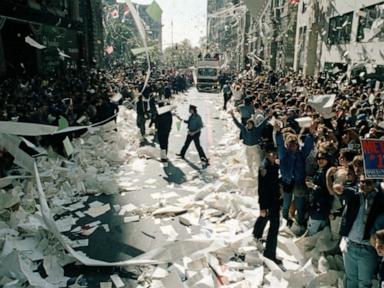
The New York Knicks are winning on the hardwood, but the real victory is unfolding inside the executive suites of Madison Square Garden and the ledger books of City Hall. While fans flood Seventh Avenue celebrating a deep playoff run, a far more cold-blooded calculation is taking place behind the scenes. A championship chase in New York is never just about sports. It is a high-stakes economic engine that reshapes the city's hospitality sector, drives luxury ad spending to unprecedented heights, and tests the limits of what the public is willing to pay for a piece of the action.
The euphoria is real. The financial exploitation of that euphoria is even more real.
To understand why a Knicks playoff surge matters, you have to look past the highlight reels and examine the complex web of local commerce, skyrocketing ticket pricing algorithms, and the broader sports entertainment industrial complex.
The Seven Figure Quarterback of Midtown Commerce
Madison Square Garden sits directly atop North America’s busiest transportation hub. This geographical reality transforms every home playoff game into an immediate injection of capital for the surrounding blocks.
Local bars and restaurants report a massive surge in baseline revenue on game nights. It is not uncommon for midtown establishments within a six-block radius of the arena to see a 40% spike in food and beverage sales during a single playoff series. For an industry still clawing back its margins against rising labor costs and food inflation, the Knicks are a lifeline.
But this economic windfall is highly localized.
Economists who study sports franchises frequently point out a harsh truth. Most stadium-driven spending is merely substituted capital. Money spent on a $300 ticket or a $15 stadium beer is money that a local resident would have otherwise spent on a Broadway show, a neighborhood dinner in Queens, or a concert in Brooklyn. The city as a whole does not magically generate massive amounts of new wealth during a playoff run. Instead, the Knicks act as a giant financial vacuum, sucking discretionary income from the outer boroughs and concentrating it squarely into the corporate accounts of MSG Entertainment and a handful of midtown hotel conglomerates.
The real net-new money comes from corporate tourism and wealthy out-of-towners who fly in for the spectacle. Hotels in Manhattan can command a premium during these stretches, raising average daily room rates simply because the city feels alive.
The Ticket Pricing Escalation Weapon
The most aggressive financial maneuvering occurs in the primary and secondary ticket markets. Madison Square Garden has perfected the art of dynamic pricing, turning a sporting event into a luxury commodity that excludes the average working-class fan.
+-------------------+-----------------------+-----------------------+
| Seating Tier      | Regular Season Avg    | Playoff Round 2 Min   |
+-------------------+-----------------------+-----------------------+
| Upper Bowl        | $140                  | $480                  |
| Lower Bowl        | $350                  | $1,200                |
| Courtside / Club  | $2,000                | $7,500+               |
+-------------------+-----------------------+-----------------------+
These numbers show a clear trend. The fan base that endured decades of sub-par basketball is effectively priced out of witnessing the resurrection.
Secondary ticketing platforms reap massive windfalls from transaction fees alone. When a single ticket changes hands for $1,500, platforms pocket hundreds of dollars in service charges for facilitating a digital transfer. This creates a secondary economy where brokers and speculative algorithms hoard inventory, artificially choking supply to keep prices inflated.
The team's ownership reaps the rewards without taking the reputational hit for the resale markups. They establish a high baseline price, knowing the market will bear it, while luxury suites are locked up by corporate partners who write off the astronomical costs as business entertainment expenses.
The Luxury Suite Premium
Inside the arena, the financial stratification becomes even more stark. The luxury suites at Madison Square Garden are the ultimate status symbol for Wall Street firms, tech giants, and media empires. During a deep playoff run, the cost to rent a single suite for one night can soar into the tens of thousands of dollars, exclusive of high-end catering.
For these corporate entities, the game is a backdrop for closing deals. The rowdy, passionate fan base in the upper sections provides the "authentic" atmosphere that corporate clients pay top dollar to observe from behind insulated glass. It is a symbiotic, if cynical, relationship.
The Broadcast and Advertising Matrix
The money moving inside the arena is dwarfed by the capital flowing through television networks and regional sports broadcasters.
Every additional playoff game is a goldmine for television rights holders. High ratings in the New York media market—the largest in the country—allow networks to demand astronomical rates for 30-second commercial spots. Advertisers are willing to pay these premiums because live sports represent the final frontier of monoculture. It is the only programming where viewers do not fast-forward through the commercials.
- Local Sports Networks: Regional broadcasters see a sustained lift in subscriber retainment and premium ad sales that carries over into the off-season.
- Merchandise Saturation: The licensing agreements between the league, the team, and apparel manufacturers turn every fan into a walking billboard, with jersey sales spiking globally, not just in the tri-state area.
- Gambling Integration: Mobile sports betting applications experience unprecedented volume during a New York playoff run. The state taxes these revenues heavily, creating a direct line of income from a fan's smartphone straight to Albany's fiscal budget.
This gambling revenue is often cited by politicians as a major benefit of the sports boom. However, critics point out that this revenue is derived from a regressive form of entertainment that disproportionately impacts lower-income individuals who view sports betting as a financial opportunity rather than a leisure activity.
State Tax Revenues -> Funded by Increased Mobile Betting Volume -> Driven by Local Team Success
The Public Cost of Private Joy
While the city celebrates, municipal services bear a heavy burden that rarely shows up in the celebratory press releases issued by the mayor's office.
The influx of thousands of people into midtown Manhattan requires a massive deployment of public resources. The New York Police Department must increase its presence around Penn Station and the arena to handle crowd control, counter-terrorism measures, and traffic management. Sanitation workers must log overtime to deal with the mountain of waste generated by street celebrations and increased pedestrian traffic.
Increased Sanitation Shifts + NYPD Overtime + Transit Delays = The Hidden Public Subsidy
These costs are paid for by the taxpayer. While Madison Square Garden enjoys significant property tax exemptions—a decades-old arrangement that remains a point of intense political contention—the city absorbs the operational friction of the team's success. The narrative of a sports team "healing the city" or "boosting morale" is a useful smoke screen that obscures the lopsided nature of stadium economics.
The Brand Equity Valuation Surge
Ultimately, the biggest winner of a playoff run is the valuation of the franchise itself.
Even during periods of historical incompetence, the Knicks remained one of the most valuable franchises in professional sports due to their location. When you add winning to the equation, the valuation compounding effect is staggering. The enterprise value of the sports properties climbs by hundreds of millions of dollars over the course of a single successful season. This equity growth benefits a tiny group of billionaires and institutional shareholders.
The winning culture also transforms the franchise into a premier destination for corporate sponsorships. Global brands want their logos associated with a winner in New York. The premium patch on the jersey, the digital signage along the court, and the naming rights to various arena clubs all fetch significantly higher prices during the subsequent renewal cycles.
The fans get the memories. The ownership gets a permanently elevated asset class.
This reality does not diminish the emotional resonance of a playoff victory for a city that lives and dies by its sports teams. The roars that shake the arena when a crucial shot drops are genuine. But as the confetti is swept up and the crowds disperse into the midnight subway system, the money keeps moving upward, away from the streets and into the ledger books where the real score is kept.