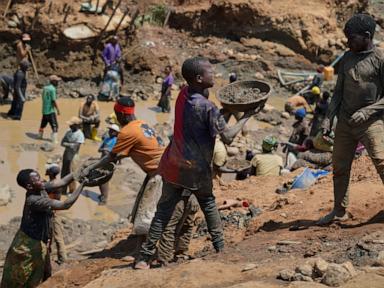
The ground in Mongbwalu is soaked in mercury, sweat, and a quiet panic. Deep in the eastern reaches of the Democratic Republic of the Congo, thousands of artisanal gold miners descend daily into waterlogged pits, chasing specks of yellow metal while a virulent strain of hemorrhagic fever cuts through their camps. This is the epicenter of the 2026 Ebola epidemic, a fast-moving public health crisis driven by the Bundibugyo strain. For the migrant workforce keeping the local economy breathing, isolation is a luxury. Hunger remains an immediate executioner long before the virus has time to finish its work.
Public health mandates assume a static population. They rely on the ability of citizens to stay home, wash their hands, and report symptoms early. These assumptions shatter against the reality of eastern Congo's informal mining economy.
The Economics of Desperation
When a miner earns only enough to feed dependents for a single day, public health containment measures transform into economic starvation protocols. Stopping work means skipping meals.
Consider a hypothetical family living near an open-pit gold washing site in Ituri Province. If the primary earner spends two weeks in quarantine, the household loses its entire cash inflow. Credit lines at local food stalls vanish within forty-eight hours. Under these conditions, hiding symptoms becomes a rational survival strategy.
- Daily subsistence labor leaves zero margin for medical compliance.
- Informal markets lack basic sanitation infrastructure, turning bustling trade hubs into viral mixing bowls.
- Distrust of treatment centers runs deep, fueled by historical marginalization and the association of isolation wards with terminal outcomes.
Epidemiologists tracking the outbreak face a ghost population. Miners move fluidly across provincial borders into North Kivu, South Kivu, and neighboring Uganda, chasing higher yields or fleeing localized armed conflict. Contact tracing breaks down completely when an infected digger packs up camp and walks twenty miles through the forest overnight.
Strain Specifics and Medical Roadblocks
The pathogen driving the current emergency compounds the operational nightmare. This outbreak stems from the Bundibugyo ebolavirus, a species distinct from the Zaire ebolavirus that dominated previous Central African epidemics.
Stockpiled vaccines and therapeutics certified for Zaire strains offer limited utility against this specific variant. Medical teams find themselves fighting an accelerated contagion with an adjusted toolset, while local clinics struggle with severe water shortages. In Mongbwalu, only a fraction of residents have reliable access to safe piped water, forcing families to choose between drinking and basic hygiene. Runoff from unregulated mining operations further fouls local groundwater supplies, leaving communities dependent on distant natural springs.
Traditional healers and private unregulated practitioners step into the vacuum left by overwhelmed formal clinics. These spaces operate entirely outside epidemiological surveillance systems. Without infection control protocols, a single mismanaged fever case inside a private practitioner's room can seed dozens of secondary infections before response teams even register an anomaly.
Systemic Failures Beyond the Virus
Treating this crisis purely as a medical emergency misses the structural rot beneath the soil. Mineral extraction in Ituri operates under the shadow of rival armed factions and chronic institutional neglect. The wealth generated in these muddy pits flows outward into global technology and luxury supply chains, leaving the extraction zones destitute.
When international aid agencies focus solely on clinical containment while ignoring food security and basic wage support, containment strategies backfire. Armed guards and checkpoints restrict humanitarian access across wide swaths of the mineral belt. Communities caught between military skirmishes and viral patrols view state health interventions with intense suspicion.
Until economic survival is decoupled from physical mobility in the mining sector, containment efforts will continue to chase a ghost through the forest. The pickaxes keep swinging because the alternative is starving in plain sight.

.jpg)

