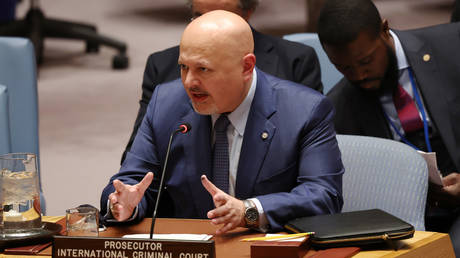
The International Criminal Court has just crossed a Rubicon from which it may never return. When 82 of the tribunal's 125 member states voted at United Nations headquarters to strip chief prosecutor Karim Khan of his office over sexual misconduct allegations, they did more than end a tenure. They severed the spine of global institutional accountability.
This historic dismissal—the first time member states have ever ousted a sitting prosecutor—did not happen in a vacuum. It represents the violent collision of internal institutional decay, unprecedented geopolitical warfare from Washington, and the structural fragility of international law. Khan has vehemently denied the allegations involving a female subordinate, labeling the disciplinary process unfair and politically motivated. Yet regardless of the legal battles still to come in Geneva or elsewhere, the damage to the world's premier war crimes tribunal is already structural.
The Weaponization of Internal Crisis
To understand how the court reached this precipice, one must examine the timeline. The accusations first surfaced shortly before Khan sought arrest warrants for high-profile figures, including Israeli Prime Minister Benjamin Netanyahu and then-defense minister Yoav Gallant, alongside actions targeting Russian leadership. Instantly, the administrative and the geopolitical became inseparable.
Critics of the court argued that the gravity of the accusations was downplayed internally for months, while Khan’s defenders claimed the disciplinary apparatus was weaponized by states hostile to the court's docket. This duality paralyzed the Office of the Prosecutor. An institution designed to impartially judge the worst atrocities known to humanity suddenly found itself incapable of managing its own internal corridors.
The oversight body, the Assembly of States Parties, faced an impossible balancing act. Protect the institution's fragile reputation by shielding its leader, or preserve its moral authority by enforcing zero-tolerance workplace standards. By choosing the latter via an unprecedented expulsion vote, the assembly preserved procedural integrity at the heavy cost of complete organizational fracture.
Geopolitical Fallout and American Pressure
The ouster arrives precisely as the United States intensifies a sweeping diplomatic and economic crusade against the tribunal. With Washington placing economic sanctions on court personnel and threatening allied nations over cooperation, the ICC was already fighting for institutional survival.
When a global court loses its chief prosecutor to an internal sex scandal, its deterrent value evaporates. Dictators, warlords, and rogue state actors are watching. The message sent to capitals from Moscow to Washington is simple: international justice can be crippled from the inside out without firing a single shot.
Furthermore, regional friction is compounding the crisis. Venezuela's concurrent announcement that it is withdrawing from the ICC citing geographic bias highlights a deep fracture between the Global South and the tribunal's European-backed core. The court is hemorrhaging legitimacy on multiple fronts simultaneously.
The Administrative Vacuum
The immediate operational reality inside The Hague is bleak. Deputy prosecutors have shouldered the administrative burden since Khan’s initial leave of absence, but managing day-to-day operations is vastly different from steering an agency facing existential geopolitical attacks.
Finding a replacement will test the limits of international diplomacy. Any new candidate must possess the diplomatic armor of a seasoned diplomat, the legal acumen of a top-tier barrister, and an unblemished personal history that can withstand the microscopic scrutiny of modern intelligence services. More importantly, any prospective prosecutor must be willing to accept immediate economic sanctions and travel bans from the world's foremost superpower.
The candidate pool is exceptionally small. Qualified legal minds will look at Karim Khan's fate—caught between the crosshairs of superpower retaliation and internal misconduct findings—and decline to submit their names for consideration.
The arrest warrants issued under Khan's tenure remain legally active because only the judges can withdraw them. Yet a warrant is only as powerful as the coalition willing to enforce it. Without a permanent prosecutor possessing unassailable moral authority, the court's investigative momentum will stall. The machinery of international justice has not merely slowed down; it has seized.