The Mediterranean breeze still carries the scent of roasted coffee and saltwater through the streets of Beirut, but these days, it smells like fear too.
When a phone rings in a quiet apartment in the Lebanese capital, people freeze. It is a involuntary, collective reflex. For months, those rings have not just brought gossip or family updates. Sometimes, they bring warnings. Other times, they are followed by the deafening roar of an explosion that shatters concrete and lives in a matter of seconds.
Political assassinations and targeted killings have a way of turning a vibrant city into a psychological chessboard. Every shadow looks like a threat. Every unexpected car parked on the curb becomes a potential bomb. The dry news wires frame this as a geopolitical calculation, a series of strategic moves between regional powers. They use words like "neutralization" and "surgical strikes."
But there is nothing surgical about a child waking up screaming because the building next door just collapsed into a mountain of grey dust.
The Warning from Paris
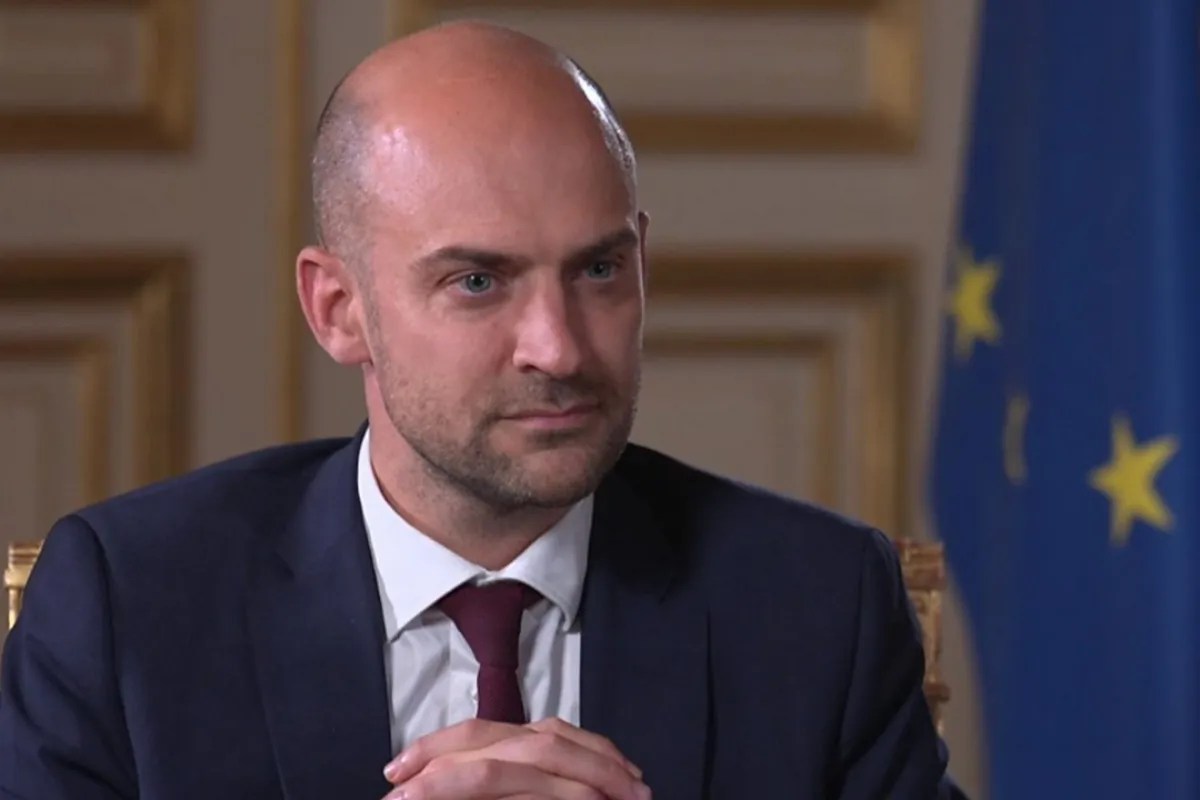
Recently, the French Foreign Ministry broke through the diplomatic static with an urgent, sharp message. The French government made it clear that the cycle of violence, targeted assassinations, and impunity gripping Lebanon must end. But Paris also pointed a finger directly across the Atlantic. They argued that the only way to halt this slide into absolute chaos is for the United States to exert serious, unyielding pressure on the forces driving these assassinations.
It was a rare, blunt admission of a harsh reality. France, with its deep historical and cultural ties to Lebanon, knows its own limitations. It can provide aid, it can host conferences, and it can offer passionate speeches at the United Nations. But it lacks the raw leverage needed to change the behavior of the actors operating within and around Lebanon's borders.
That leverage lives in Washington.
Consider a hypothetical family living in the southern suburbs of Beirut—let’s call them the Amins. Tariq, the father, runs a small grocery shop. His wife, Layla, teaches mathematics. They have nothing to do with politics. They do not belong to any militia. Yet, their daily existence is entirely dictated by the decisions made in rooms thousands of miles away. When a targeted strike occurs a few blocks from their home, Tariq’s business empties out. Customers stay home, terrified of being in the wrong place at the wrong time. Layla looks at her students and wonders which of them will lose a parent next.
For the Amins, the diplomatic back-and-forth between Paris and Washington is not an abstract debate. It is a matter of survival.
The Illusion of Containment
There is a dangerous myth circulating in Western capitals that the violence in Lebanon can be contained. The thinking goes that as long as the instability stays within certain geographic boundaries, the rest of the world can afford to watch from a distance.
This is a profound misunderstanding of how contagion works in the Middle East.
Lebanon has long been the region’s canary in the coal mine. When the state begins to fracture under the weight of targeted violence and unchecked assassinations, the cracks inevitably spread. The collapse of Lebanese security does not happen in a vacuum. It triggers a refugee crisis that washes over Europe. It creates security vacuums that extremist groups are all too eager to fill. It disrupts vital maritime trade routes in the eastern Mediterranean.
The real problem lies elsewhere, far beneath the surface of official press releases. By allowing assassinations to become a normalized tool of statecraft and regional rivalry in Lebanon, the international community is silently rewriting the rules of global engagement. We are accepting a world where sovereignty is a suggestion and due process is a relic of the past.
If a superpower like the United States refuses to use its massive diplomatic and financial weight to draw a hard line in Beirut, it sends a green light to actors everywhere. It signals that the cost of killing is low, and the price of silence is cheap.
The Missing American Weight
Why has the American response been so hesitant? To understand the hesitation, one must understand the delicate, agonizing tightrope Washington walks in the region.
The United States is trying to manage a dozen different fires simultaneously. It is negotiating hostage deals, trying to secure shipping lanes in the Red Sea, and attempting to prevent a total regional war. In that context, a string of assassinations inside Lebanon can look like a secondary issue to policymakers in Washington. It gets pushed down the agenda, viewed as a symptom of a larger disease rather than a crisis that demands immediate, specific intervention.
But this hierarchy of priorities is flawed. You cannot put out a house fire while ignoring the gas leak in the kitchen.
American pressure does not have to mean military intervention. It means utilizing the immense financial machinery of the U.S. Treasury to choke off the funding of those who orchestrate these killings. It means making military aid and diplomatic cover conditional on the cessation of these destabilizing strikes. It means using the backchannels that only Washington possesses to deliver an unmistakable ultimatum: Lebanon cannot be used as a free-fire zone.
Without that pressure, the French warnings are just words written on wind.
The Weight of the Unseen
Step away from the geopolitical map for a moment and look at the human cost of this inaction. It is found in the quiet, insidious erosion of normalcy.
When a society realizes that anyone can be eliminated at any time without consequence, trust evaporates. Neighbors suspect neighbors. The judiciary paralyzes itself out of sheer terror. Judges refuse to sign warrants, and police officers look the other way, knowing that investigating the wrong murder could mean their own death sentence.
I remember talking to a Lebanese journalist who spent decades covering the country’s turbulent history. He told me that the most terrifying thing about the current wave of violence isn't the explosions themselves. It is the silence that follows. The lack of accountability. The way the world simply shrugs and moves on to the next news cycle while another family cleans the blood off their living room floor.
"We are being erased," he said, his voice dropping to a whisper. "And the world is watching it happen on their phones."
The United States has the power to change this narrative. It has the leverage to force the actors involved to pause, to recalculate, and to realize that the cost of continuing these assassinations is far higher than any tactical advantage they might gain.
But leverage is useless if it sits on a shelf.
The Mediterranean breeze continues to blow through Beirut, carrying the ghosts of the past and the anxieties of an uncertain tomorrow. The city waits, suspended in a fragile, terrifying limbo, listening to the silence of a superpower that has yet to decide if the lives of ordinary people are worth the political capital it takes to save them.


