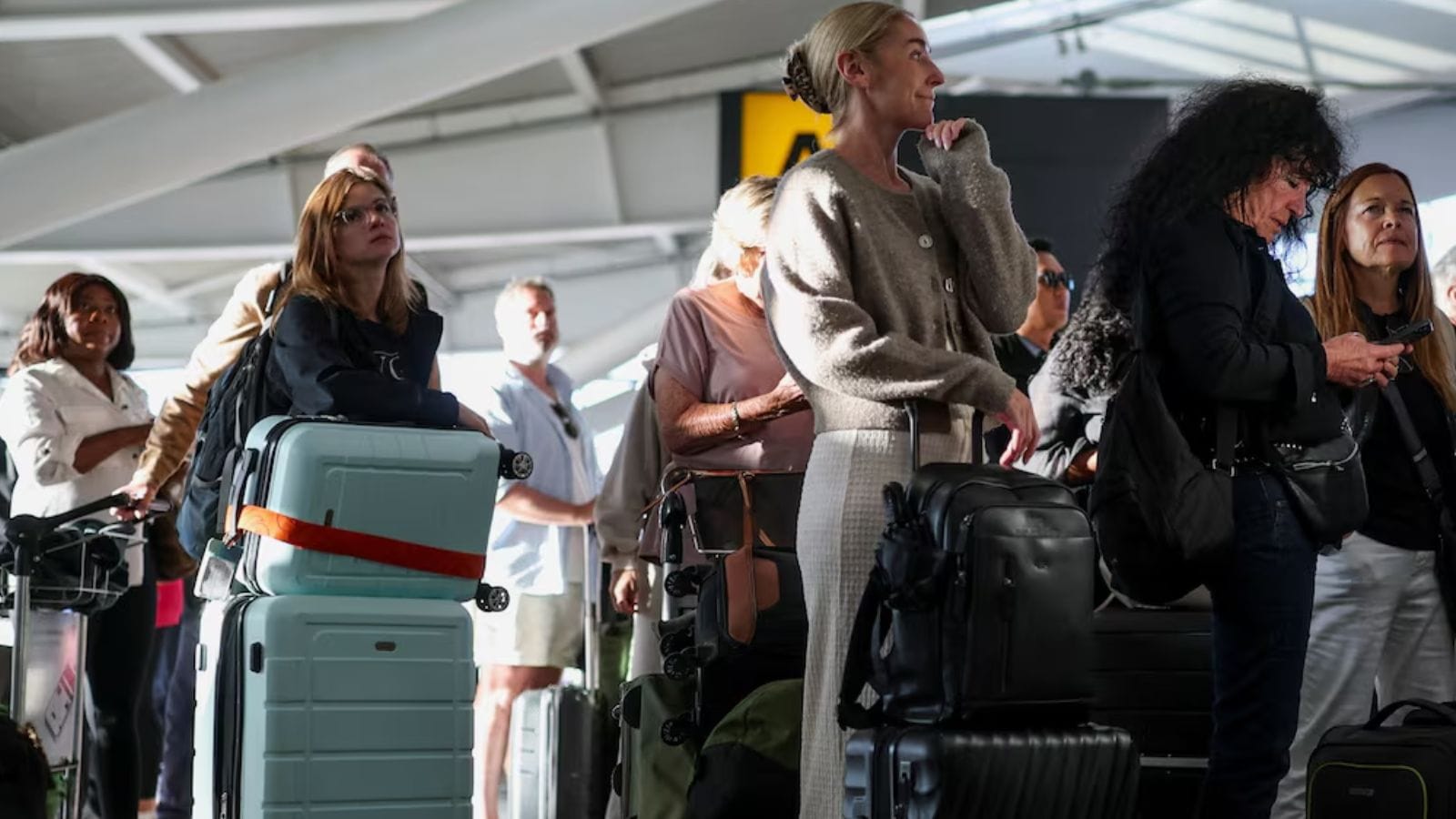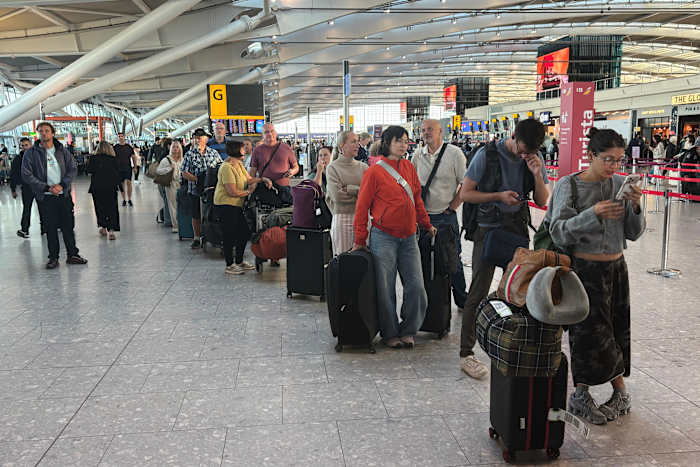
The coffee in terminal five is always too hot and tastes faintly of burnt aluminum. You sit there with your boarding pass rolled into a tight cylinder between your knuckles, watching the departure board stutter. Every three minutes, a fresh wave of silent panic rolls across two hundred faces as a row of white letters flips to red. Delayed. Cancelled. Delayed again.
Outside, the tarmac shimmers under a greasy film of jet fuel and gray English drizzle. The planes are out there. The aluminum hulls are polished, the engines are primed, the fuel trucks have done their work. Yet the sky remains an empty theater because the invisible hand guiding the traffic from above has frozen. For a different look, consider: this related article.
Right now, British airlines are openly demanding the head of the UK air traffic control boss. They want a resignation. They want a scapegoat. They want blood on the carpet to appease shareholders and exhausted passengers sleeping on plastic chairs. But changing the name on the office door at Swanwick will not fix the fracture. The crisis in British airspace is not merely a failure of leadership. It is a slow-motion collision between crumbling infrastructure, outdated technology, and a system stretched so thin you can hear it hum.
Consider what happens inside the control room when a shift begins. Related coverage on this trend has been shared by Travel + Leisure.
Picture Sarah. She is a veteran controller who has spent twenty years keeping four hundred tons of steel apart in a patch of sky the size of Yorkshire. On a good day, her job is a ballet of numbers and vector lines glowing green against the dark. She does not look at the windows. She looks at the screen. She listens to the frantic, clipped chatter of pilots whose livelihoods depend on her cadence.
Now, imagine that screen flickering. Imagine the software, built when dial-up internet was a novelty, suddenly choking on a surge of flight data. That is the reality of the UK skies. The equipment is ancient. The backup systems are fragile. When a glitch hits, the entire digital nervous system of British aviation goes blind. Controllers are forced to revert to manual safety buffers, spacing planes out by miles instead of seconds.
The airlines see the red ink on their balance sheets. They see millions of pounds evaporating into compensation claims and grounded fleets. They point their fingers squarely at the chief executive, arguing that accountability starts at the top. And they are not entirely wrong. When the machinery breaks down year after year, leadership owns the failure to modernize.
Yet, reducing this catastrophe to a boardroom squabble misses the human cost entirely.
Think of the wedding anniversary missed in Edinburgh because a Heathrow departure was vaporized by software failure. Think of the oncology patient whose transplant organs are sitting in the hold of a delayed cargo flight at Manchester. These are not statistics. These are the invisible stakes of a monopolized airspace. When the UK air traffic control network sneezes, the entire European transit grid catches pneumonia.
The public gets angry at the wrong people. Passengers scream at the gate agents, teenagers earning minimum wage who have nothing to do with radar systems or government contracts. The media runs grainy footage of stranded crowds. Meanwhile, the core problem festers in the shadows of bureaucratic inertia and underinvestment.
Upgrading a national airspace is not like updating an app on your phone. You cannot simply reboot the sky. Every single frequency, every radar ping, every procedural handoff between London and Prestwick must be integrated without a single second of total blackout. It requires billions in capital, decades of planning, and a political will that vanishes the moment an election cycle begins.
The executives will posture. The letters of no confidence will be drafted on thick cream stationery in the City. Heads might roll, if only to satisfy the baying crowd. But the screens in the darkened control rooms will still glow green. The coffee will still be bitter. And Sarah will still put on her headset, take a breath, and try to weave order out of chaos while the world below keeps shouting at the sky.