The Indian Air Force is facing an existential numbers game, and it is losing. To maintain its shrinking squadron strength, India is purchasing retired, decades-old airframes from foreign nations to strip them for spare parts. This aggressive cannibalization strategy keeps existing fleets airborne but exposes deep structural failures in domestic procurement and defense manufacturing. Bureaucratic delays and a struggling local defense industry have left New Delhi with few other options. Buying junked planes is a desperate, short-term fix for a long-term strategic deficit.
The Mathematical Collapse of Squadron Strength
Air power relies on numbers. The Indian Air Force (IAF) is structurally mandated to operate 42 combat squadrons to counter a dual-front threat from Pakistan and China. Today, that number has plummeted to around 31 squadrons. Each squadron contains roughly 16 to 18 aircraft, meaning the gap between necessity and reality represents over 150 missing fighter jets. You might also find this similar story useful: Why Free Speech Arguments Wont Solve the India New Zealand Khalistan Diplomatic Rift.
The retirement of legacy platforms accelerates this hemorrhage. For decades, the backbone of India’s frontline defense rested on Soviet-era MiG-21s. Dubbed "flying coffins" by the domestic press due to their high accident rates, these fighters are finally being phased out. The retirement of these platforms creates an immediate void that newer acquisitions cannot fill fast enough.
IAF Fighter Squadron Tracking
Target Requirement:  [██████████████████████████████████████████] 42 Squadrons
Current Strength:    [███████████████████████████████] 31 Squadrons
Deficit:             [███████████] 11 Squadrons
To plug the leaks, India has resorted to unusual acquisition strategies. It purchased retired Jaguar airframes from France, the United Kingdom, and Oman. These aircraft were not bought to fly. They were hauled to domestic depots to be systematically dismantled. As discussed in recent articles by USA Today, the implications are worth noting.
Engineers harvest wings, airframe panels, and specialized avionics from these retired hulls. This salvaged hardware sustains India’s remaining, deeply modified Jaguar squadrons. Without these secondhand parts, the domestic Jaguar fleet would face widespread grounding due to a lack of OEM (Original Equipment Manufacturer) support from British Aerospace and Safran, which moved away from these platforms years ago.
The Myth of Smooth Indigenisation
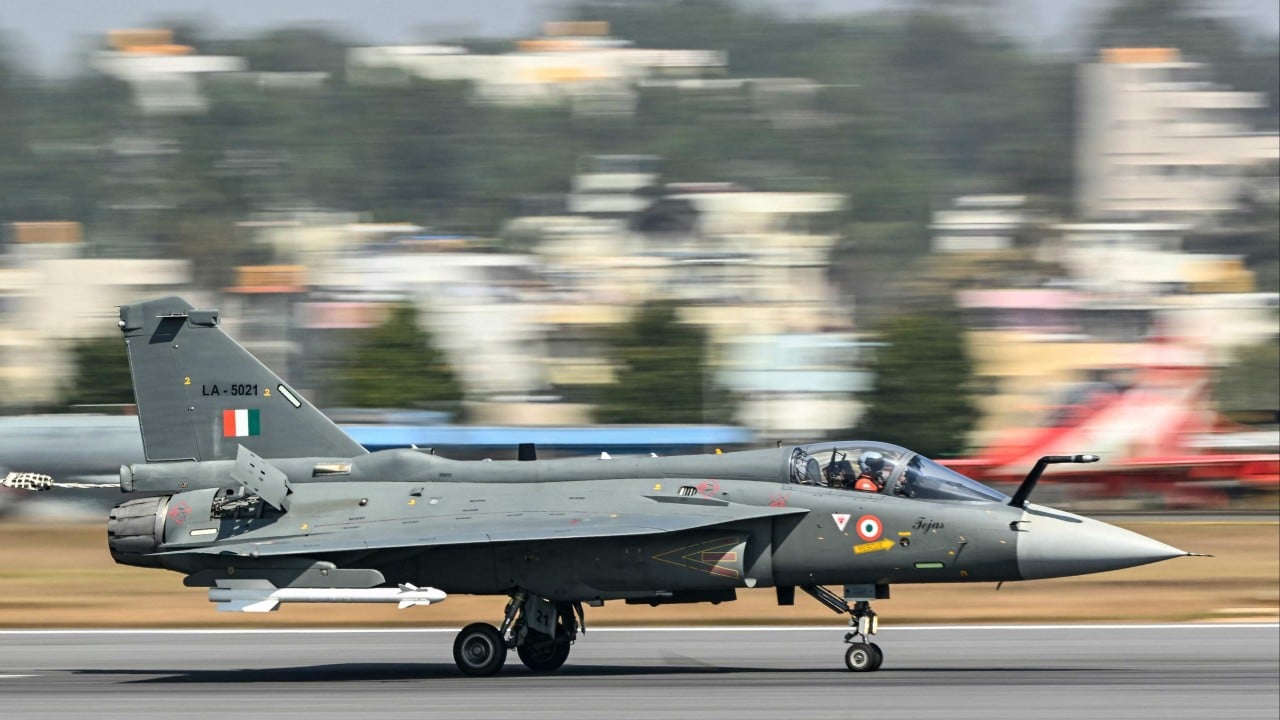
The primary driver behind this supply-chain desperation is the sluggish pace of domestic replacement programs. The Light Combat Aircraft (LCA) Tejas was envisioned as the ultimate replacement for the MiG-21. Its development timeline spans nearly four decades.
Political rhetoric frequently celebrates the Tejas as a triumph of self-reliance. The operational reality on the tarmac tells a different story. The state-owned manufacturer, Hindustan Aeronautics Limited (HAL), has consistently missed production deadlines. Production lines struggle with supply bottlenecks, quality control issues, and a heavy reliance on imported components.
- Foreign Engines: The Tejas relies on General Electric F404 and F414 engines from the United States.
- Radar Systems: Early blocks utilize Israeli radar technology rather than domestic alternatives.
- Material Shortages: Specialized aerospace-grade titanium and carbon fiber often require foreign sourcing, creating import friction.
This reliance on global supply chains invalidates the core promise of absolute domestic autonomy. When an American engine delivery faces delays or an Israeli sub-system requires a software patch, the entire assembly line slows to a crawl. The defense ministry cannot wait for HAL to resolve its industrial inefficiencies while squadron numbers continue to drop. Buying old airframes for parts acts as a financial and operational bridge to buy time.
The Multi-Role Fighter Quagmire
The procurement process for foreign aircraft is choked by political inertia and bureaucratic red tape. The poster child for this failure is the Medium Multi-Role Combat Aircraft (MMRCA) tender. Originally floated in the mid-2000s to acquire 126 multi-role fighters, the deal dragged through a decade of negotiations, evaluations, and political squabbling.
It ended in a fractured compromise. India scrapped the original mega-tender and bought just 36 Rafale fighters directly from France. While the Rafale is a potent, modern platform, 36 aircraft equal only two squadrons. It is a drop in the bucket.
The remaining requirement was pushed into a new iteration of the tender, now known as the MRFA (Multi-Role Fighter Aircraft) program for 114 jets. This program remains stuck in bureaucratic purgatory. Foreign defense contractors, including Lockheed Martin, Boeing, Saab, and Dassault, routinely submit proposals, attend defense expos, and pitch local manufacturing partnerships. The defense ministry absorbs these presentations but hesitates to sign contracts.
This paralysis stems from a fear of political scandal. Defense procurement in India carries historical baggage; previous deals, like the Bofors artillery scandal in the 1980s, collapsed governments. Bureaucrats and politicians treat major defense spending with extreme caution, preferring prolonged evaluation cycles over final signatures. While committees deliberate, airframes age.
The High Cost of Cheap Spares
Using retired foreign jets for parts seems like a cost-effective loophole. It avoids the multi-billion-dollar price tags of new fighter acquisitions. Yet, this approach introduces severe hidden costs and operational risks that undermine flight safety.
Metal fatigue is an invisible killer. Airframes that have spent thousands of hours in European or Middle Eastern skies carry structural stress. When Indian technicians transplant a wing spar or a stabilizer component from a retired French Jaguar to an active Indian one, they are installing a part with an uncertain fatigue life. Micro-fractures cannot always be detected via standard visual inspections.
[Harvested Foreign Airframe] ──> Structural Stress & Fatigue
                                        │
                                        ▼
                               [Depot Inspection] (Misses micro-fractures)
                                        │
                                        ▼
[Active IAF Airframe] <───────── [Part Transplant] ──> Operational Flight Risk
This hybrid maintenance model places an immense burden on ground crews. Indian Air Force technicians must maintain a dizzying array of aircraft types from different countries of origin:
- Russian: Su-30MKI, MiG-29, MiG-21
- French: Mirage 2000, Rafale
- British/French: Jaguar
- Domestic: LCA Tejas
Each ecosystem requires distinct tooling, distinct training, and entirely separate supply chains. A logistics network managing parts for both a 40-year-old British-designed Jaguar and a modern French Rafale is inherently inefficient. Resource diversion is unavoidable; funds and engineering talent that should support modernization are consumed by the upkeep of legacy systems.
The Modernization Gap with Regional Rivals
While New Delhi manages a patchwork fleet, its regional competitors are executing clear, long-term modernization strategies. The strategic imbalance along India's borders is growing wider.
China’s People’s Liberation Army Air Force (PLAAF) has transitioned from a defensive force into a modern, offensive powerhouse. Beijing does not rely on foreign parts scavenging. Its domestic aviation industry rapidly produces J-10C, J-16, and fifth-generation J-20 stealth fighters. China’s industrial capacity allows it to replace entire generations of aircraft within years, not decades.
Industrial Comparison: Domestic Fighter Production
China (PLAAF):  [██████████████████████████████████] High-volume Fifth-Gen & Modern 4.5-Gen
India (IAF):    [████████] Low-volume 4-Gen (Tejas) & Heavy Reliance on Parts Salvage
Pakistan has taken a different route, focusing on cost-effective, rapid fleet modernization through its partnership with Beijing. The JF-17 Thunder, co-produced by Pakistan and China, provides Islamabad with a steady supply of lightweight, modern fighters to replace its aging Mirage III and F-7 fleets. Pakistan's streamlined procurement process ensures its squadrons remain populated and operationally ready.
India risks holding a qualitative edge in pilot training but a quantitative deficit in hardware. A superior pilot in a Jaguar sustained by salvaged parts faces a massive disadvantage against an integrated network of modern air defense systems and fifth-generation fighters.
The Financial Realities of Defense Budgeting
The underlying issue is a budget that is fundamentally misallocated. India boasts one of the largest defense budgets globally, but the headline figure is deceptive.
The vast majority of the defense allocation goes toward revenue expenditure: salaries, pensions, and daily operational costs for an army with over 1.2 million active personnel. Capital acquisition—the money used to buy new hardware, ships, and aircraft—receives a fraction of the remaining pie.
Typical Indian Defense Budget Allocation
┌───────────────────────────────────────────┐
│ Revenue Expenditure                       │
│ (Salaries, Pensions, Operating Costs)     │
│ ~70-75%                                   │
└───────────────────────────────────────────┘
┌─────────────────────┐
│ Capital Acquisition │
│ (New Jets, Hardware)│
│ ~25-30%             │
└─────────────────────┘
The Air Force is a capital-intensive service. It cannot win wars through raw manpower. When a single modern fighter jet costs upwards of $100 million, a limited capital budget vanishes quickly.
Faced with this financial constraint, Air Headquarters must make compromises. It can purchase a handful of advanced, top-tier fighters like the Rafale to maintain a qualitative edge, or it can fund cheap salvage operations to keep its remaining numerical strength from collapsing completely. It has chosen to do both, creating a bifurcated force of advanced multi-role jets operating alongside flying museums.
Refusing to Face the Structural Reality
The strategy of buying junked jets for spare parts is an indictment of India's defense ecosystem. It reveals an organization operating in survival mode, where tactical ingenuity is forced to substitute for strategic vision.
Sustaining legacy fleets through parts cannibalization offers a temporary reprieve, but it does not solve the core issue. Old airframes eventually reach structural limits where no amount of salvaged parts can make them safe or combat-effective. The defense ministry cannot patch its way out of an 11-squadron deficit.
Without a sweeping overhaul of the defense ministry's procurement process, a hard pivot toward realistic domestic manufacturing timelines, and a budget restructure that prioritizes capital acquisition over raw manpower, the Indian Air Force will continue to shrink. The practice of hunting through foreign boneyards for spare parts is a warning sign of a system running out of time.