Morning on the Makwa Sahgaiehcan First Nation usually arrives with a quiet certainty. The mist rises off the water, the trees stand tall against the northern Saskatchewan sky, and life moves at the deliberate pace of a community bound by generations of shared memory. But on a Monday morning in July, that certainty shattered under the glare of smartphone screens and the stark, uncompromising reality of a police intervention gone violently wrong.
A video doesn't capture the smell of pine or the quiet hum of a morning before it breaks. It captures chaos.
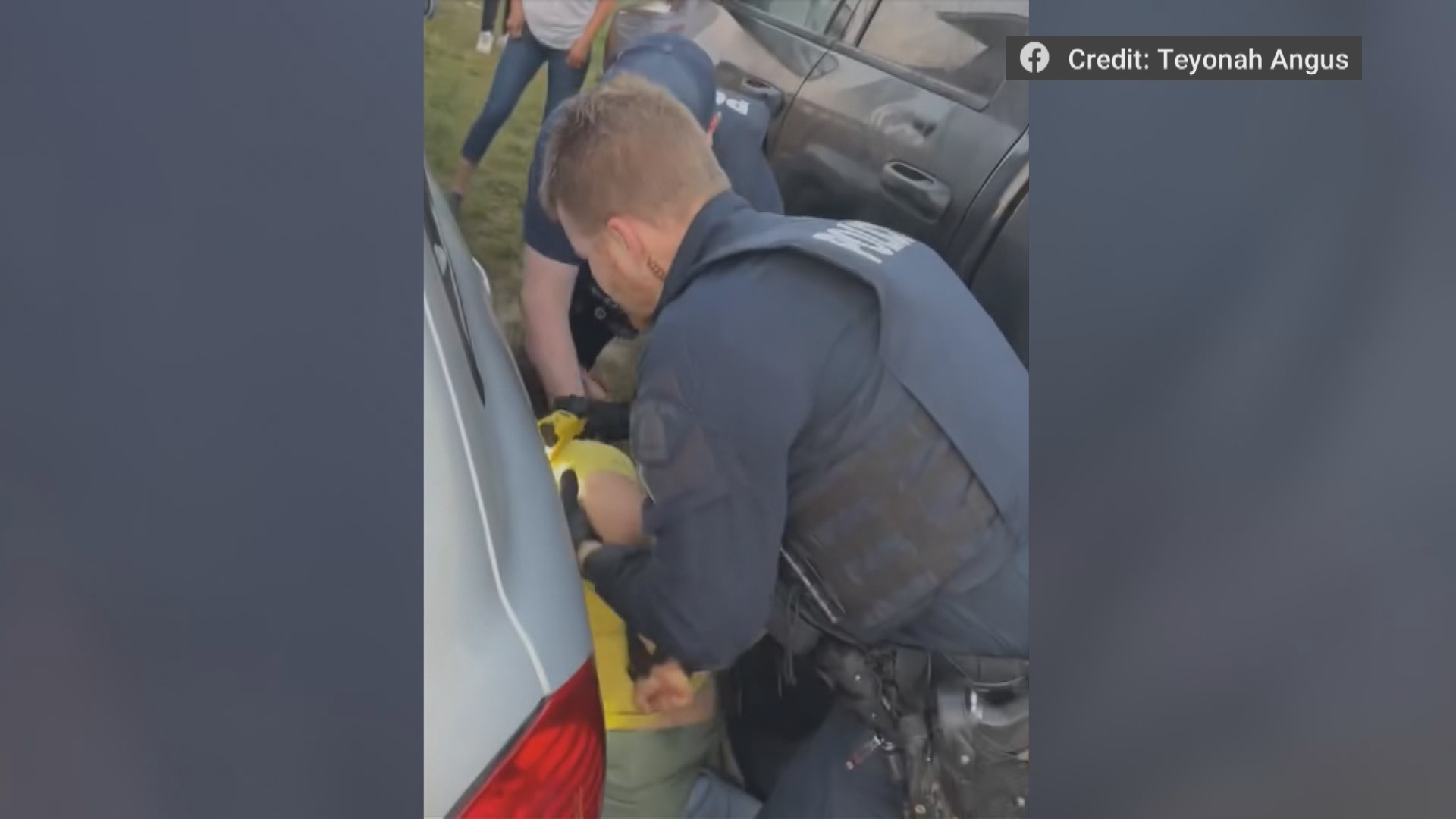
In the digital footage that spread like wildfire across social media, two Royal Canadian Mounted Police officers from the Loon Lake detachment are seen interacting with forty-year-old Rose Angus. What happens next is a visceral shock to anyone watching: punches thrown, a taser deployed, a body forced down onto the earth, a knee pressed perilously close to a neck. And then, the frame shifts to reveal Angus standing up, her face smeared and stained with fresh blood.
To understand why this digital clip became an immediate flashpoint, you have to look beyond the pixelated violence. You have to look at the invisible architecture of trust that exists—and too often fails—between Indigenous communities and law enforcement in Canada.
Police accounts tell one version of the morning. According to the RCMP, officers originally arrived around five in the morning responding to a report of an individual impaired by drugs on a public street. That initial call quickly spiraled. Officers spotted a man wanted on an outstanding warrant entering a residence. They approached, made arrests at the door, and encountered a volatile atmosphere.
Enter Rose Angus. According to police statements, she became confrontational during the execution of those arrests, allegedly striking two officers before descending the stairs outside the home. What followed was the deployment of intermediate weapons and physical force that has now triggered a storm of public outrage and institutional scrutiny.
Force. It is a sterile word for a terrifying thing.
When a trained officer decides to cross the line from verbal command to physical subjugation, they are using state-sanctioned violence. That authority is meant to be a shield, not a weapon of first resort. Federation of Sovereign Indigenous Nations Chief Bobby Cameron put it bluntly in the aftermath of the release: the public has every right to ask how a situation involving two fully equipped, trained officers and a single woman escalated to the point of strikes to the head.
Consider what happens next in these cycles. A video surfaces. Communities feel a collective, generational knot tighten in their stomachs. Leaders speak out, demanding transparency, demanding accountability, demanding a fundamental shift in how human beings are treated on their own lands.
Makwa Sahgaiehcan Chief Melvin Mooswa called the captured footage unacceptable, echoing a sentiment shared widely by the Meadow Lake Tribal Council and associated First Nations. They are not anti-police; they are pro-safety. There is a profound difference. Communities want protection from crime, but they refuse to accept protection that leaves their members bleeding on the asphalt.
The wheels of institutional accountability are turning, albeit slowly. The Saskatchewan Serious Incident Response Team has stepped in, accepting a request to independently investigate the conduct of the officers involved. Yet, the officers remain on duty while the inquiry unfolds, a detail that rankles advocates who wonder how public confidence can be maintained when accountability feels deferred.
Trust is a fragile ecosystem. Once clear-cut, it takes generations to grow back. Every time a video like the one from Makwa Sahgaiehcan hits the internet, another acre of that trust is bulldozed.
The investigation will issue its findings in time. Reports will be written, policy manuals referenced, and legal arguments weighed in quiet rooms far away from the northern Saskatchewan dust. But back on the First Nation, the blood on the pavement has been washed away, leaving behind something much harder to clean: the lingering question of who the law is actually built to protect.
Watch the report on the Saskatchewan RCMP arrest incident
This video report details the viral footage and the rising calls for accountability from First Nations leaders following the arrest in Makwa Sahgaiehcan First Nation.