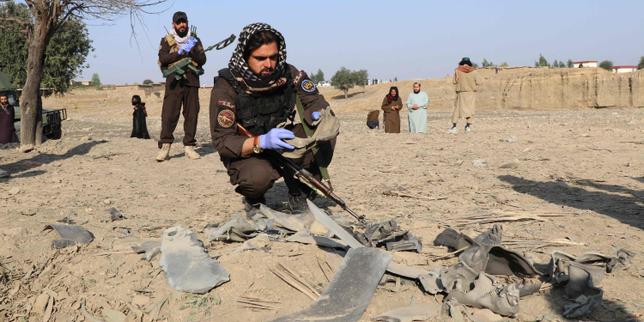
When fighter jets of the Pakistan Air Force cross into Afghan airspace to drop ordnance on military and insurgent installations, a long-simmering regional crisis enters a perilous new phase. For decades, Islamabad maintained a carefully curated fiction that cross-border friction was merely a localized border management issue. That fiction is dead. Pakistani airstrikes targeting sites within provinces like Khost, Paktika, and Kunar signal a fundamental collapse of relations between the military establishment in Rawalpindi and the de facto administration in Kabul. This is not a sudden aberration. It is the violent culmination of strategic miscalculations, unfulfilled promises, and a bitter security dilemma that neither side knows how to resolve.
The Illusion of Strategic Depth
To understand why Pakistani ordnance is detonating on Afghan soil, one must dismantle the decades-old dogma of strategic depth. For generations, Pakistani planners viewed Afghanistan through a singular lens. A friendly or compliant regime in Kabul was thought to guarantee a secure western flank against India, providing strategic breathing room in the event of a conventional war. To achieve this, Islamabad nurtured, funded, and protected various Islamist factions, culminating in the rise of the Afghan Taliban.
The miscalculation lay in assuming that ideology could be compartmentalized. Pakistani strategists believed they could sponsor militant proxies who would fight foreign occupiers and rivals abroad while remaining docile toward the Pakistani state. History proved otherwise. When the Afghan Taliban swept back into power in August 2021, celebrations erupted in certain circles of the Pakistani security establishment. They whispered that victory had finally been achieved. They were blind to the structural trap they had built for themselves.
The Cost of Historical Oversight
By outsourcing influence to non-state actors, the Pakistani state steadily eroded the rule of law within its own borderlands. Militant networks grew accustomed to autonomy, financial extortion, and ideological impunity. When those same groups turned their weapons toward Islamabad, demanding the overthrow of the Pakistani constitution in favor of a hardline religious state, the military establishment discovered that its proxies had become masters of their own destiny.
The Afghan Taliban victory in Kabul provided an immediate psychological and operational boost to their ideological brethren across the border. If the mighty United States and its Western allies could be expelled through protracted asymmetric warfare, the Pakistani state looked vulnerable by comparison. The ideological umbilical cord connecting the Afghan Taliban to the Tehrik-e-Taliban Pakistan was never severed, despite repeated assurances given to foreign diplomats by Taliban leadership.
The TTP Factor and Islamabad Ultimatum
The primary catalyst for these cross-border bombings is the Tehrik-e-Taliban Pakistan, an ideological sibling and historical ally of the Afghan Taliban. While the Afghan Taliban captured Kabul, the TTP stepped up its violent campaign against the Pakistani state, seeking to impose its own brand of strict religious governance in Islamabad's tribal districts. Operating from sanctuaries tucked inside rugged Afghan terrain, TTP commanders orchestrate ambushes, suicide bombings, and coordinated assaults against Pakistani security personnel with relative impunity.
Islamabad expected gratitude. Instead, they received defiance. When Pakistani generals demanded that Kabul dismantle TTP infrastructure and extradite high-value targets, the Afghan Taliban demurred, citing Islamic brotherhood, shared history, and internal political fragility. To crack down on the TTP would alienate hardliners within the Afghan Taliban movement, risking a splintering of their own forces and an open invitation for rival factions to absorb disgruntled fighters. Caught between domestic political survival and Pakistani ultimatums, Kabul chose defiance.
Anatomy of an Insurgent Sanctuary
The terrain along the porous frontier offers natural defense mechanisms that conventional militaries struggle to neutralize. Deep mountain valleys, extensive cave networks, and cross-border tribal affiliations make border control an exercise in frustration. TTP fighters move fluidly across the Durand Line, blending into local populations that share ethnic Pashtun ties spanning both sides of the frontier.
Intelligence assessments indicate that TTP leadership enjoys operational freedom in eastern Afghan provinces, utilizing abandoned coalition outposts and secluded compounds as training grounds and logistical hubs. For Islamabad, watching soldiers die in roadside bombings orchestrated from these safe havens became politically untenable. The civilian government in Islamabad and the military high command in Rawalpindi reached a rare consensus: patience had expired, and force was the only remaining instrument of persuasion.
The Mechanics of Cross-Border Strikes
As TTP attacks surged inside Pakistan, killing hundreds of soldiers and civilians, patience in Rawalpindi wore thin. Diplomacy yielded endless rounds of deadlocked talks in Islamabad and Kabul, punctuated by brief ceasefires that collapsed almost immediately. Frustrated by diplomatic paralysis, the Pakistani military shifted tactics. Airstrikes became the instrument of choice.
These are not random artillery duels across the disputed Durand Line. They are calculated, intelligence-led aerial bombardments designed to degrade TTP command nodes and signal to Kabul that sovereignty has a price. Yet, the collateral damage tells a different story. Reports from eastern Afghan provinces frequently detail civilian casualties, including women and children, transforming targeted counter-terrorism operations into potent recruitment tools for anti-Pakistani militants. Every bomb that misses a TTP commander or strikes a village home hardens public sentiment in Afghanistan against its eastern neighbor.
The Limits of Air Power
Relying on airstrikes to solve a complex insurgency is a well-documented tactical trap. Without boots on the ground to secure territory and intelligence networks capable of providing pinpoint accuracy in hostile terrain, air campaigns frequently hit the wrong targets. Each errant bomb reinforces the Afghan Taliban narrative of foreign aggression, rallying local tribesmen to the defense of their lands regardless of their feelings toward the TTP.
Furthermore, the Afghan Taliban possess rudimentary anti-air capabilities and electronic warfare limitations, but their response has taken the form of asymmetric retaliation. Border skirmishes, heavy artillery exchanges targeting Pakistani border posts, and asymmetric infiltration attempts test the resolve of the Frontier Corps stationed along the mountain passes. The conflict threatens to escalate from targeted punitive raids into a grinding conventional border war.
The Rhetorical Warfare and Nationalistic Backlash
Publicly, the Afghan Taliban administration condemns the strikes as a flagrant violation of national sovereignty, warning of severe consequences should the aggression persist. Defense ministers and spokesmen take to social media and press conferences to frame the Pakistani military as an occupier proxy, stoking historical grievances rooted in the disputed British-era border. For ordinary Afghans who have endured four decades of continuous conflict, these strikes validate an enduring narrative that foreign powers treat Afghan land as a permanent theater for proxy warfare.
In Pakistan, the narrative is equally polarized, driven by an acute sense of betrayal. The military leadership faces fierce domestic criticism for failing to curb terrorism despite fencing the entire 2,600-kilometer border at an immense financial cost. Public opinion, once sympathetic to the Afghan Taliban's return, has turned sour as coffins of young soldiers arrive home from frontier outposts. For the Pakistani state, striking targets inside Afghanistan is framed as an act of national self-defense against an ungrateful neighbor that provides sanctuary to murderers.
The Fencing Fallacy
Pakistan spent billions of dollars and years of grueling labor erecting a multi-tiered steel fence along the Durand Line, complete with trenches, observation posts, and biometric screening points. The project was hailed by military planners as a definitive solution to cross-border infiltration. In practice, the fence has proven to be a porous barrier.
Determined insurgents simply cut through the wire, bribe corrupt border guards, or exploit mountainous terrain where physical fencing is structurally impossible. The fence also alienated local Pashtun populations whose ancestral lands were bisected by the barrier, disrupting daily commerce, family visits, and traditional grazing rights. By creating economic hardship for border communities, the fencing project inadvertently stoked local grievances that militant recruiters easily exploited.
Economic Strangulation and Border Closures
The military escalation is mirrored by economic warfare. Trade routes linking Central Asia to South Asia through key crossings like Torkham and Chaman are frequently shuttered amid rising tensions. Trucks laden with perishable goods sit stranded for weeks, decaying under the sun while bilateral commerce grinds to a halt.
Pakistan has also cracked down on undocumented Afghan refugees, initiating mass deportations that push hundreds of thousands of people back into a humanitarian crisis they fled decades ago. This coercive diplomacy aims to squeeze the Afghan economy and pressure the Taliban administration into compliance. Instead, it deepens the humanitarian catastrophe, driving desperate populations further into poverty and cementing deep-seated animosity between the two populations.
The Transit Trade Weapon
Bilateral trade agreements, long utilized to keep landlocked Afghanistan economically viable, have become diplomatic pressure points. Pakistan holds significant leverage over Afghan imports and exports, utilizing Karachi port and overland transit routes as economic anchors. However, weaponizing trade often backfires, pushing Kabul to seek alternative economic corridors through Iran's Chabahar port or Central Asian republics.
When border crossings close, business chambers on both sides suffer immense losses, generating domestic pressure against government policies. Yet, security imperatives in Rawalpindi consistently override economic pragmatism, ensuring that trade remains hostage to the volatile security climate.
Regional Shockwaves and the Silence of Neighbors
This escalating bilateral crisis does not occur in a vacuum. It reverberates across a volatile geopolitical neighborhood. Beijing, which has poured billions into the China-Pakistan Economic Corridor and maintains pragmatic diplomatic ties with the Afghan Taliban, views the escalating violence with deep alarm. Chinese security concerns regarding Uyghur militant groups operating from Afghan soil mirror Pakistani anxieties, yet Beijing prefers quiet diplomacy and economic engagement over military confrontation, fearing that a destabilized Afghanistan could unravel regional security architecture.
Iran watches with a mix of opportunistic concern and wariness, managing its own water disputes and refugee flows with Kabul while keeping an eye on Pakistan's military posture. Central Asian republics, anxious about the export of radical ideology and narcotics, reinforce their southern borders, quietly hoping that Islamabad and Kabul can contain their feud before it spills over the Amu Darya.
The Risk of Regional Contagion
As bilateral mechanisms break down, the risk increases that external actors will step into the vacuum, backing rival factions to protect their sovereign interests. If Pakistan's military operations fail to suppress the TTP, Islamabad may be tempted to provide covert support to anti-Taliban resistance groups inside Afghanistan, effectively turning the clock back to the civil wars of the 1990s.
Such a strategy would be catastrophic. A renewed proxy war inside Afghanistan would guarantee infinite instability, ensuring that millions more refugees flee westward into Iran or northward into Central Asia, while terrorist networks find fertile ground to rebuild unhindered.
The Structural Deadlock
There is no clean exit ramp from this cycle. The Afghan Taliban cannot surrender their ideological brethren without risking civil war within their own ranks, nor do they possess the military capability or political will to police every rugged mountain pass along the eastern frontier. Conversely, the Pakistani military cannot afford to tolerate a permanent safe haven for terrorists who slaughter its soldiers with impunity.
When diplomacy fails and military force merely perpetuates the cycle of grievance, nations are left standing at the edge of an abyss. The bombings of military and militant sites inside Afghanistan are symptoms of a profound structural failure. They represent the moment where decades of geopolitical engineering collapsed under the weight of its own contradictions. Until both capitals confront the hard, unvarnished reality that security cannot be built on the ruins of their neighbor's sovereignty, the border will continue to bleed, and the drumbeat of escalation will grow louder.