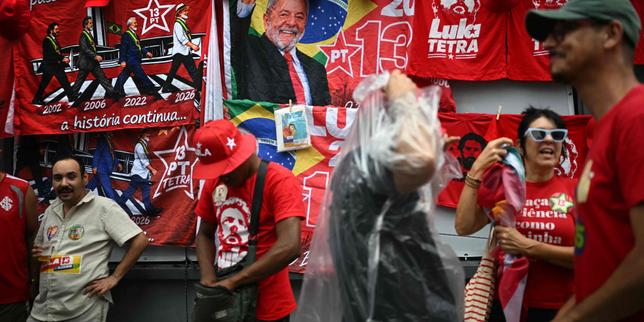
Elections in South America's largest democracy rarely go quietly. If you expected a straightforward battle for the future of Brazil, you missed the strange fatigue hanging over the entire country. The streets aren't buzzing like they used to. Voters look tired. Yet beneath this sleepy surface, a high-stakes power struggle is playing out, heavily shadowed by foreign friction and online warfare.
Let's look at what's actually happening on the ground.
The Fatigue of Extreme Polarization
You hear the word polarization thrown around constantly, but it doesn't quite capture the mood. People are just exhausted. Lula da Silva, running at age 80, represents the old guard of the left, trying to hold a coalition together while voters complain about cost-of-living pressures and public spending. On the other side, the conservative base—featuring figures like Flávio Bolsonaro—maintains a ferocious grip on significant portions of the middle class and business sectors.
The energy feels different compared to 2022. Back then, every street corner was a battleground. Now? Turnout enthusiasm among traditional left-leaning grassroots movements has cooled. People aren't marching with the same blind optimism. They are questioning whether either side can fix the structural debt, the soaring cost of everyday goods, and the massive rise of online betting addictions bleeding families dry.
The Shadow of External Interference
No modern election happens in a vacuum, least of all in Latin America. Washington's watchful gaze and outspoken commentary from American political figures have injected a volatile element into the mix. When foreign leaders openly question the validity or integrity of Brazilian democratic institutions before the votes are even fully counted, it changes the game.
Why does this matter? Because foreign interference isn't always about hacking voting machines. Often, it's about delegitimization. Planting seeds of doubt about institutional integrity gives losing factions an instant playbook to cry foul. It turns a tight domestic race into an international geopolitical football.
The Digital Trench Warfare
Social media is where the real fight lives. Forget traditional televised debates; nobody under forty watches them without scrolling through TikTok or X at the same time. Both camps spend millions trying to out-maneuver each other using algorithmic micro-targeting, WhatsApp chains, and aggressive rapid-response networks.
Candidates try desperately to disqualify each other online rather than win voters over with policy. Accusations fly daily regarding dark-money propaganda, fake news syndicates, and automated smear campaigns. When the margin between victory and defeat sits within a razor-thin statistical tie in polls like Datafolha, every viral clip can swing tens of thousands of undecided voters in 24 hours.
What Comes Next for the Country
The danger isn't just who wins the second round. It's whether the losing side will accept the math. When trust in courts, electoral boards, and media hits historic lows, democracy becomes fragile. Brazil is walking a tightrope between a weary population wanting economic stability and a radicalized political ecosystem primed to scream fraud at the first sign of a tight loss. Keep your eyes on the institutional pushback. The real crisis begins the morning after the votes are tallied.