The border does not care about your maps. It does not care about administrative decrees signed in colonial drawing rooms or disputed cartography inherited by post-partition states. Along the rugged frontier dividing Afghanistan and Pakistan, sovereignty is measured in artillery craters, closed crossing gates, and the blood of civilians caught between an unrecognized boundary and an asymmetric war.
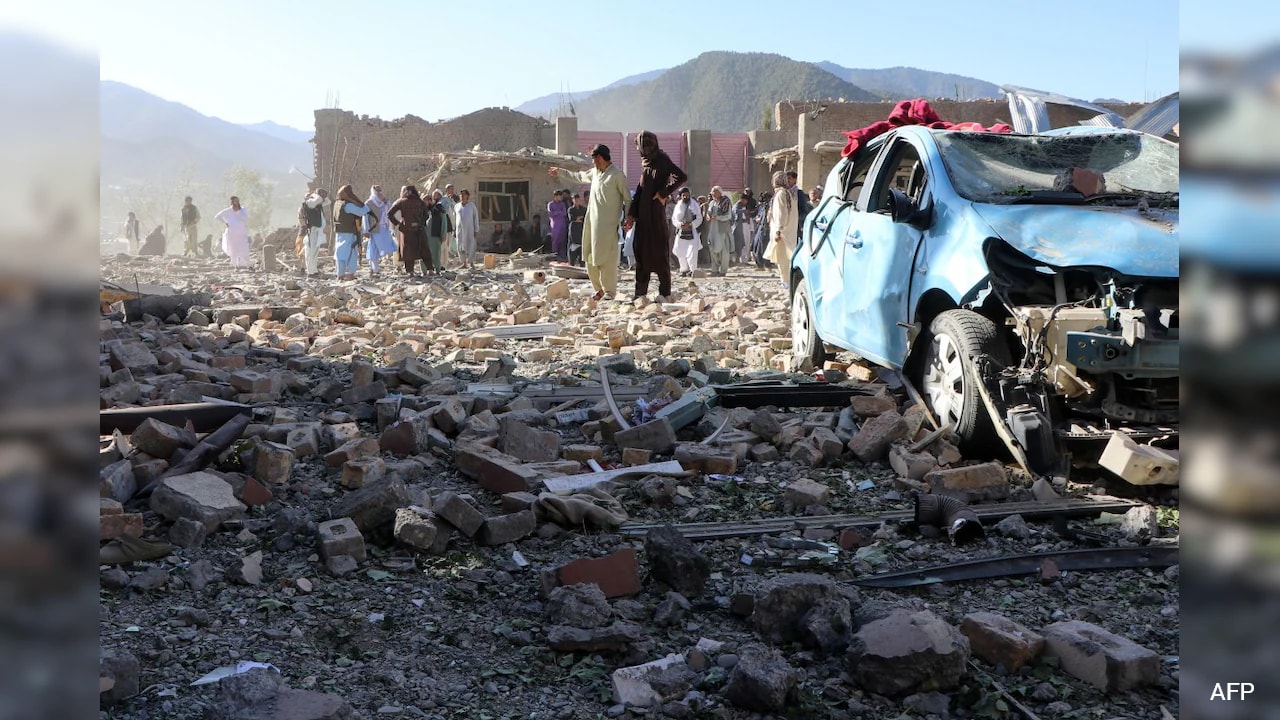
When reports emerged that Pakistani airstrikes inside Afghan territory left nine civilians dead, the diplomatic machinery did what it always does. Condemnations flew from Kabul. Denials or strategic silences emanated from Islamabad. Officials traded blame over who harbors who, while the actual human cost was quietly filed away as collateral damage in a shadow conflict that has outlived multiple administrations in both capitals.
To understand why nine people died in their beds in Khost or Paktika, you have to peel back decades of geopolitical failure. This is not a sudden flare-up. It is the predictable arterial bleeding of a borderland that has never been stabilized, only militarized.
The Cartography of Contention
The root of this violence stretches back to 1893 and the Durand Line, a boundary drawn by British diplomat Mortimer Durand to demarcate spheres of influence between British India and the Emirate of Afghanistan. Kabul has never formally accepted the line as an international border. Generations of Afghan leaders, regardless of their regime type, have viewed it as an artificial scar dividing ethnic Pashtun populations.
When the Taliban retook Kabul in 2021, Islamabad expected a compliant neighbor that would help secure its western flank. That calculation crashed against the hard rocks of nationalist reality. Even an isolated, unrecognized Taliban administration cannot afford to look soft on Pakistan regarding the border without inviting fierce domestic backlash.
Pakistan, meanwhile, faces a severe internal security crisis. The Tehrik-e-Taliban Pakistan, or TTP, has waged an increasingly aggressive insurgency against the Pakistani state, utilizing safe havens across the Afghan border. Islamabad demands that Kabul dismantle these networks. Kabul denies they are there, pointing instead to Pakistan's own intelligence failures and domestic governance issues.
Into this stalemate steps the air force. When intelligence indicates a high-value TTP commander is sheltering near the frontier, command structures in Rawalpindi weigh the strategic imperative against the diplomatic risk of violating Afghan airspace. Too often, the calculus favors action. The jets fly. Munitions drop. And villagers thousands of miles away from the decision-making tables pay the ultimate price.
Anatomy of an Airstrike Escalation
Military operations conducted across contested borders follow a brutal, repetitive arc.
Intelligence collection in rugged terrain is notoriously difficult. Relying on electronic intercepts, human sources with their own local vendettas, and grainy drone feeds creates massive margins for error. A compound identified as a militant staging ground turns out to be a multi-generational family home. A gathering of armed men described as a command cell is revealed to be a local dispute resolution council, or jirga.
When a strike misses its intended high-value target or kills non-combatants instead, the political fallout is immediate. The Afghan government faces intense pressure to retaliate, usually resulting in localized border skirmishes using heavy mortars and artillery. Trade routes close. Freight trucks loaded with perishable goods rot at the gates of Torkham and Chaman, strangling local economies that depend on cross-border commerce.
Civilians suffer a double displacement. First, they live under the constant anxiety of overhead drone surveillance and night raids. Second, they face economic ruin when border closures cut off their livelihoods. The international community issues brief expressions of concern, humanitarian aid organizations scramble to assess the damage, and the cycle resets, waiting for the next trigger event.
The Regional Spillover
This is no longer a bilateral dispute between two dysfunctional neighbors. The friction along the Durand Line threatens to destabilize an already volatile South Asian corridor.
Regional powers watch closely. Beijing, heavily invested in the China-Pakistan Economic Corridor, worries deeply about militant groups using Afghan soil to strike Chinese interests in Pakistan. Washington maintains over-the-horizon counterterrorism interests in the region, quietly sharing intelligence with various actors while publicly keeping its distance.
Yet, treating the TTP insurgency solely as an Afghan harboring problem ignores the deep structural grievances within Pakistan's own tribal districts. Decades of military operations, forced displacements, and economic neglect have created fertile ground for radicalization. Building fences and launching retaliatory airstrikes treats the symptom while letting the underlying disease spread unchecked.
Kabul's approach is equally flawed. By offering tacit hospitality or looking the other way regarding anti-Pakistani militants, the Taliban leadership plays a dangerous game of strategic ambiguity. They assume they can manage the blowback without provoking a full-scale conventional confrontation. That assumption underestimates the desperation of a Pakistani military establishment that feels cornered by internal economic collapse and resurgent militancy.
The Unresolved Horizon
Nine more graves have been dug in the rocky soil of the frontier. Families have mourned their dead under the indifferent gaze of armed guards manning checkpoints that divide families, tribes, and futures.
Neither side has the appetite for an all-out war, but neither has the political courage to negotiate a sustainable security framework. Pakistan cannot bomb its way to domestic stability across an uncooperative border. Afghanistan cannot build a viable state while serving as an arena for proxy wars and cross-border reprisals.
Until both capitals stop treating the borderlands as a disposable buffer zone and start addressing the systemic failures of governance, intelligence sharing, and regional diplomacy, the casualty tolls will continue to rise. The next airstrike is not a question of if, but when, and the civilian cost will remain the currency of a war without an exit strategy.