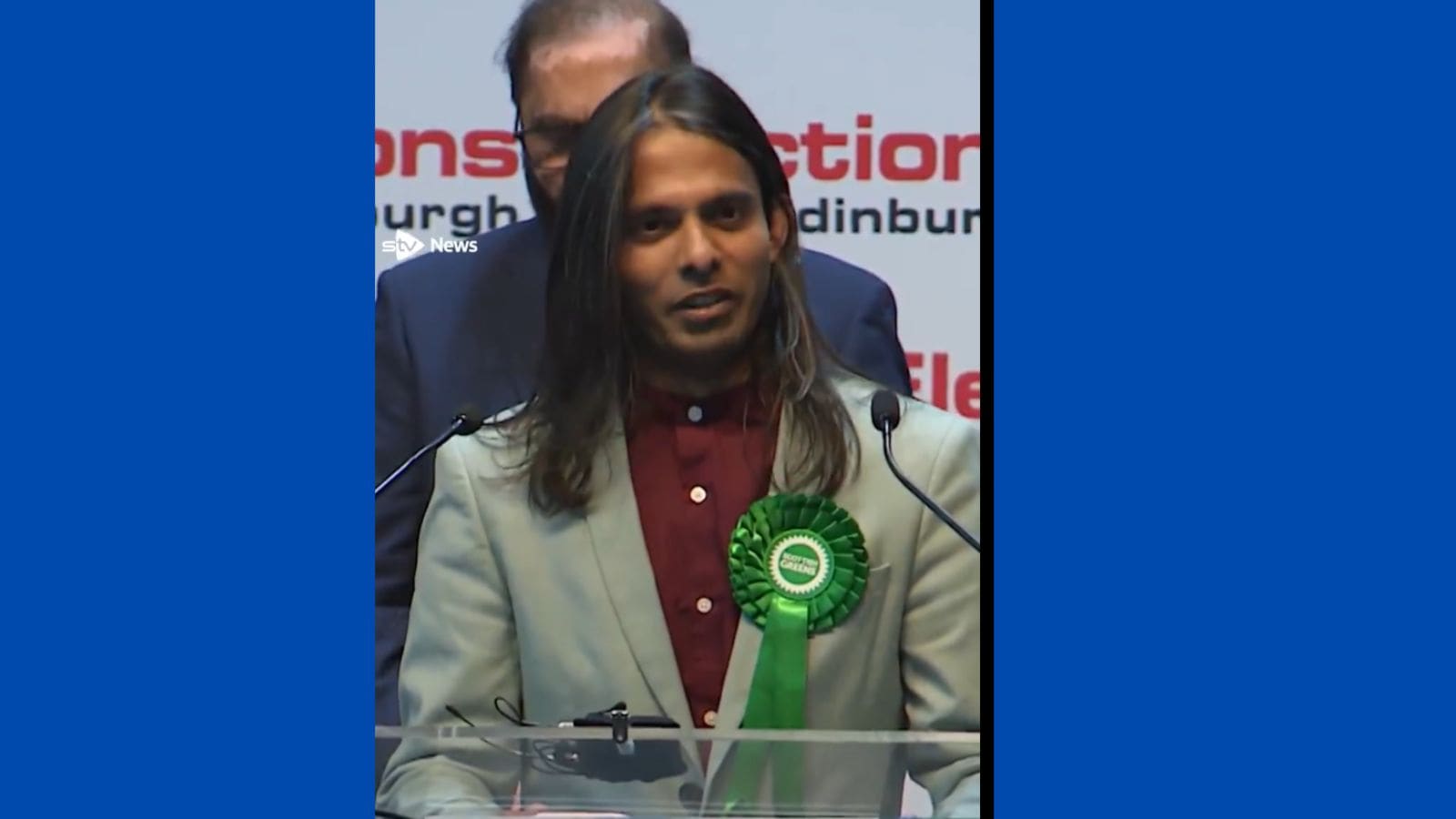
The air inside the Scottish Parliament has a specific weight to it. It smells of polished oak, old stone, and the sharp, metallic tang of cold North Sea wind that sneaks through the glass of the Canongate. Most people who walk these halls do so with the heavy tread of certainty. They carry the weight of lineages, of Scottish soil under their fingernails, or at least the comfort of a passport that matches the accent of the room.
Then there is Iris.
She did not arrive with a silver spoon or a birthright tied to a Highland glen. She arrived with a suitcase, a temporary visa, and a lived reality that most politicians only discuss in the abstract during late-night committee meetings. Her victory wasn't just a political shift; it was a glitch in the matrix of how we define "belonging."
The Weight of a Stamp
To understand why a woman of Indian origin, identifying as transgender and holding no permanent residency, winning a seat in Edinburgh matters, you have to understand the fragility of the "Temporary."
Imagine living your life in three-year increments. Every decision—the couch you buy, the cat you adopt, the career path you forge—is shadowed by an expiration date stamped in purple ink. For many, this uncertainty breeds a quiet, flickering sort of life. You keep your head down. You don't make waves. You certainly don't run for office.
But Iris chose to stand.
Her election to the Scottish Parliament is a defiant scream against the idea that your right to contribute to a society is dictated by the permanence of your paperwork. In the dry language of the competitor's reports, she is a "trans candidate without a permanent visa." In reality, she is a human being who looked at the crumbling infrastructure of her adopted home and decided she was the one to fix it, even if she might be asked to leave it tomorrow.
Two Fronts of a Single War
The narrative around her win often splits into two tidy boxes: the "trans" story and the "immigrant" story. This is a mistake. For Iris, these aren't separate battles. They are a single, fused experience of being an outsider looking in.
Consider the hypothetical—but very real—experience of walking into a GP surgery as a trans woman of color with a visa nearing its end. You are navigating a healthcare system that is increasingly skeptical of your identity, while simultaneously fearing that any "trouble" or "cost" you incur might be flagged by the Home Office. It is a double-bind of invisibility. You want to be seen for who you are, but you need to stay hidden to stay safe.
When Iris campaigned, she wasn't just talking about gender recognition acts or visa reform as academic points. She was talking about the knot in the stomach that millions of people feel every time they open a letter from a government department. She turned that private dread into a public mandate.
The Ghost in the Chamber
There is a particular irony in her seating. The Scottish Parliament, or Holyrood, was designed to be "new." It was meant to be the democratic answer to the stuffy, wood-paneled elitism of Westminster. Yet, even in a "new" parliament, the ghost of the "ideal citizen" haunts the benches. That ideal citizen is usually white, usually cisgender, and always, always British.
Iris is a ghost that refused to stay in the shadows.
She represents a growing demographic in Scotland: the global Scot. These are people who weren't born to the land but chose it. They pay taxes into a system that doesn't always guarantee them a future. They care for Scottish elders in care homes, they teach Scottish children in schools, and now, they sit in the Scottish Parliament making laws for people who might never have met someone like them.
The skepticism she faces isn't just about her policies. It is a visceral reaction to the blurring of borders—both the borders of the nation and the borders of the body. If a woman can change her gender, and if a foreigner can lead a nation, then the old structures of "us" versus "them" begin to dissolve.
That dissolution is terrifying to some. To others, it feels like oxygen.
The Logic of the Heart
Critics will point to the legalities. They will ask how someone who may technically have to leave the country in a few years can represent a constituency. They focus on the bureaucracy of the visa, the technicality of the "permanent."
But the logic of the heart is different.
Representation isn't about how long you've been in a chair; it’s about whose voices you carry with you when you sit in it. For the young trans kid in a rural Scottish village, Iris is proof that the world isn't as small as it feels. For the immigrant working three jobs to keep their family afloat, she is proof that the "temporary" label doesn't mean you are a secondary character in the story of your own life.
She didn't win because she is trans, and she didn't win because she is Indian. She won because she spoke to a shared Scottish experience that transcends both: the feeling of being an underdog. Scotland has always loved a fighter who takes on the big, cold machinery of the establishment.
The Unwritten Future
The victory is won, but the story isn't over. The visa remains a ticking clock. The political climate remains polarized. The vitriol on social media hasn't slowed down; if anything, her success has made her a larger target for those who believe she shouldn't exist, let alone govern.
But watch her when she speaks.
There is no "imagine a world" idealism in her eyes. There is the grounded, gritty reality of someone who has had to fight for the right to breathe the same air as her colleagues. She knows the stakes are higher for her. Every word she speaks in the chamber has to be twice as sharp because her right to be there is questioned ten times as often.
She is not a symbol. Symbols are static and easy to ignore. She is a disruption.
As the sun sets over Arthur's Seat, casting long, purple shadows across the Parliament's jagged roof, the reality of her presence sinks in. The laws of Scotland are now being shaped by a woman who the Home Office considers a guest. It is a beautiful, chaotic contradiction.
It reminds us that the land belongs to those who love it enough to fight for it, regardless of where they started or what the ink on their passport says. The future of Scotland isn't just written in the history of its clans, but in the courage of its newcomers who refuse to be temporary.
The oak benches of Holyrood feel a little less cold today.

