The leather of the briefcase was already worn at the corners, scuffed from overhead bins on red-eye flights between Shenzhen, Frankfurt, and Detroit. Inside lay a stack of folded memos printed on thick, heavy paper—the kind of paper that does not rustle easily when your hands begin to shake from jet lag.
For thirty years, men and women like this executive—let us call him Director Lin, a composite figure standing for the quiet architects of modern manufacturing—had measured their lives in assembly lines, factory floor yields, and shipping container manifests. They understood tolerances measured in microns. They understood the bitter, unyielding math of lithium-ion cell chemistry and copper pricing.
They did not understand protocol. Not like this.
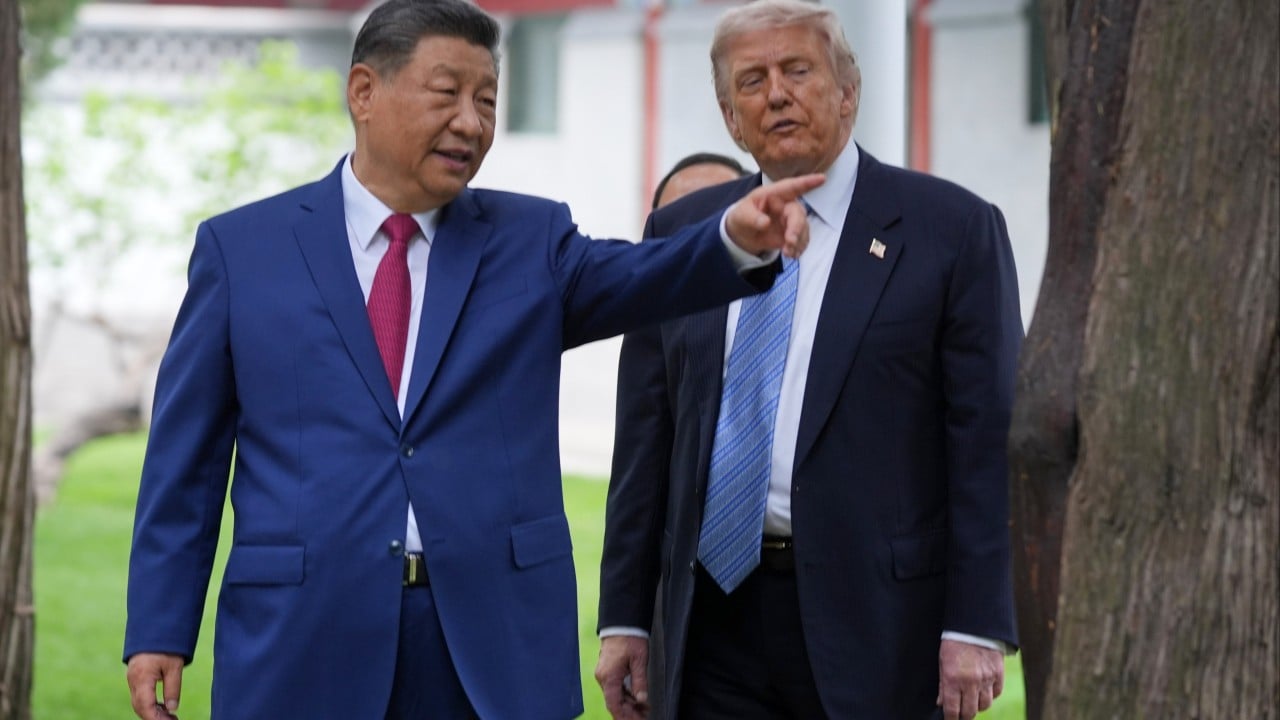
When rumors began to solidify in diplomatic backchannels that corporate titans from China’s most formidable industrial sectors would likely join President Xi Jinping on an upcoming journey to the United States, the atmosphere in corporate headquarters shifted overnight. This was not a trade delegation of bureaucrats in matching gray suits who spoke in bloodless acronyms. This was the engine room itself.
To understand the weight of that potential boarding pass, one must look at the trio of companies whispered to be in the passenger manifest: BYD, Xiaomi, and Innolight.
At first glance, they appear to have little in common. One builds electric vehicles that crowd highways from Oslo to Bangkok. Another began as a smartphone maker before transforming into an ecosystem giant that now rolls sleek electric sedans off automated assembly lines. The third makes high-speed optical transceivers—the tiny, blindingly fast fiber-optic components that let massive artificial intelligence data centers talk to one another across oceans without dropping a single packet of data.
They are disparate entities. Yet, taken together, they represent the entire nervous system of twenty-first-century industrial power: energy, mobility, connectivity, and artificial intelligence.
Consider what happens inside a factory floor in Shenzhen at three o'clock in the morning. The fluorescent lights hum with a high, sterile whine. Robotic arms snap spot-welds onto chassis with terrifying precision. Millions of dollars of inventory flow through logistics veins every hour. Behind those physical motions are human beings who started with nothing in the economic reforms of the late twentieth century, working out of rented garages or drafty concrete workshops, building a manufacturing base that reshaped global commerce.
Now, those same founders and senior executives are packing bags for a summit where the air will be thick with tension, suspicion, and high-stakes negotiation.
The friction between Washington and Beijing is not an abstract spreadsheet entry. It is lived by every engineer who wakes up wondering if their supply chain will be severed by a new tariff schedule or an export control regulation signed twelve time zones away. It is felt by supply chain directors who maintain two parallel sets of blueprints: one for the world as it was, and one for the fractured world as it threatens to become.
When an executive steps onto a state aircraft alongside a head of state, the symbolism is deafening. It tells the world that the separation between statecraft and corporate strategy has dissolved entirely. Governments no longer simply regulate commerce; commerce is the foreign policy.
Director Lin spent his Tuesday reviewing briefing packets that read like military intelligence dossiers. They detailed the specific political sensitivities of congressional committees, the shifting moods of American labor unions, and the delicate rhetoric required to discuss supply chain resilience without sounding threatening. He adjusted his tie in front of a hotel mirror in Beijing, feeling the strange vertigo of a man who prefers the predictable logic of machinery suddenly thrust into the unpredictable theater of international diplomacy.
Machinery does not care about politics. A battery cell releases its electrons according to electrochemistry, not ideology. An optical transceiver routes light through a glass fiber regardless of who holds the presidency. But the factories that build them, the capital that funds them, and the markets that consume them are trapped in a fierce geopolitical undertow.
The United States market remains the great prize and the great anxiety. For all the talk of decoupling and self-reliance, the economic gravity between the two superpowers is immense. American consumers want affordable electric vehicles, smart devices, and the high-speed infrastructure required to feed the insatiable appetite of generative artificial intelligence. Chinese manufacturers want access, scale, and validation on the global stage.
Yet every handshake carries a risk. Every photo opportunity can be dissected by cable news anchors on both sides of the Pacific as either a sign of dangerous appeasement or a cynical ploy.
This is the invisible burden carried by the delegation. They are not merely selling cars, phones, or transceivers. They are carrying the reputation of an entire industrial transformation. They are proof that a nation once written off as a low-cost assembler of plastic toys and textiles could climb the value chain to become a technological powerhouse.
History is replete with moments where merchants and monarchs traveled together. In earlier centuries, it was silk and spices carried across desert routes under the protection of imperial guards. Today, it is silicon wafers, lithium-ion battery packs, and optical lasers carried in the belly of a wide-body jet, protected by layers of security details and diplomatic immunity.
Yet the vulnerability remains the same. A single misspoken word in a closed-door roundtable can wipe billions of dollars off market valuations before the landing gear has even retracted on the return flight.
As the departure date draws closer, the internal memos grow thicker. Coffee cups multiply on glass-topped boardroom tables. Executives who normally spend their days reviewing yield rates and engineering roadmaps find themselves practicing handshake etiquette and studying the biographies of American governors and corporate leaders they will meet across polished mahogany tables.
They know that the world is watching. They know that the headlines will scream about trade wars, espionage fears, and geopolitical dominance.
But beneath the noise of the pundits lies a quieter, more stubborn human reality. It is the desire to build, to sell, to connect, and to survive. It is the ambition of people who built empires out of raw concrete and empty ambition, now stepping out onto an American tarmac to face a chilly reception and an uncertain horizon.
The jet sits on the runway, its engines spooling up with a low, gathering roar. The cabin lights glow softly against the gathering dusk. Inside, the seats are quiet. Briefcases are stashed away. Laptops are closed.
For a brief moment before takeoff, there is only the hum of the turbines and the steady breathing of passengers who know that nothing will ever be quite the same once the wheels touch down on the other side of the ocean.