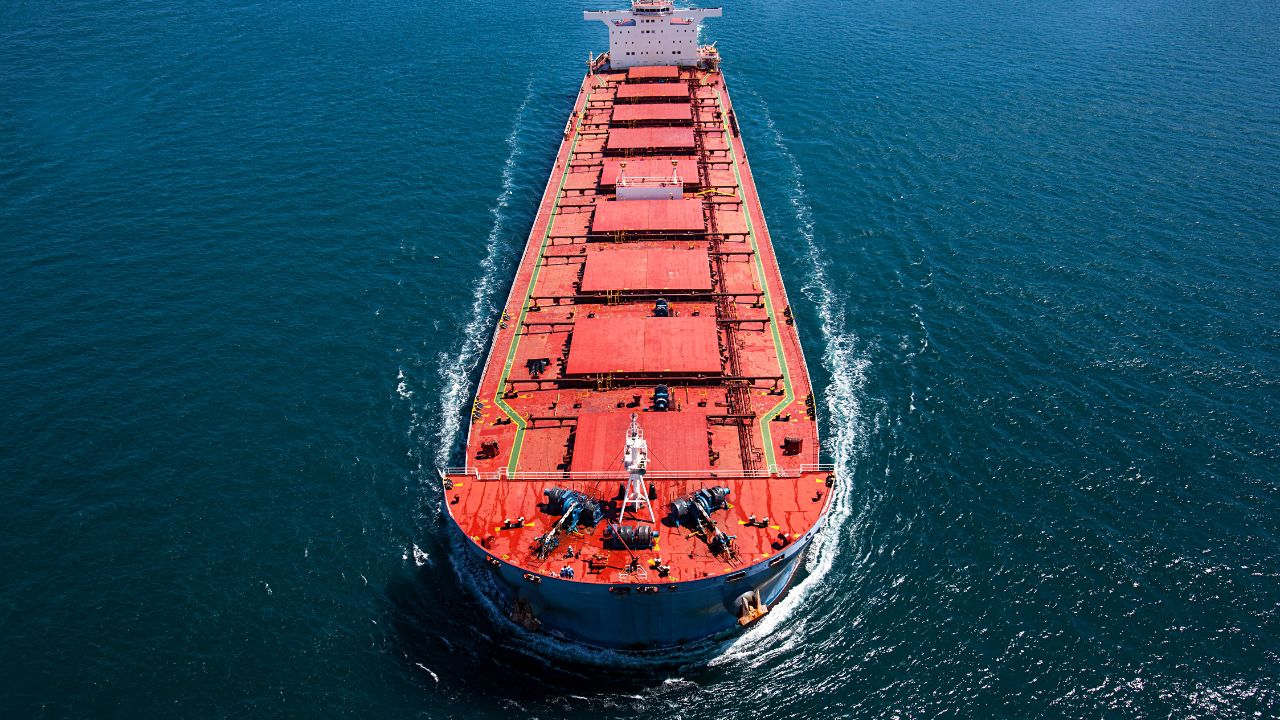
A standard shipping container is an unremarkable object. It is a corrugated steel box, usually painted a weathered maroon or ocean blue, dented by the casual violence of global commerce. It holds no inherent drama. Inside might be thousands of running shoes, or components for smart TVs, or frozen poultry destined for a supermarket half a world away. We do not think about these boxes. We do not think about the men and women who move them. They exist in the blind spot of modern civilization, a floating conveyor belt that makes the miracle of overnight delivery and cheap consumer goods possible.
Until the sky explodes.
Imagine standing on a bridge of steel, surrounded by nothing but the flat, blinding glare of the Gulf of Aden. The heat is thick enough to chew. Beneath your feet, two hundred thousand tons of metal are throbbing with the steady, reassuring heartbeat of a massive diesel engine. Then comes the whine. It is a high-pitched, mechanical shriek that cuts through the wind. Before you can look up, a drone—no larger than a lawnmower but packed with military-grade explosives—slams into the superstructure. Fire follows. The smell of burning paint and scorched wiring fills the air. The nearest coastline is a jagged strip of desert controlled by militia forces who view you not as a human being, but as geopolitical leverage.
This is no longer a hypothetical nightmare. It is the daily reality for hundreds of Indian seafarers navigating the choke points of global trade.
The maritime industry recently shuddered under a series of escalating attacks on commercial vessels in the Red Sea and the Gulf region. Missiles and drones, once the exclusive domain of standing armies, are now standard tools for regional factions looking to disrupt the global economy. In response to this asymmetric warfare, the Indian government issued an urgent, unprecedented advisory. The directive was stark: shipping companies must stop sending Indian seafarers into these high-risk conflict zones.
It was a bureaucratic document, drafted in the clean, air-conditioned offices of New Delhi. But its ripples are tearing through the lives of families thousands of miles away, from the coastal villages of Kerala to the high-rise apartments of Mumbai.
To understand why this matters, you have to look at the numbers, and then you have to forget them. India provides roughly ten percent of the global seafaring workforce. Walk onto any cargo ship, oil tanker, or bulk carrier in the world, and you are almost guaranteed to find an Indian captain, chief engineer, or deckhand. They are the backbone of maritime trade. When a nation with that much skin in the game tells its workers to pull back, the entire mechanism of global logistics begins to grind and groan.
But the industry cannot simply stop.
Consider the dilemma of a young third mate from Chennai. Let us call him Aarav. Aarav is twenty-six. His salary supports his aging parents, pays for his sister’s university tuition, and covers the mortgage on a modest apartment. For months, he has been watching the news tickers with a knot in his stomach. He knows the danger. He has seen the footage of the True Confidence, a Barbados-flagged bulk carrier that was struck by a missile in the Gulf of Aden, killing three crew members. He knows about the Galaxy Leader, hijacked by armed men dropping from a helicopter, its crew turned into hostages for a political theater they had no part in creating.
When Aarav’s crewing agency calls with his next contract, the route takes him straight through the Bab al-Mandab Strait—the "Gate of Tears."
If he says no, he protects his life, but he kills his career. In the hyper-competitive world of commercial shipping, refusing a berth can get you blacklisted. Agencies prefer mariners who do not ask questions, who accept the risk as part of the paycheck. If he says yes, he steps onto a floating target.
The Indian government’s advisory is an attempt to break this cruel leverage. By explicitly advising companies against deploying crew to these areas, New Delhi is throwing its diplomatic and regulatory weight behind the mariners. It gives the sailors a shield. It allows a captain to say, "My government forbids it," rather than "I am afraid."
Yet, the economics of the sea are notoriously slippery. Most global shipping operates under what are called flags of convenience. A ship might be owned by a German conglomerate, managed by a company in Cyprus, flagged in Panama, and crewed by Indians and Filipinos. When a missile is flying toward a hull, those legal abstractions dissolve. The only thing that matters is the flesh and blood on board.
The broader public rarely grasps how fragile this system is. We live in an era of digital frictionless reality. We tap a screen, and a product arrives at our door forty-eight hours later. This illusion of magic depends entirely on the physical bravery of people willing to spend six months at a time isolated on the open ocean.
When the Red Sea becomes impassable, ships are forced to take the long way around. They bypass the Suez Canal entirely, routing south around Africa’s Cape of Good Hope. This detour adds ten to fourteen days to a journey. It burns thousands of tons of additional fuel. It jacks up insurance premiums to astronomical levels.
Every extra mile sailed is a financial wound that bleeds into the global economy. The cost of shipping a container spikes. The price of oil ticks upward. Ultimately, the consumer pays for the detour at the gas pump and the grocery checkout line.
But the financial cost is a distraction from the real crisis. The true inflation is being measured in human anxiety.
The nature of seafaring has changed drastically over the last few decades. Sailors used to spend days, sometimes weeks, in port, exploring foreign cities and unwinding from the monotony of the voyage. Today, automated ports turn ships around in mere hours. Crew sizes have shrunk to the bare minimum. A vessel the size of three football fields might be operated by just twenty people. They work grueling shifts, plagued by sleep deprivation and the constant pressure of tight schedules.
Now, add the fear of sudden death.
Imagine trying to sleep in your cabin, knowing that a low-flying suicide drone could pierce the bulkhead at any moment. You listen to every vibration of the ship, wondering if that sudden shift in engine pitch means the bridge is taking evasive action. You stare at the radar screen during your watch, trying to distinguish between a harmless fishing boat and an incoming fast-attack craft crewed by militants.
This psychological toll does not vanish when the contract ends. Mariners return home with the hyper-vigilance of combat veterans, yet they receive none of the societal recognition. They are civilian merchants, not soldiers. They did not sign up to fight a war; they signed up to transport grain and electronics.
The Indian government's intervention highlights a deeper, structural failure in international law. The oceans are supposed to be global commons, governed by freedom of navigation. When non-state actors can effectively shut down a primary maritime artery using cheap, off-the-shelf technology, the old rules of deterrence no longer apply. Naval task forces from the United States, India, and European nations are patrolling these waters, shooting down missiles and escorting convoys. But a navy cannot be everywhere at once. A destroyer cannot protect every single merchant vessel spread across millions of square miles of ocean.
The shipping companies are caught in their own trap. They are bound by contracts to deliver goods on time. If they delay, they face massive penalties. If they reroute, they lose millions in fuel. Some companies have resorted to desperate measures, hiring private maritime security teams—often former special forces operators—to stand guard on the decks with automatic rifles.
But a rifle is useless against an anti-ship ballistic missile.
The advisory from New Delhi is a warning shot to the industry. It signals that India is no longer willing to trade the safety of its citizens for the preservation of global supply chain efficiency. It forces a conversation that the shipping cartels have avoided for decades: who bears the ultimate responsibility when a merchant ship becomes a battlefield?
The answer, so far, has been the crew.
The industry has traditionally viewed seafarers as an infinite resource. If one crew becomes too expensive or hesitant, there is always another developing nation ready to supply hungry young workers desperate for US dollars. But India’s move could disrupt this dynamic. If other major seafaring nations—like the Philippines, Ukraine, and China—follow suit, the maritime industry will face a catastrophic labor shortage in the very sectors where experience is most critical.
You can see the tension playing out in the quiet living rooms of port towns across the world.
Think of a mother sitting in a kitchen in Goa, watching the evening news. Her son is an oiler on a chemical tanker currently entering the Gulf of Oman. She doesn't understand the complex geopolitics of the Middle East. She doesn't know the difference between various rebel factions. She only knows that the sea, which used to be a source of prosperity for her family, has turned into a lottery of violence. Every time her phone rings, her heart skips. She waits for a message on WhatsApp, a simple "I am safe," to allow her to breathe for another twelve hours.
This is the invisible collateral damage of modern conflict. It is the weaponization of the mundane. The global economy has become so interconnected, so tightly wound, that a political grievance in one corner of the world can instantly jeopardize the life of a sailor from a completely different hemisphere.
The maritime world is watching closely to see how shipping lines respond to India’s stance. Will they respect the advisory and reroute their vessels, prioritizing human life over quarterly profit margins? Or will they look for loopholes, recruiting from countries with fewer regulatory protections, continuing to run the gauntlet for the sake of the bottom line?
The choice is not just economic; it is a moral calculus.
The next time you look at a consumer product, or fill your car with fuel, look past the plastic and the price tag. Think of the rust-streaked hull moving through the dark waters of the night. Think of the lookout on the wing of the bridge, binoculars pressed to his eyes, scanning the black horizon not for rocks or weather, but for the flash of a missile launch.
The steel boxes will keep moving because the world demands it. But the cost of that movement is no longer just measured in dollars per mile. It is being paid in the quiet, terrified courage of men and women who look at a gray stretch of water and know that their next breath might depend on a piece of shrift luck.