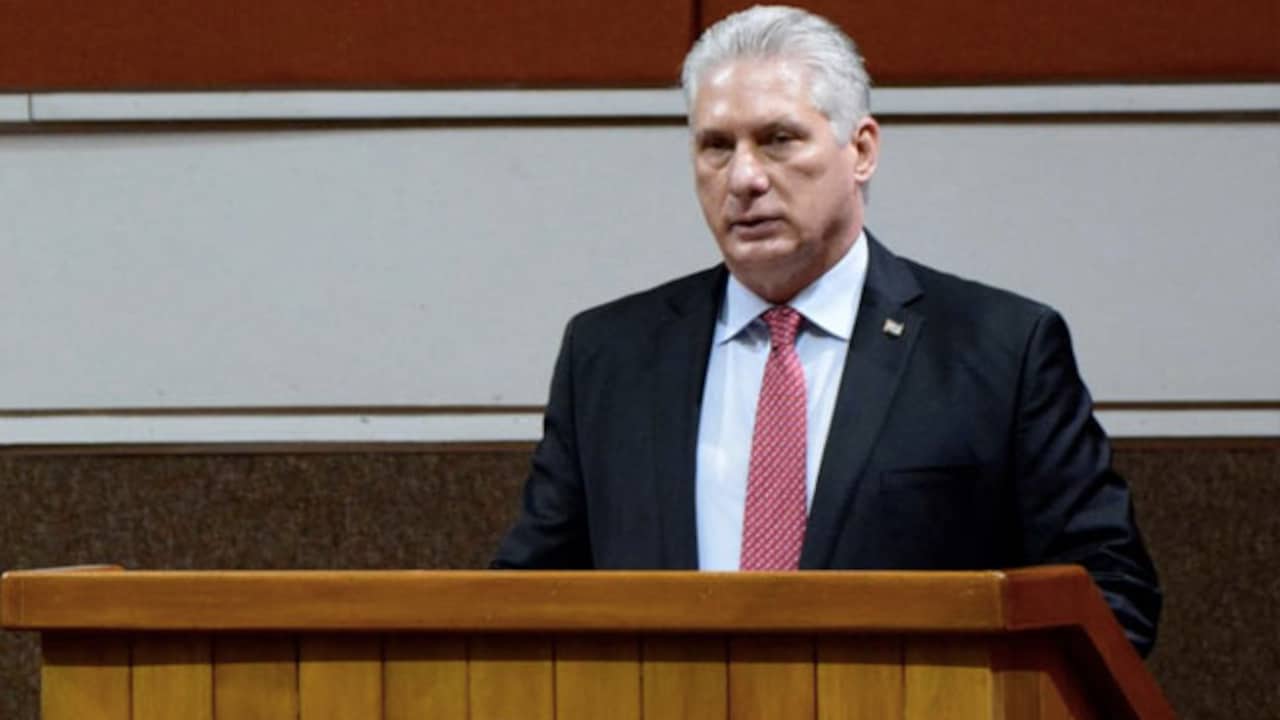
Every time Havana faces a blackout, a bread shortage, or a mass exodus of young professionals down through Central America, the script writes itself. State television rolls out the same tired talking points. Officials stand at podiums draped in flags and point a trembling finger straight north across the Florida Straits. The narrative is always identical. The United States is trying to starve, subvert, and suffocate the island. Washington wants to seize the sovereignty of the nation through embargoes and covert meddling.
It is a convenient story. It is also an intellectual fraud.
I have spent decades watching foreign policy analysts swallow this rhetoric whole. They parrot the talking points of state ministries as if geopolitical theater were economic reality. The lazy consensus in mainstream coverage accepts that Cuba's collapse is merely a consequence of external siege.
Stop buying the alibi.
The primary threat to Cuba's survival is not originating in Washington, District of Columbia. It is operating out of Plaza de la Revolución. The embargo is real, clumsy, and punitive, but treating it as the sole architect of the Cuban crisis ignores internal economic sabotage, administrative paralysis, and a deliberate fear of market reform. When you blame the neighbor for every broken pipe and empty shelf, you excuse domestic mismanagement and lock a nation in stasis.
The Geography of State Control
Let us define terms immediately. What is the United States embargo against Cuba? It is a complex set of statutory restrictions, trading bans, and financial penalties codified largely through the Helms-Burton Act and the Torricelli Act. It blocks direct bilateral trade in many sectors, penalizes third-country companies doing business with Havana, and restricts American tourism.
It is a relic of Cold War diplomacy that has failed to achieve its stated political goals for over six decades. That much is true.
Here is where the consensus diverges from reality. Analysts look at the embargo and assume it means Cuba exists in total isolation from global commerce. That is false. Cuba trades openly with the European Union, Canada, China, Vietnam, Mexico, and dozens of other nations. Food imports from the United States itself run in the hundreds of millions of dollars annually via agricultural exemptions.
The bottleneck is not an inability to buy goods. The bottleneck is an inability to pay for them, paired with an institutional refusal to let domestic producers keep what they earn.
Imagine a scenario where a private farmer in Pinar del Río grows tobacco or potatoes. Under the current bureaucratic machinery, that farmer must sell the vast majority of their yield to state collection agencies at heavily depressed, state-mandated prices. The state then fails to pay on time, withholds essential fuel and fertilizer, and controls the logistics chain from field to market.
When that farmer gives up and lets the fields go fallow, do we blame the White House? Of course not. We are watching the predictable death spiral of command economics.
The Anatomy of Manufactured Scarcity
Economists love to debate the mechanics of sanctions. They build complex models showing how restricted access to international lenders like the International Monetary Fund or the World Bank strangles capital formation.
Fair enough. But let us look at how Havana treats internal capital.
For decades, the state criminalized independent enterprise, choked private initiative, and demonized profit. While neighboring Caribbean nations built dynamic tourism and service sectors fueled by foreign direct investment and local entrepreneurship, Cuba locked down every corner of commerce. The state apparatus insisted that total centralized control was the only shield against foreign absorption.
What did that shield actually protect? It protected a bloated bureaucratic class from competition.
When the government finally permitted small private businesses, known as cuentapropistas, it saddled them with absurd tax burdens, restricted their legal right to import goods directly, and barred them from accessing wholesale markets. They were forced to buy retail supplies from state-run stores at exorbitant markups, competing directly with the very state bureaucracy that set the rules of the game.
This is not a siege by a foreign power. This is economic auto-immolation.
When officials claim the United States is trying to destabilize the island, they are weaponizing a half-truth to justify total political monopoly. If foreign meddling were the singular variable driving down living standards, then the loosening of restrictions during the Obama administration would have sparked an economic miracle.
Instead, what happened? The Cuban government responded to increased tourism and commercial engagement by tightening internal security, restricting the scope of private licenses, and clamping down on independent journalism. They realized something terrifying: economic freedom creates political independence. And political independence is the one thing the regime cannot tolerate.
The Remittance Paradox
Let us talk about hard currency. One of the primary arguments deployed by defenders of the status quo is that financial restrictions cut off the lifeblood of remittances sent by the diaspora in Miami and beyond.
The flow of cash from Florida to families in Havana is substantial. Yet, look at how the Cuban government intercepts and manipulates those dollars.
For years, remittances were funneled through military-controlled conglomerates like Fincimex, which took a massive cut, forced transactions through unfavorable exchange rates, and converted hard currency into local scrip or debit cards usable only in overpriced state-run dollar stores.
When Washington tightened restrictions on these specific military-linked entities, Havana cried foul. They framed it as an attack on ordinary families. But peel back the PR campaign. The regime was furious not because families were suffering, but because their primary mechanism for siphoning hard currency off the top of private transactions had been disrupted.
This is the core deception of the official narrative. Every restriction from abroad is seized upon by local authorities as an excuse to double down on internal centralization.
The Myth of Foreign Usurpation
The title of the traditional narrative is always about sovereignty. The United States wants to seize the island.
This phrase plays on historic anxieties rooted in the Platt Amendment and the ghosts of 20th-century interventionism. It is emotional dynamite. But it bears zero resemblance to modern geopolitical strategy.
No serious policymaker in Washington wants to govern Cuba. Running a bankrupt island nation of eleven million people with crumbling infrastructure, hyper-inflated state liabilities, and an alienated populace is a nightmare scenario that no American administration wants to inherit. The policy of Washington for decades has not been physical conquest; it has been containment, electoral pandering to domestic constituencies in Florida, and a lazy hope that economic suffocation would trigger an internal implosion.
That hope has failed. The regime has proven remarkably resilient at passing the cost of its failures down to the citizenry while preserving its own grip on power.
Meanwhile, the true seizure of the island's future is happening from within. When the most talented doctors, engineers, and tech workers board flights to Nicaragua or brave the Florida Straits on makeshift rafts, who is seizing the island's human capital? Is it the United States Coast Guard? No. It is the systemic hopelessness manufactured by a government that refuses to let its people prosper at home.
The Unspoken Solution
If you want to fix Cuba, you do not need concessions from the United States Congress. You need a total dismantling of the internal economic cage.
You need to dismantle the state monopolies on foreign trade. You need to grant full property rights to citizens. You need to allow independent cooperatives and private corporations to operate without asking permission from a party functionary. You need to open the banking sector to genuine competition and let the currency float based on actual productivity rather than arbitrary ideological fiat.
Will the United States embargo complicate those reforms? Initially, yes. Operating without easy access to American credit markets is a massive friction point. But it is not a fatal one. Nations with far fewer natural resources and much harsher geopolitical isolation have built thriving market economies by looking outward and liberating internal enterprise.
Vietnam did it. China did it in the late 1970s. They stopped blaming foreign demons, accepted the realities of global trade, and unleashed the creative energy of their own populations.
Cuba refuses to do this because economic liberation means the end of political monopoly.
Stop blaming the northern neighbor for a famine of initiative created at home. The blockade that matters most to the everyday Cuban is the one drawn with red ink inside their own capital, telling them how much they can earn, what they can say, and how far they are allowed to dream.


