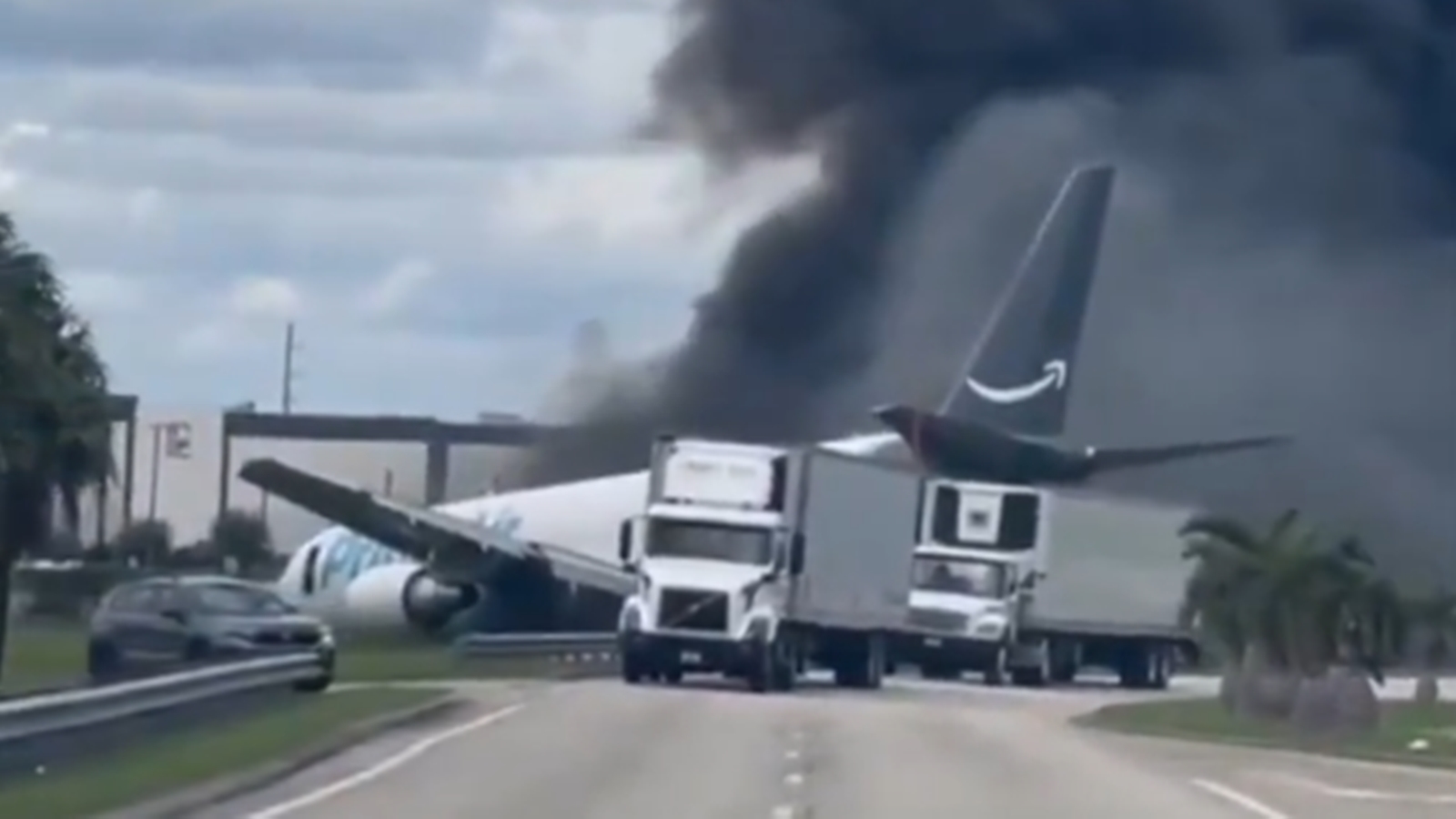
Every time a freighter punches through a perimeter fence or stalls out on a slick piece of tarmac, the playbook writes itself.
The media rushes to hyperventilate about wet braking coefficients, hydroplaning mathematics, and the archaic dimensions of asphalt strips built decades before widebodies weighed half a million pounds. Regulators show up with clipboards, muting the actual operational failure behind a thick fog of bureaucratic noise. They want you to stare at the grooves in the concrete. They want you to debate rubber contamination on touchdown zones and crosswind vectors.
It is a comfortable distraction. It protects the balance sheets of corporations moving billions of boxes under impossible velocity.
Let us look past the sensationalized headlines of cargo planes overrunning runways at major hubs like Miami and confront the uncomfortable reality. The accident report will eventually point a finger at weather anomalies, pilot decision fatigue, or minor mechanical discrepancies. That is what paperwork loves to do. It isolates variables to avoid indicting the entire architecture of modern supply chain velocity.
I have spent twenty years watching corporate logistics boards mandate impossible delivery windows while trimming safety margins down to the millimeter. When you treat aviation logistics like a software deployment where speed overrides physics, physics eventually bites back.
The Myth of the Controlled Environment
The narrative surrounding commercial cargo incidents always frames them as sudden, unpredictable acts of god. A torrential downpour hits. Visibility drops. The aircraft slips off the concrete like a toy on ice.
Except aviation does not operate in a vacuum. It operates in an ecosystem where corporate dispatchers push flight crews to land heavy because delaying a transit schedule triggers millions in downstream fulfillment penalties.
Consider a scenario where an aircraft operator faces a choice: divert to a facility three hundred miles away to burn fuel and wait out a severe weather front, or press into a congested primary hub on the razor's edge of braking action reports. The commercial incentive structure tilts heavily toward pressing forward.
We talk endlessly about pilot training and braking technology while ignoring the economic coercion baked into every dispatch release. When you push crews to operate at peak capacity around the clock, safety margins stop being absolute barriers. They become elastic bands stretched until they snap.
Why Standard Safety Audits Are Blind to Systemic Failure
When investigators walk the wreckage of a runway excursion, they look for broken pins, failed thrust reversers, and worn tread patterns. They treat the machine as an isolated entity.
This is a category error.
A modern cargo aircraft is not an autonomous unit. It is the mobile extension of an automated inventory management system. Every minute an asset sits on the ground waiting for weather to clear or taxiways to dry costs real capital. The pressure to maintain flow throughput—turning planes around in minutes rather than hours—compounds every operational risk.
To understand why aircraft overrun runways, you have to look at the dispatch desk, not just the cockpit window. You have to analyze the corporate culture that rewards schedule adherence over cautious conservatism.
When a company values uptime above absolute redundancy, mistakes multiply. A pilot dealing with microbursts, heavy fuel loads, and tailwind components is already working with a narrowed margin of error. Add an aggressive turnaround schedule and dispatch pressure, and you have engineered an environment where a minor miscalculation becomes a catastrophic event.
The Cost of Institutional Amnesia
Every major incident brings promises of reform. We hear about new runway safety areas, upgraded grooving techniques, and improved drainage systems. Millions of dollars flow into civil engineering projects designed to catch planes that shouldn't have been put in a compromising position in the exact same spot.
It is an expensive band-aid over a systemic wound.
Fixing the drainage on a Miami tarmac does nothing to fix the systemic scheduling pressure that forces heavy transport operations into marginal weather windows. Upgrading runway end safety areas is necessary civil engineering, but it treats the symptom while leaving the disease untouched.
If we want to stop cargo aircraft from overrunning runways, we have to change how we measure operational success. As long as velocity remains the only metric that matters to the boardroom, the tarmac will keep claiming the consequences.
Stop looking at the weather report. Start looking at the dispatch logs.