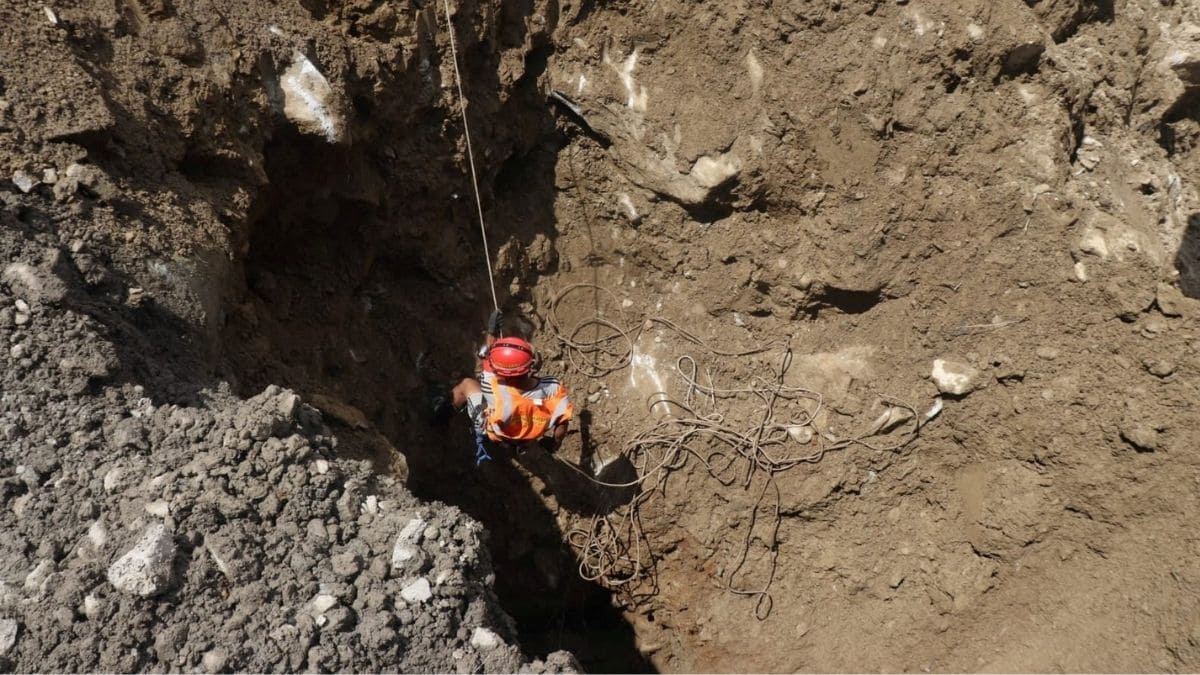
Every time a river swallows a construction site in the Himalayas, the media reaches for the exact same script. They call it an act of god. They point to the monsoon clouds, the unpredictable mountain topography, and the sheer fury of rising water. It is a comforting narrative. It lets project financiers sleep at night and allows regulators to hand out permits without looking in the mirror.
Stop buying the excuse.
The tragedy unfolding around Himalayan energy sites—where hundreds of workers vanish into the churning mud—is not a natural disaster. It is an engineering failure masquerading as a weather report. I have watched boardrooms authorize multi-million dollar turbine imports while cutting corners on basic site hydrology because the spreadsheet demanded a quicker timeline.
The Fallacy of the 100-Year Flood
Let us clear up the technical delusion right out of the gate. Engineers love to talk about historical data. They design tunnels, cofferdams, and diversion channels based on what the river did over the last fifty years.
That metric is dead.
Climate volatility has rendered historical water flow tables completely useless. When you build a run-of-the-river project in terrain as fragile as the Hindu Kush-Himalaya region, using past data to predict future risk is financial Russian roulette. Yet, project developers keep doing it because changing the safety thresholds cuts straight into the internal rate of return.
Imagine a scenario where a contractor builds a basement in a floodplain using data from a dry decade. When the river reclaims its space, nobody blames the contractor for ignoring basic geography. They blame the rain. Yet scale that exact same bad judgment up to a billion-dollar energy project, and plötzlich the press starts talking about unprecedented meteorological anomalies.
The math does not care about your budget constraints. If your diversion tunnel diameter cannot handle a sudden glacial lake outburst flood, your project design is flawed on day one.
The Human Cost of Corporate Amnesia
The standard reporting focuses on the headcounts and the rising tolls, treating the missing workers as tragic collateral damage in a noble quest for clean energy. That is polite fiction.
In reality, safety protocols on these remote sites are treated as bureaucratic checkboxes. Workers are routinely pushed into hazard zones during unstable shoulder seasons to hit quarterly milestones. When a wall of water breaches a poorly reinforced penstock or a tunnel fills with silt, the investigation committees fly in, nod sympathetically, and write reports about difficult working conditions.
Let us look at the actual mechanics of how these sites operate under pressure. Project managers operate on tight bonuses tied to power generation deadlines. Every day a tunnel sits idle because of heavy seepage or minor structural warnings costs tens of thousands of dollars. That economic gravity pulls decision-makers toward reckless optimism. They gamble with lives because the penalty for a washed-out tunnel is financial, while the penalty for delaying construction is immediate shareholder panic.
Rethinking the Energy Transition Narrative
The clean energy lobby has built a powerful shield around itself. Because hydropower produces low-carbon electricity, any critique of its execution is often treated as backhanded support for fossil fuels.
That is a false dichotomy. We can acknowledge the desperate need for renewable power without giving a free pass to reckless site selection and substandard civil engineering. Pushing deeper into fragile mountain ecosystems without dramatically upgrading our hazard tolerance is not progress. It is extraction capitalism wearing a green jersey.
If we want to stop writing obituaries for workers who never should have been in the path of a flash flood, we need to change how projects are funded and insured. Insurance underwriters need to stop accepting historical hydrology models written by consultants who have never spent a night in a base camp during a monsoon.
Regulators must stop treating worker safety as an internal compliance issue and start treating structural hydrology failures as criminal negligence. Until the financial penalty for building in the wrong place outweighs the profit of getting it done fast, the rivers will keep winning.
And the toll will keep rising.