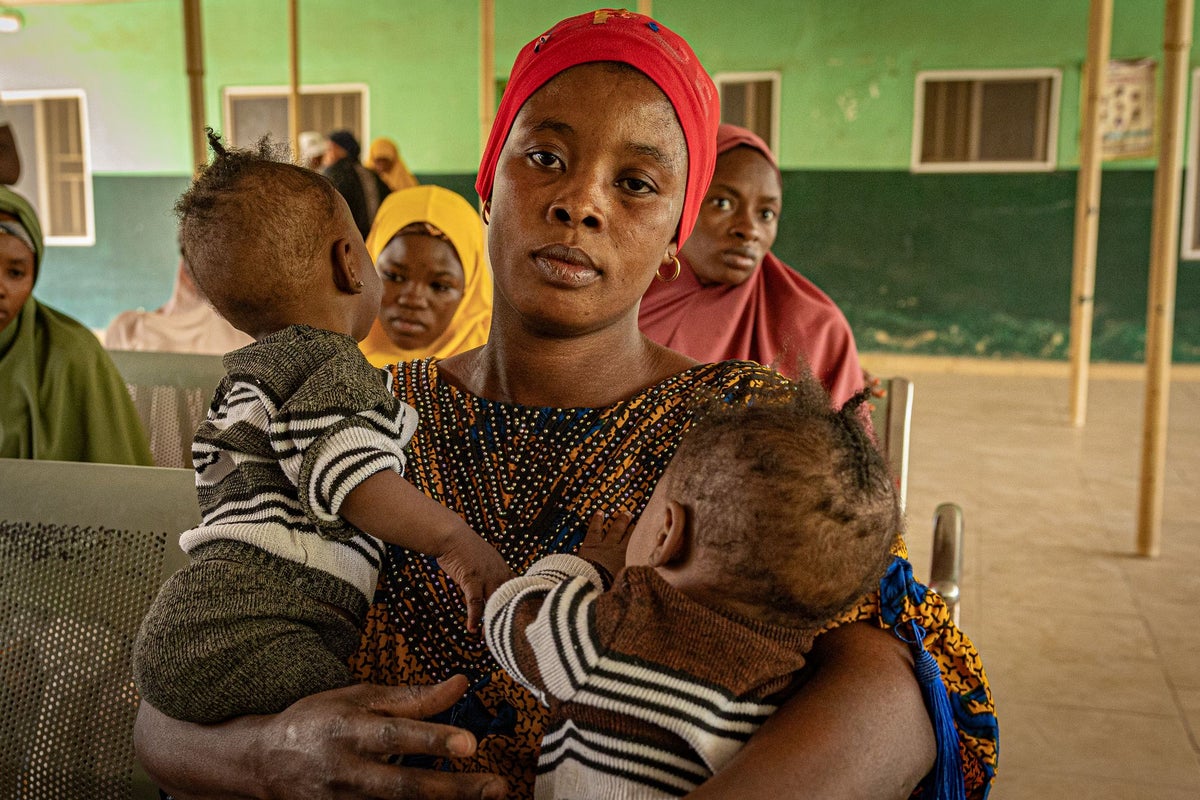
We love a neat, clean tragedy. Western media outlets live for the helpless pregnant mother stranded in a remote desert or a crumbling mud-brick clinic, waiting for a savior who never arrives. It makes for award-winning photography. It fills donor coffers. It lets comfortable people in London and New York shake their heads, send a check, and feel like they have solved systemic human fragility with a credit card.
It is also a profound, dangerous lie.
The lazy consensus says the worst places on earth to give birth are simply coordinates on a map where hospitals are scarce and roads are unpaved. Fix the infrastructure, drop in a fleet of four-wheel-drive ambulances, pour concrete, and presto, maternal mortality vanishes.
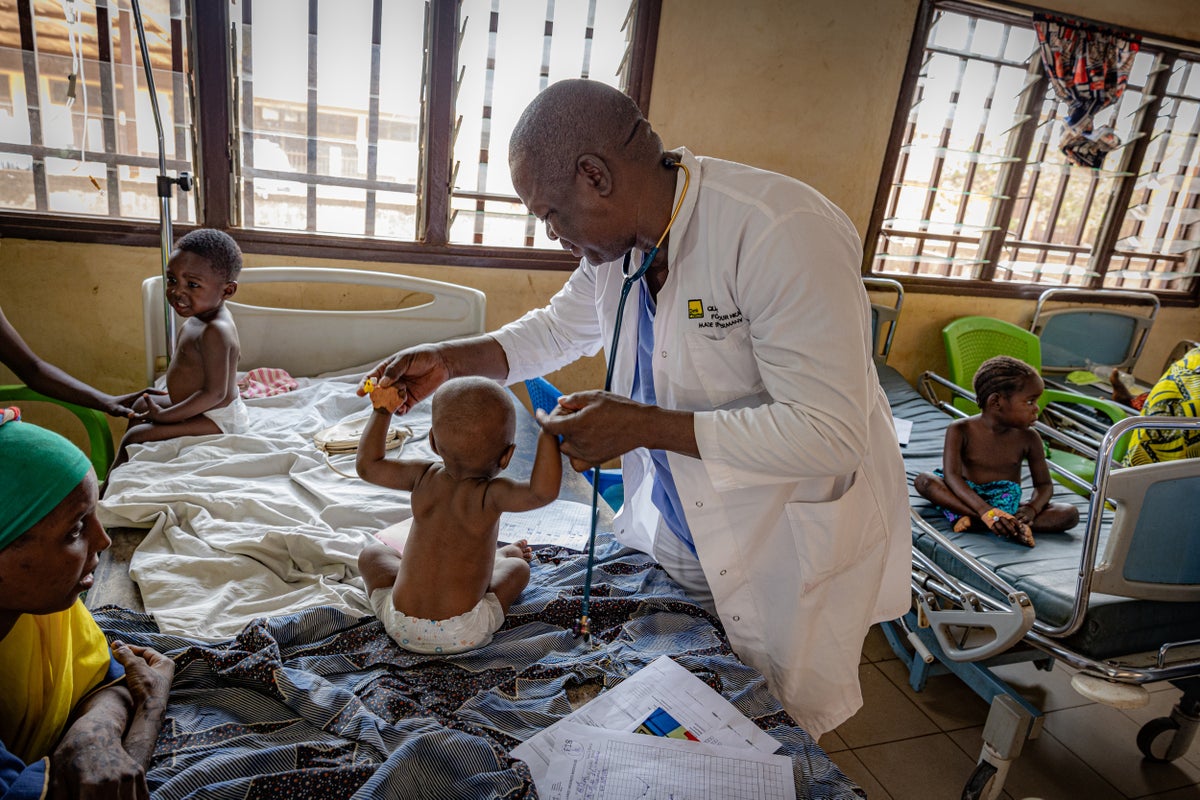
I have walked through maternity wards in post-conflict zones and rural outposts where the monitors were blinking and the operating tables were surgically sterile, yet women were still dying on the table. I have watched well-funded international aid organizations spend millions building state-of-the-art obstetrical units that sat empty because the local community preferred traditional birth attendants down the road.
Geography is a symptom, not the disease. The worst place to give birth is not a specific country or a zip code. It is anywhere human systems prioritize bureaucratic compliance, cultural dogmatism, and technological cargo cults over radical clinical execution and individual agency.
Let us dismantle the comfortable narrative.
The Cargo Cult Of Global Health
For decades, the global health industrial complex has suffered from a terminal case of magical thinking. The diagnostic framework goes like this: maternal mortality is high because there is no hospital. Therefore, build a hospital.
This is the obstetrical equivalent of building an airport runway in the middle of an empty field and expecting planes to magically land.
I have seen international NGOs blow millions on gleaming incubators and ultrasound machines shipped to regions with intermittent electricity and zero biomedical technicians. Within six months, the screens are dark, the filters are choked with dust, and the machines are serving as expensive nightstands. The locals call them ghost equipment. Western donors call them progress.
The foundational error here is confusing physical presence with functional capability. A building with a roof and a bed does not save a postpartum hemorrhage. A trained pair of hands, an unyielding supply of oxytocin, and an institutional culture that treats bleeding as a five-minute emergency do.
When you look at the actual data compiled by organizations like the World Health Organization and independent epidemiological researchers, the numbers tell an uncomfortable story. Some regions with abysmal per-capita GDP boast maternal survival rates that put poorly managed urban centers in middle-income countries to shame. Why? Because they optimized for what actually matters: speed, triage, and stripping away administrative friction.
Conversely, some of the most perilous environments for a laboring mother are hyper-modern tertiary hospitals in major metropolitan areas where defensive medicine, administrative bloat, and hierarchical paralysis create a bureaucratic deathtrap. When a placenta accreta turns into a catastrophic hemorrhage, a patient does not need a committee meeting or a signed insurance authorization form. She needs a surgeon who can move without asking permission.
The Myth Of The Noble Tradition
On the opposite end of the spectrum from the technocratic hospital-builders sit the romantic anthropologists. These are the wellness-adjacent crusaders who treat indigenous birth practices as sacred rituals that must be preserved against the encroaching evils of modern medicine.
Let us be brutally honest. Nature is not a gentle midwife; nature is an apex predator with a statistical grudge against parturition.
For most of human history, giving birth was the leading cause of death for young women. Infection, obstructed labor, eclampsia, and postpartum bleeding do not care about your cultural heritage or your deep spiritual connection to the earth. Traditional birth attendants working without antibiotics or surgical intervention are performing heroic triage, but they are playing Russian roulette with a loaded revolver.
The romanticization of unassisted or purely traditional home birth in high-risk settings is a luxury afforded only to people who have never watched a woman slip into hypovolemic shock because her uterus refused to contract.
Yet, we see a parallel delusion in hyper-developed nations, where low-risk women are subjected to a cascade of unnecessary medical interventions—continuous electronic fetal monitoring, elective inductions, and cascading cesarean sections—not because the clinical evidence demands it, but because liability lawyers and risk-averse hospital systems dictate it.
The worst place to give birth can be a luxury suite in a metropolitan hospital if the standard operating procedure is designed to protect the institution's malpractice insurance policy rather than the physiological autonomy of the mother.
Redefining The Risk Matrix
If distance to a paved road does not define the danger zone, what does?
The true metric of maternal peril is institutional friction.
Friction is the time it takes for a diagnosis to turn into an intervention. It is the distance between recognizing a complication and opening an abdomen. It is the number of bureaucratic layers standing between a bleeding woman and a unit of cross-matched blood.
Imagine a scenario where a woman in a remote rural clinic begins seizing from eclampsia. In System A, the local nurse recognizes the signs within thirty seconds, administers magnesium sulfate from an unlocked box on the wall, and calls a designated transport rider whose motorcycle is fueled and parked outside. Total friction time: ten minutes. Outcome: survival.
Now imagine System B. The woman is in a multi-story urban hospital with marble floors. She arrives at the intake desk. The clerk requires a government ID and a cash deposit before generating a chart. The triage nurse is on a smoke break. The resident physician is waiting for attending sign-off before prescribing anti-seizure medication. The blood bank is on the fourth floor, and the requisition form must be signed in triplicate. Total friction time: ninety minutes. Outcome: irreversible brain damage or death.
System A is a mud hut with a thatched roof. System B is a modern temple of medical science. Which one is the worst place on earth to give birth?
The answer should terrify every healthcare administrator reading this.
The Economics Of Neglect
We need to talk about money, but not the way charity telethons talk about it.
The shortage of maternal care in impoverished regions is rarely an absolute lack of global resources. It is an allocation failure driven by perverse political incentives. Governments love ribbon-cutting ceremonies for new hospitals because concrete is photogenic. They hate funding the unglamorous, invisible work of supply chain management, continuous nursing education, and rural fuel stipends.
You cannot post an Instagram story about a properly maintained cold-chain logistics system that keeps oxytocin potent in 40-degree heat. You cannot secure a naming grant for a box of sterile surgical blades.
So capital flows toward vanity projects while the plumbing of the healthcare system rusts away. International donors act like tourists buying souvenirs, funding the shiny surface level of medical infrastructure while ignoring the structural integrity underneath.
If we want to stop maternal mortality, we have to stop funding buildings and start funding velocity. We need to measure success not by the number of square footage constructed, but by the collapse of transit and decision-making times.
What Actually Works
Let us dispense with the feel-good platitudes and look at the brutal mechanics of survival. If you are serious about fixing maternal outcomes anywhere on earth, you must implement three non-negotiable operational shifts.
First, decentralize life-saving pharmacology. Stop locking essential drugs behind institutional gatekeepers. Magnesium sulfate, oxytocin, misoprostol, and tranexamic acid should be as common and accessible in remote communities as band-aids and aspirin. Train frontline workers—regardless of their formal university pedigree—to administer them at the very first sign of trouble. Waiting for a doctor to give permission to stop a hemorrhage is murder by protocol.
Second, obsess over the transport pipeline. In many rural crises, the delay is not lack of skill at the clinic; it is the physical gap between the village and the surgical suite. Fix the logistics. Invest in community-owned transport networks, satellite communication devices, and fuel reserves that bypass corrupt municipal bureaucracies.
Third, strip away administrative latency. In hospitals worldwide, we need to treat postpartum hemorrhage and eclampsia with the same ruthless, militarized urgency as a cardiac arrest or a gunshot wound to the chest. Code Crimson protocols should override billing, insurance verification, and institutional hierarchy every single time.
The Bottom Line
Geography is an alibi for bad management.
When we wring our hands over remote regions and write elegies for women dying in distant lands, we are often absolving ourselves of our own systemic failures closer to home. We prefer to externalize the problem, turning human tragedy into a distant abstraction that requires charity rather than competence.
The worst place to give birth is any environment where human life is processed through a grinder of bureaucracy, cultural dogma, and logistical incompetence.
Fix the friction. Speed up the intervention. Stop building monuments to vanity and start building pipelines for survival.
Everything else is just noise.