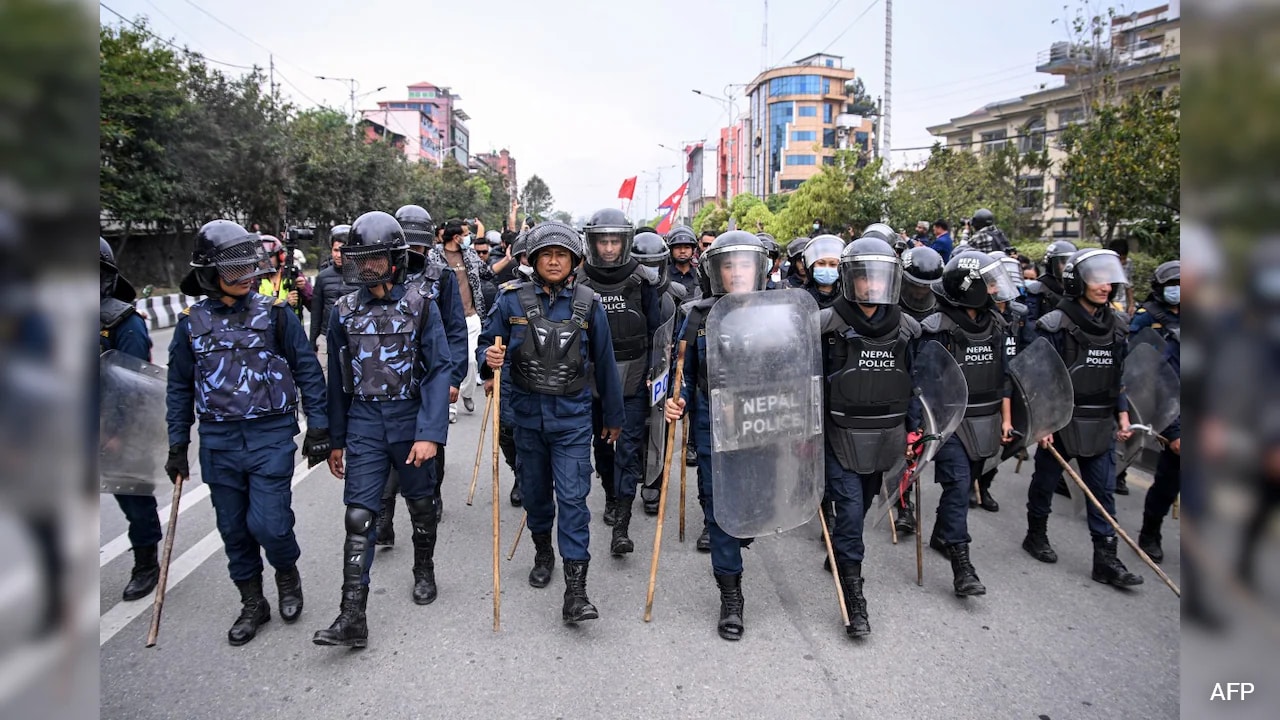
Every time a border town erupts into sectarian violence, the media manual opens to a predictable page. A casualty drops. A curfew drops. The pundits point a trembling finger at the porous frontier, mutter something about cross-border agitation, and pretend that drawing a cleaner line on a map solves a human friction problem.
It is lazy analysis. And it keeps us trapped in a loop of perpetual surprise over conflicts that are entirely structural.
Let us look at the standard narrative surrounding recent flare-ups in Nepal's border districts adjacent to India. The baseline media consensus frames these incidents as spontaneous explosions of ethnic or religious hatred sparked by external provocations. The prescription? More police, stricter checkpoints, and tighter administrative lockdowns.
I have spent years watching regional security frameworks crumble because policymakers treat symptoms while ignoring the machinery producing them. Curfews are not solutions. They are administrative admissions of failure, temporary bandages slapped on a gaping arterial wound.
The Geography of Grievance
Borders in South Asia are rarely just lines on paper; they are economic arteries. When you restrict trade, squeeze informal supply chains, and treat border populations as national security liabilities rather than sovereign economic participants, you create a pressure cooker.
The standard report tells you that a clash occurred because two groups threw stones at each other over a religious procession or a minor local slight. That is the spark. But oxygen does not care about the spark; it cares about the dry timber.
The dry timber is economic disenfranchisement. When youth unemployment in border districts hits double digits, when informal cross-border commerce is criminalized by heavy-handed state regulation, and when local political actors realize that polarizing communities yields immediate electoral dividends, violence stops being an anomaly. It becomes a rational, albeit destructive, career path for local muscle.
Deconstructing the Border Myth
Let us dismantle the core falsehood driving most reporting on these incidents: the idea that proximity to an international border inherently breeds communal conflict.
Geographic proximity does not cause riots. State neglect does.
When central governments treat border regions as distant peripheries useful only for customs revenue or nationalist posturing, local administrative apparatuses atrophy. Police forces are underfunded, poorly trained, and structurally incentivized to side with dominant majorities to maintain quiet rather than enforce the rule of law. Courts move at the speed of geological drift.
Imagine a scenario where a local merchant in a border town cannot move goods legally without facing endless bureaucratic harassment, yet smugglers operate with tacit municipal blessing. That distortion of the economy breeds a shadow governance model. Once shadow governance takes root, communal tensions are routinely manufactured to distract from the turf wars of local syndicates.
The journalist reports a religious clash. The investigator finds a protection racket gone wrong.
Why the Curfew Trap Fails
Imposing a curfew is an exercise in political cowardice disguised as decisive action. It freezes the symptoms while letting the disease mutate.
When you lock down a district, you accomplish three things, none of them good:
- You choke the daily wage earners who live on subsistence margins, deepening the economic desperation that fuels radicalization.
- You hand absolute operational control of the narrative to state security forces, sealing off independent verification.
- You validate the narrative of siege warfare, convincing both communities that the other is an existential threat requiring permanent defense.
If your primary tool for maintaining social cohesion is a bat-wielding riot squad, you do not have a stable society. You have an occupied zone waiting for the curfew to lift.
The Uncomfortable Truth About Accountability
To fix this, we have to look past the convenient scapegoat of foreign incitement. Pointing across the border is a fantastic way for local politicians to evade domestic competence tests. It allows failing municipal administrations to launder their own governance failures through the noble lens of national defense.
The hard reality is that communal harmony is an infrastructure project. It requires boring, unglamorous investments: predictable legal systems, depoliticized local policing, transparent municipal economies, and economic integration that rewards cooperation rather than zero-sum sectarian tribalism.
Until policymakers stop treating border zones as security threats and start treating them as economic hubs requiring sophisticated governance, the curfews will keep coming.
And the blood will keep flowing while the pundits blame the map.