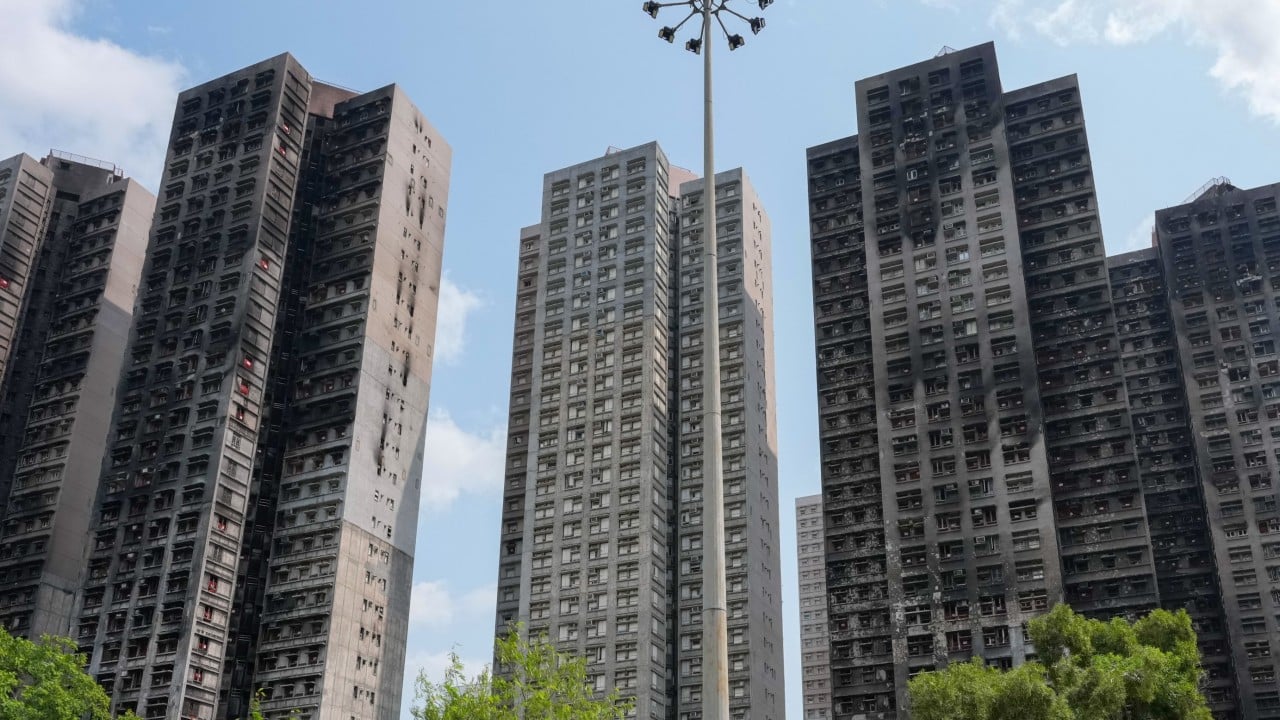
Every time a high-rise fire claims lives, the media and a parade of self-proclaimed fire safety experts trot out the exact same script. They point trembling fingers at "combustible materials," "unregulated partitions," and "substandard building materials." They scream for more bans, harsher penalties, and a complete purging of anything that can catch fire from our living spaces.
It is a comforting narrative. It gives us a tangible villain. It suggests that if we just replace enough plastic and wood with concrete and steel, we can engineer tragedy out of existence. Also making headlines recently: Why Courthouse Immigration Arrests Just Got Shut Down Nationwide.
It is also dangerously wrong.
Blaming the fuel for a fire is like blaming gravity for a plane crash. It ignores the systemic failures that allowed the environment to become lethal in the first place. The obsession with outlawing combustible materials in urban construction is a lazy, surface-level distraction from the real culprits: broken compartmentalization, failed active suppression systems, and the total collapse of basic municipal oversight. Further insights into this topic are explored by NPR.
I have spent decades auditing industrial facilities and high-rise structures after catastrophic failures. I have seen landlords pour millions into replacing perfectly adequate, modern materials with "fire-rated" alternatives, only to leave fire doors propped open and sprinkler valves shut. If we keep focusing on the physical materials rather than the systemic engineering of containment, people will continue to die in perfectly non-combustible concrete boxes.
The Materials Myth: Everything Burns (And That Is Fine)
The core fallacy of the standard post-fire analysis is the idea that a safe building is a building made of non-combustible materials. This is an engineering fantasy.
First, let us deal with reality: everything in a modern residential or commercial building is fuel. Even if you construct a room entirely out of bare concrete and structural steel, the moment a human moves in, they bring hundreds of pounds of highly combustible materials with them. Polyurethane foam mattresses, synthetic clothing, electronics, wooden furniture, and books.
The initial fuel load of a fire is almost always the contents of the room, not the walls themselves.
When an expert looks at a charred ruin like the recent tragedy in Hong Kong and declares that "combustible materials fueled the blaze," they are stating a useless truism. Of course they fueled the blaze. Fire requires fuel. The critical question is not why the material burned, but why the fire was allowed to escape the room of origin and migrate through the building unimpeded.
The Real Enemy is Broken Compartmentalization
Fire safety in high-rise architecture relies on a single, elegant concept: compartmentalization. The goal is never to ensure a fire never happens; that is statistically impossible. The goal is to lock the fire in a box until the fire department arrives to extinguish it.
In high-density urban environments like Hong Kong, New York, or London, compartmentalization fails because of human behavior and bureaucratic negligence, not because a contractor used the wrong type of drywall.
The Anatomy of an Escape Route Failure
- The Propped Fire Door: A fire-rated door is a useless piece of heavy metal if it is wedged open with a wooden block to let a breeze through. In dozens of fatal high-rise fires, toxic smoke—which kills far faster than flames—invades the main stairwells because the self-closing mechanisms on fire doors were broken or disabled.
- The Unsealed Pipe Penetration: When internet cables, water pipes, or electrical conduits are retrofitted into older buildings, contractors drill holes through fire-rated concrete floors and walls. If these holes are not sealed with intumescent firestop material, they become blowtorches, funneling superheated gas and smoke straight into the floors above.
- Illegal Alterations as a Symptom, Not a Cause: Regulators love to raid subdivided flats and fine the owners for creating unapproved partitions. But sub-dividing a unit does not inherently cause a mass-casualty event. The disaster occurs because the sub-divisions block access to the building’s original smoke extraction paths and alternative exits.
When you look at the mechanics of flashover—the moment when a room's contents simultaneously ignite due to radiant heat—the material of the partition wall matters far less than whether the door to the corridor was sealed tight. A standard, cheap timber door can hold back a fire for twenty minutes if it is closed. A million-dollar, certified fire-rated steel door does absolutely nothing if it is left wide open.
The Active Suppression Blind Spot
Why do we hear so much about building materials and so little about active suppression? Because enforcing material compliance is a paperwork exercise that city inspectors can do from a desk, whereas maintaining active systems requires actual work.
Sprinkler systems are the closest thing to a silver bullet in fire protection engineering. Data from the National Fire Protection Association (NFPA) consistently shows that in buildings with fully operational sprinkler systems, the civilian death rate is roughly 80% lower than in non-sprinkled buildings.
Yet, in older high-rises globally, sprinkler systems are routinely turned off during maintenance and never turned back on. Pumps fail. Water tanks are left empty to save on utility costs. Corrupted or incompetent inspectors sign off on compliance certificates without ever testing water pressure.
If a building has a working, pressurized sprinkler system, the flammability of the interior lining becomes almost entirely irrelevant. The sprinkler suppresses or contains the fire in its infancy. If the sprinkler fails, even a room lined with pristine, non-combustible gypsum board will eventually turn into an unlivable kiln due to the burning furniture inside.
The Financial Reality Nobody Wants to Admit
Shifting the blame to materials also serves a convenient political purpose for municipal governments and wealthy property developers.
If the problem is "bad materials," then the solution is simply to pass a new law banning those materials, forcing individual property owners to foot the bill for expensive retrofits. It costs the city nothing to change a building code.
But if the problem is a systemic failure of municipal enforcement—if the city has failed to inspect properties, failed to crack down on corrupt building management companies, and failed to maintain public infrastructure—then the blame lies squarely on the state.
Let us look at a thought experiment. Imagine two identical buildings.
Building A features modern, lightweight, composite materials on its interior walls. However, its sprinkler system is tested monthly, its fire doors are strictly monitored via electronic sensors, and its stairwells are kept entirely clear of storage.
Building B is constructed entirely of traditional, heavy, non-combustible concrete and brick. However, its fire doors are broken, its smoke detectors have dead batteries, and its residents use the emergency stairwells to store old sofas and cardboard boxes.
If a fire breaks out in a kitchen in both buildings, Building A will suffer localized property damage. Building B will become a tomb.
Yet, current regulatory logic fixates almost entirely on making Building A look more like Building B.
Stop Banning Materials. Start Enforcing Physics.
The current approach to urban fire safety is broken because it treats fire as a moral failing of the building's physical components rather than a predictable event governed by fluid dynamics and thermodynamics.
If we want to stop these tragedies, the playbook needs to be rewritten from the ground up.
- Mandate Real-Time Door Monitoring: Stop relying on annual inspections to check fire doors. Every fire door leading to a primary escape route should be fitted with a simple, cheap IoT sensor that alerts building management the moment a door is held open for more than five minutes.
- Brutal Penalties for Active System Tampering: Turning off a building's main sprinkler valve or disabling a smoke extraction fan for convenience should not result in a minor administrative fine. It should be prosecuted as criminal negligence.
- Acknowledge the Economics of Subdivided Housing: In hyper-dense cities, subdivided housing exists because people cannot afford anything else. Banning them outright simply drives them further underground, making them more dangerous. Regulators must pivot from trying to eliminate these spaces to mandating that they meet basic compartmentalization standards—specifically, requiring independent, fire-rated exits and localized, low-cost residential sprinkler loops for every sub-unit.
The downside to this approach is that it requires continuous, active effort. It means building managers actually have to walk the floors, and city governments have to fund real, unannounced field inspections instead of pushing paper. It is messy, it is expensive, and it requires holding people accountable rather than inanimate objects.
Until we stop letting city officials and industry insiders hide behind the excuse of "combustible materials," we are simply waiting for the next inevitable spark to expose the same hollow infrastructure. The fuel is not the problem. The failure to contain it is.