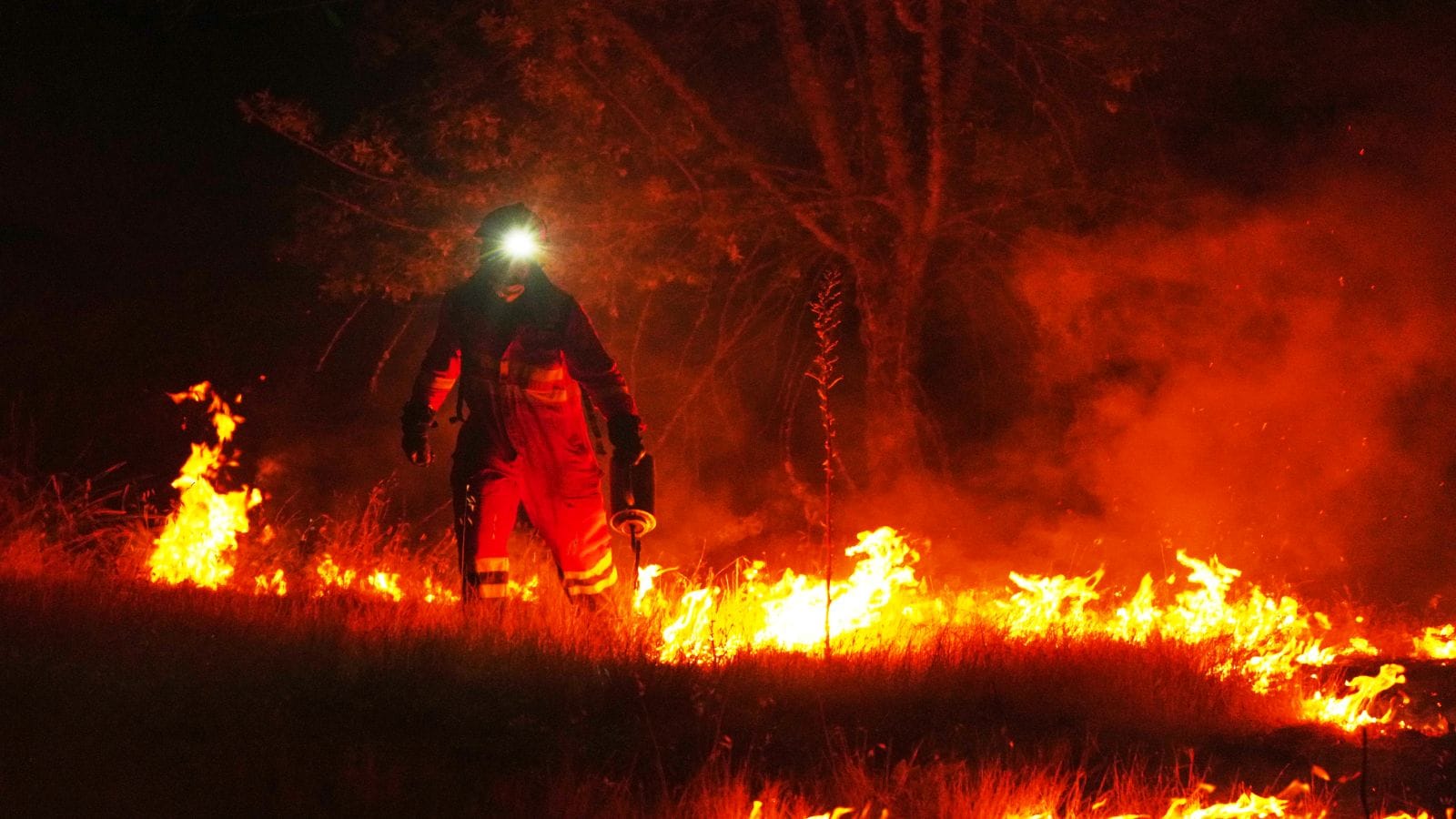
Every single summer, the media machine rolls out the exact same panic script. France and Spain burn. Headlines shriek about unprecedented heatwaves, angry weather gods, and an apocalyptic new normal. The consensus narrative is neat, tidy, and completely useless: climate change turned the Iberian Peninsula and southern France into a tinderbox, and there is nothing anyone can do except watch the smoke roll in and pray for rain.
It is a comforting lie for politicians and bureaucrats because when everything is the climate's fault, nobody is to blame.
I have spent the last fifteen years walking through charred Mediterranean scrublands, talking to rural foresters whose families have worked the land for centuries, and watching millions of euros vanish into high-tech aerial firefighting fleets that arrive too late to matter. I have seen governments blow fortunes on theatrical water-dropping planes while ignoring the foundational mechanics of the dirt beneath their feet.
The standard narrative about European wildfires gets the causality completely backward. The fires in France and Spain did not grow into historic emergencies because it got hot. They grew because generations of rural workers were legislated out of existence, because grazing livestock were driven off the hillsides, and because modern conservation policy substituted active human intervention with dangerous neglect.
The Myth of Pristine Nature
Listen to urban environmentalists long enough, and you will start to believe that nature left alone is a harmonious Eden. That is biological illiteracy.
The Mediterranean basin is a fire-adapted ecosystem. It has burned for millennia. But historically, it burned in a mosaic pattern because human beings treated the forest as a pantry, a pasture, and a woodlot. Goats ate the underbrush. Farmers cleared small patches. Charcoal burners harvested dead wood before it could dry into kindling.
Then came the great rural exodus of the twentieth century. People left the villages for Barcelona, Madrid, Lyon, and Paris. The hillsides emptied. And what did well-meaning urban policymakers do? They drew red lines around huge tracts of land, slapped conservation orders on them, and declared them protected wilderness.
Protecting a Mediterranean forest by locking humans out of it is like locking a house, turning off the lights, and walking away while leaving the stove on. Biomass accumulates. Scrub takes over. Dead pine needles form a thick, volatile carpet that turns every minor lightning strike or discarded cigarette into a surface-to-air missile for flames.
When people ask why Spain and France are seeing mega-fires that leap over firebreaks, they are asking the wrong question. The question is not why it is so hot. The question is why we spent forty years subsidizing the accumulation of fuel.
The Industrial Complex of Aerial Theater
Let us talk about the hardware. Whenever a forest fire in the Landes or Andalusia makes the international news, politicians rush to the cameras to announce massive contracts for new water-dumping aircraft. Canadairs circle overhead, dropping dramatic curtains of water that make for incredible television footage.
It is mostly theater.
Aerial firefighting is a mop-up operation. Once a crown fire gets moving through a continuous sea of dense, unmanaged undergrowth driven by thirty-knot winds, twenty water bombers will not stop it. They might slow the flank or protect a high-value villa, but they are spitting on a blowtorch.
Governments love buying aircraft because airplanes have ribbon-cutting ceremonies. You can photograph a politician standing in front of a red-and-yellow water tanker. You cannot photograph a bureaucrat quietly rewriting zoning laws to allow local farmers to clear brush, nor can you make a prime-time news broadcast about sheep grazing on a firebreak.
The economics are perverse. Millions of euros flow into emergency response contractors while preventative silviculture—the boring, unsexy work of thinning trees, clearing deadwood, and maintaining pastoral buffers—is chronically underfunded. We have built an emergency response industry that profits off catastrophe while starving prevention.
The Regulatory Straitjacket
If you want to understand why a French or Spanish landowner often watches their property burn, look no further than the environmental bureaucracy.
Try clearing brush on your own rural plot in the south of France without filling out a mountain of paperwork or running afoul of regional habitat directives protecting a local bird species. The legal friction of land management has become so severe that it is literally easier and safer to do nothing.
If you clear the land aggressively to protect your home, you risk a fine from environmental inspectors who value unkempt scrub over human safety. If you leave it alone and it burns down your house, well, at least you stayed compliant with the habitat directive.
This is the deadly absurdity of modern ecological dogma. In trying to preserve a static snapshot of nature, we have created a volatile system that destroys everything—flora, fauna, and human settlements—in one violent sweep.
The Prescription Nobody Wants to Hear
Fixing this crisis requires reversing every fashionable assumption currently driving European environmental policy.
First, we must abandon the cult of passive preservation. Wildfire management is not about keeping humans out; it is about putting the right kind of humans back in. We need aggressive, localized agro-silvopastoral systems. We need to pay shepherds to graze their flocks in high-risk zones. We need to legalize and encourage controlled burning on a massive scale during the cool months, rather than panicking every time someone lights a backfire.
Second, we must shift capital from emergency suppression to landscape architecture. Every euro spent on an emergency water bomber should be matched by three euros spent on clearing biomass, creating wide pastoral corridors, and re-establishing rural economies that extract value from the underbrush.
Third, politicians need to stop hiding behind the weather. Climate change loads the dice, yes, but we are the ones who stacked the table with dynamite.
The next time a hillside in the Pyrenees or the Ardèche goes up in smoke, do not look at the thermometer. Look at the brush. Look at the empty villages. Look at the bureaucrats who traded active stewardship for passive ruin.
Stop funding the smoke. Clear the floor.