Chalk dust smells like old limestone and wet autumn mornings. It settles in the creases of tweed jackets and coats the fingers of anyone brave enough to stand at the front of a room of thirty teenagers. For centuries, education has been an act of friction. Two human minds rubbing against each other until a spark catches. A teacher coughs. A student sighs. A desk scrapes the linoleum. These are the sounds of learning.
Until recently, a new sound threatened to join the chorus. The quiet, high-pitched whir of cooling fans.
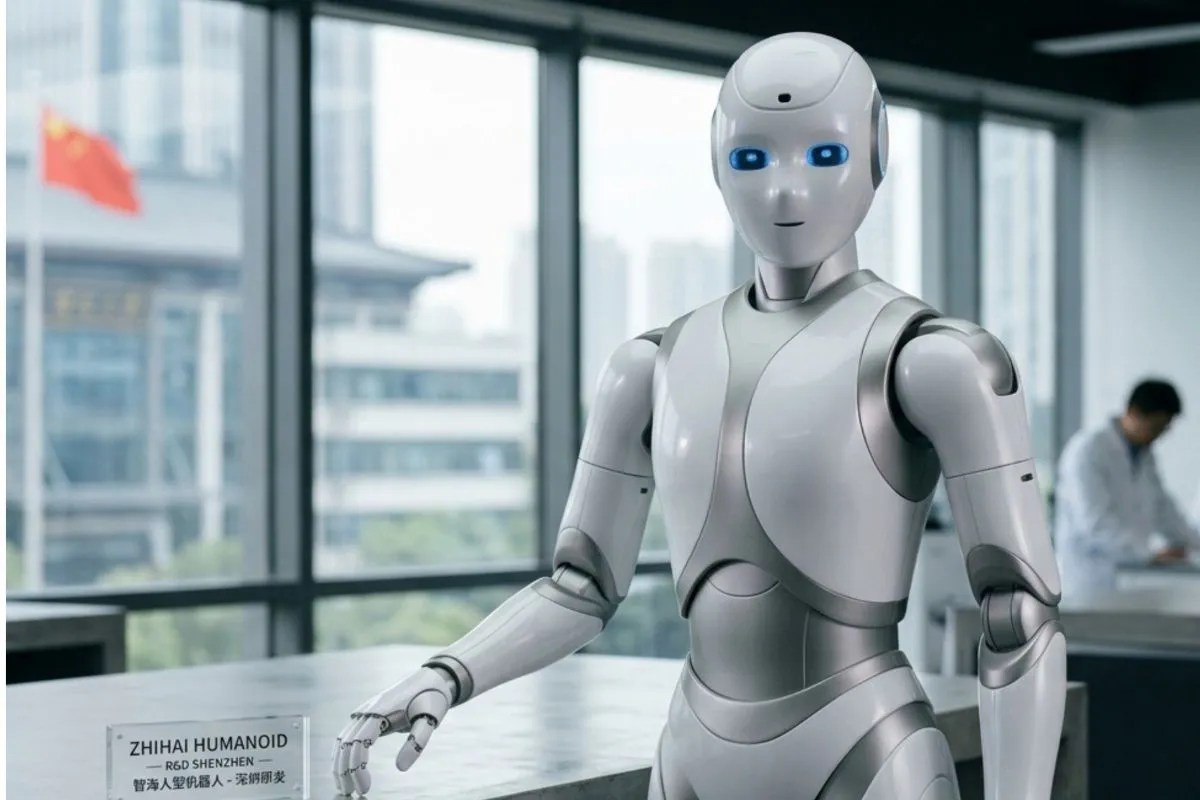
In a New York school district, the blueprint was drawn. The plan was clean, efficient, and thoroughly modern. Deploy a humanoid artificial intelligence robot to stand at the front of the classroom, delivering lessons with unblinking precision. No sick days. No frayed nerves. No emotional baggage brought through the staff room door. A pristine conduit of curated data, packaged in a synthetic shell designed to look reassuringly familiar.
Then came the pushback.
Parents stood in municipal meetings. Teachers folded their arms. Students raised questions that algorithms could not parse. The plan paused. But the idea remains. It sits in the inbox of innovators waiting for public memory to fade.
Consider what happens when we try to automate the soul.
The Weight of a Glance
Imagine a hypothetical teacher named Marcus. He has taught high school chemistry for twenty-four years. He knows the exact moment a teenager is about to give up on a titration experiment. It is not in the data of the failed drop. It is in the way shoulders drop three millimeters. It is the sudden stillness of a pencil against paper. Marcus stops pacing, walks down the aisle, and leans over a desk. He does not offer a correct formula first. He offers a nod. A shared acknowledgment that stoichiometry is genuinely punishing on a Tuesday in November.
An android cannot see those three millimeters. It processes inputs and outputs. It detects raised voices or prolonged silence, but it lacks the visceral memory of failure.
Education is messy. It relies entirely on the transfer of empathy wrapped in instruction. When children sit across from a human authority figure, they are not just absorbing polynomial equations. They are observing how an adult handles frustration, how they apologize when they lose their temper, and how they listen when someone stumbles over an explanation.
If you replace the messy human with a machine, you solve for efficiency while destroying resonance.
The Silicon Mirror
Why do we keep trying to build replacements for each other?
The drive toward automation in classrooms usually wears the mask of equity. Proponents argue that an AI educator never tires, never plays favorites, and delivers standardized instruction with absolute fidelity. Every child gets the exact same quality of delivery. On paper, it sounds fair.
Mathematically, equality means everyone gets the same thing. Equity means everyone gets what they actually need.
A machine can tailor vocabulary based on a reading-level metric. It cannot sense the cultural nuance behind a student's silence. It cannot recognize the subtle signs of a child carrying invisible weight from home. When a robot stands at the front of the room, it reflects our deepest fatigue. We are tired of funding schools properly. We are tired of supporting burnout among educators. We are tired of the friction. So we look to silicon to smooth the edges of a broken system.
But the edges are where the growth happens.
The Cost of Quiet Rooms
Let us step inside a classroom governed by a synthetic instructor. The lights are bright. The air is filtered. The robot's face is a masterclass in neutral ergonomics—designed to be friendly without provoking attachment, authoritative without causing fear.
A student asks a question about history. The machine answers in a voice modulated for maximum comprehension. The facts are immaculate. The dates are unassailable.
Yet something vital is missing. The air is too still.
When humans teach, friction occurs. Arguments break out over the interpretation of a text. A teacher shares a personal anecdote that has nothing to do with the curriculum, yet somehow illuminates the entire subject. These digressions are not inefficiencies. They are the core of mentorship. They are the moments where a young mind realizes that knowledge is not an external product to be consumed, but a living human endeavor built by flawed, passionate people.
When we hit pause on the New York robot deployment, we did not just halt a technology trial. We drew a temporary line in the sand. We declared that some spaces must remain stubbornly, imperfectly human.
The Final Bell
The chalk dust settles once more.
Out in the hallway, lockers slam with a heavy, metallic clang that reverberates through the floorboards. Shouts echo down the corridor. Two friends argue loudly over whether a historical figure was a visionary or a tyrant, their voices rising with genuine passion.
No machine programmed this argument. No algorithm prompted their disagreement. They are learning how to inhabit the world by bumping against one another in real time.
The screens will wait. The code will be rewritten. But the messy, beautiful work of human connection will remain the only fire hot enough to forge a mind.