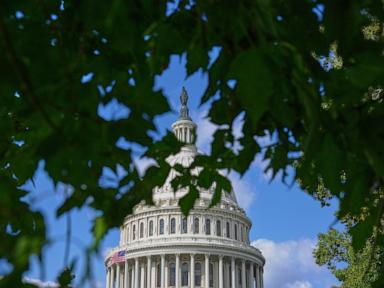
Power usually talks in whispers. Congress prefers to scream under fluorescent lights.
When the House Oversight Committee voted unanimously to recommend holding billionaire financier Leon Black in contempt, the velvet curtain protecting elite financial networks shuddered. This was not merely a procedural scuffle on Capitol Hill. It was a direct, high-stakes collision between congressional investigative authority and the immense defensive machinery available to Wall Street titans.
Black refused to appear for a scheduled deposition and withheld critical documents requested by lawmakers probing the late sex offender Jeffrey Epstein. By opting for stonewalling and immediate litigation over compliance, Black transformed a legislative inquiry into a constitutional referendum. The committee responded with an uncompromising bipartisan rebuke, signaling that the institutional appetite for accountability regarding Epstein's enablers has crossed partisan lines.
To understand how this standoff reached a boiling point, one must look backward to the summer hearings that exposed the fault lines between private wealth and public oversight. The mechanics of modern congressional investigations rely heavily on voluntary cooperation. When voluntary cooperation vanishes, the machinery of state power grinds into motion, often with unpredictable legal and political fallout.
The Breakdown Behind Closed Doors
Interrogating a billionaire requires more than a gavel. It requires stamina and absolute procedural rigidity.
In mid-2026, Leon Black sat before investigators for a transcribed interview intended to clear the air regarding his sprawling financial ties to Epstein. That interview unraveled in real time. Sixty minutes into the proceeding, Black began withholding answers, prompting committee leadership to take drastic action. Chairman James Comer issued two sweeping subpoenas: one compelling Black to sit for a full deposition on September 3, 2026, and another demanding the production of non-disclosure agreements involving Epstein and Ghislaine Maxwell.
Subpoenas carry legal weight. Black treated them as optional suggestions.
When the September deposition date arrived, the chair sat empty. Black did not show up. Instead of answering questions under oath, his legal team filed a federal lawsuit against Chairman Comer and committee members, arguing that the subpoenas exceeded legitimate legislative authority and constituted an unconstitutional fishing expedition into private records. The playbook was predictable. Delay, distract, and dispute the foundational powers of Congress itself.
Legal battles are familiar territory for elite financiers facing public scrutiny. But congressional investigators operate under a different set of rules, where political momentum often matters more than courtroom delays. Every motion filed by high-priced defense counsel serves a dual purpose: stalling the immediate inquiry while establishing a shield against future criminal referrals.
The Financial Architecture of Influence
Money builds walls. The wall between Leon Black and Jeffrey Epstein was built with tens of millions of dollars.
Public disclosures and committee findings revealed that Black paid Epstein roughly $158 million for various financial, tax, and estate advisory services. For years, Black defended these transactions by painting a picture of professional detachment. His public stance boiled down to a simple proposition: he knew a savvy financial advisor, not a predatory criminal.
The investigators saw a different picture entirely.
To the committee, those funds were not isolated advisory fees. They were the financial oxygen that sustained Epstein's lavish lifestyle while his criminal enterprise operated in plain sight. When wealth of that magnitude flows into the orbit of a convicted sex offender, public interest ceases to be abstract. It becomes a matter of legislative necessity. Lawmakers wanted to know how those transactions functioned and whether elite financial networks insulated Epstein from consequences long before his federal indictment.
Financial transparency rarely arrives willingly. It must be extracted through institutional pressure, subpoena enforcement, and public exposure. When financiers treat oversight bodies as nuisances rather than sovereign authorities, the entire architecture of white-collar accountability fractures.
The Battle Over Confidentiality Agreements
Silence has a price. Confidentiality agreements ensure it stays hidden from public view.
One of the core flashpoints in the Black investigation centered on non-disclosure agreements. The committee demanded every NDA that referenced or involved Epstein or Maxwell. Black produced a single agreement, despite committee leadership asserting that numerous others existed within his vast corporate and personal ecosystem.
NDAs protect trade secrets. They also bury systemic misconduct.
When powerful individuals deploy confidentiality contracts, they create private legal systems that routinely outlive public statutes of limitations. Victims are bound by financial penalties and legal threats, locking away testimony that investigators desperately need. The House committee's push to pierce these agreements represents a direct challenge to the culture of secrecy surrounding Epstein's network. If confidentiality clauses can be used to shield associates from congressional oversight, the legislature's ability to investigate systemic corruption effectively ceases to exist.
Attorneys for Black pushed back fiercely, calling the demands absurd. They argued that the committee sought documents spanning decades of unrelated business dealings and private social circles, crossing lines of personal privacy.
Privacy arguments ring hollow to those demanding an accounting of crimes.
A Constitutional Stress Test for Subpoena Power
Power tests its limits when challenged. Congress is currently testing its own.
The unanimous committee vote to advance the contempt resolution placed the issue before the full House, setting up a high-stakes referral to the Department of Justice for potential criminal prosecution. Criminal contempt of Congress carries severe penalties, including potential fines and imprisonment. Yet, prosecution is never guaranteed. The executive branch holds ultimate discretion over whether to pursue charges, creating an institutional bottleneck where political calculations often outweigh legislative intent.
The Department of Justice has previously signaled reluctance regarding certain phases of Epstein-related investigations, leaving Congress to shoulder the burden of public exposure. This dynamic creates a fractured federal landscape where different branches of government pull in opposite directions.
Black's legal challenge adds another layer of complexity. By suing the committee, his defense turned the tables, forcing federal courts to evaluate the constitutional boundaries of congressional oversight. Every motion filed in that courtroom establishes a precedent for how future legislative bodies can investigate private citizens who refuse to cooperate.
Institutions bend under pressure. Some break entirely when faced with executive apathy and judicial delays.
The Voices Outside the Hearing Room
Lawmakers debate in quiet rooms. Survivors live with the permanent consequences.
While legal briefs flew between federal courts and Capitol Hill, victim advocacy groups and Epstein survivors watched closely. For years, survivors fought against institutional indifference, police failures, and corporate protectionism. To them, the bipartisan 41-0 vote represented a rare moment of validation in a system that frequently favors the well-connected.
Accountability moves slowly. Too slowly for many who sought justice decades ago.
The contrast between the billionaire's legal fortress and the lived reality of survivors remains stark. Every motion to dismiss, every jurisdictional challenge, and every delayed deposition extends an exhausting process. Yet, the contempt vote proved that even the wealthiest individuals cannot completely outrun public scrutiny when a bipartisan coalition decides to hold the line.
The investigation continues to cast a long shadow over modern finance and politics. New names surface, subpoenas are issued, and institutional defenses rise and fall. Power protects its own until the cost of protection becomes too high to bear.
The gavel has fallen on the committee stage, and the next move belongs to prosecutors and federal judges who must decide whether a subpoena is an enforceable command or an optional request for the exceptionally wealthy