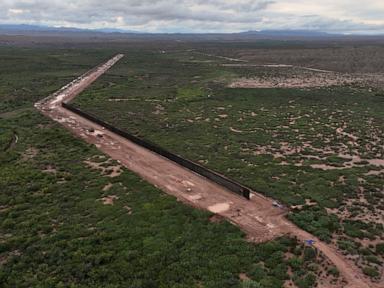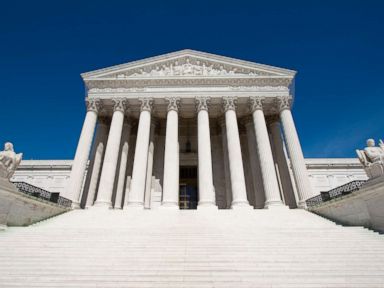
The Supreme Court did not decide whether building a border barrier through Texas's Big Bend region is wise or ecologically sound; it ruled 8-1 on November 9, 2026, that federal courts likely lack jurisdiction to block construction under statutory waivers while litigation continues. Treating that emergency order as a final verdict on border security or environmental protection misses the real mechanics driving the conflict. In Big Bend, a roughly 500-mile stretch of remote West Texas terrain that accounts for more than 25% of the U.S.-Mexico border yet records between 0.3% and 2.2% of border-wide apprehensions, the dispute turns on a collision between statutory jurisdiction limits, daily unrecoverable contractor expenses, and high-friction desert logistics.
Standard news coverage of emergency docket orders usually reduces a complex legal and operational standoff to two opposing slogans: border enforcement versus wilderness preservation. That framing leaves out how the system actually operates once an injunction is paused. To evaluate what happens next on the ground, analysts need four distinct lenses:
- The Jurisdictional Barrier Framework: How statutory limits on judicial review under Section 102 and the Supreme Court's treatment of the major questions doctrine constrain district court injunctions.
- The Unrecoverable Cost Function: Why Customs and Border Protection (CBP) pointed to roughly half a million dollars per day in unrecoverable expenses while heavy equipment and crews sat idle.
- The Asymmetry of Enforcement vs. Geography: How a sector spanning over a quarter of the southern border generates a small fraction of total apprehensions due to rugged topography.
- The Property and Ecological Friction Matrix: How federal land acquisition, eminent domain filings, road clearing, and river corridor impacts collide across national park, state, private, and municipal boundaries.
Why Procedure Outranked Merits on the Emergency Docket
When U.S. District Judge Kathleen Cardone issued a preliminary injunction on October 2, 2026, halting border wall construction and related work across the Big Bend area, she sided with challengers—including conservation groups, local residents, and the Friends of the Ruidosa Church—who argued the administration exceeded its authority in waiving environmental and conservation laws. One month later, on November 9, the Supreme Court granted the federal government's request for emergency relief in an unsigned 8-1 order, with Justice Ketanji Brown Jackson noting she would have denied the request.
The first analytical distinction is separating a known fact about procedural posture from an educated hypothesis about eventual merits. It is a documented fact that the Supreme Court's order paused the lower court's injunction so construction can resume while the administration seeks further Supreme Court review. It is an educated hypothesis—not a settled legal certainty—that the justices will ultimately uphold every specific deployment or waiver on the merits once full briefing occurs.
In its reasoning, the Court focused on three pillars that shaped the emergency balance:
- Likely lack of district court jurisdiction: Challengers framed their objection around the major questions doctrine, but the Court indicated that statutory-authority challenges dressed in constitutional language run into congressional limits on judicial review under Section 102.
- Irreparable government harm: Pausing active barrier and road projects delayed executive border-security operations and exposed the government to costs it argued could not be recovered.
- Balance of equities: Because Congress authorized waivers of environmental and conservation statutes for border infrastructure, the Court concluded that lower courts cannot treat aesthetic, recreational, and environmental harms as outweighing the government's asserted interest during preliminary review.
The second operational mechanism lies in asymmetric time horizons. Litigation moves in motions, briefings, and conferences over months, whereas heavy civil construction moves in weekly mobilization cycles. Once a halt is lifted, contractors can clear right-of-way, grade access roads, and stage materials before a final merits ruling ever arrives. Physical alteration creates facts on the ground that subsequent court orders rarely unwind cleanly.
Quantifying the Cost Function Against Enforcement Reality
Project managers overseeing remote infrastructure programs evaluate delays through a direct cost function: idle labor, standby heavy machinery, demobilization and remobilization fees, and schedule slippage across short desert work windows. In court filings and public statements, federal officials placed the daily cost of the construction halt at roughly $500,000 per day—a figure cited in coverage as nearly half a million dollars daily in unrecoverable expenses.
The second limitation in standard public debate is treating a daily burn rate as proof of strategic return on investment. A $500,000 daily delay cost measures contractual and operational friction, not security output. Evaluating whether physical barriers in Big Bend yield high marginal security returns requires comparing infrastructure spending against actual crossing volume and terrain constraints.
Court filings cited during the dispute noted that while the Big Bend Sector spans more than 25% of the U.S.-Mexico border, annual apprehensions there have historically accounted for only 0.3% to 2.2% of total border-wide apprehensions. That gap points to a classic diminishing-returns mechanism:
- Natural terrain friction: Canyons, desert expanses, and river bends along the Rio Grande already impose severe physical barriers and navigation hazards.
- Low baseline traffic relative to footprint: Spreading fixed steel barriers and access roads across hundreds of miles where apprehension shares are low drives up cost per mile of defended terrain without necessarily matching high-volume crossing corridors.
- Alternative detection trade-offs: Opponents and local commentators argue that remote surveillance tools, such as drones and sensors, impose a smaller physical footprint than continuous walls and roads in rugged backcountry.
At the same time, a rigorous analyst must note the counter-mechanism that enforcement proponents emphasize. Low historical apprehension numbers in a remote sector do not automatically prove zero smuggling risk; traffickers routinely probe under-patrolled routes whenever enforcement tightens elsewhere. Whether physical barriers, mobile patrols, or remote sensors offer the best cost-per-interdiction ratio in Big Bend remains an empirical operational question rather than a settled equation.
The Terrain and Property Bottlenecks on the Ground
Big Bend is not a single uniform parcel of federal land; it is a patchwork of Big Bend National Park, state-managed lands such as Big Bend Ranch State Park, private ranches, and rural communities across counties like Brewster, Presidio, and Jeff Davis. That mosaic creates three distinct bottlenecks whenever heavy construction restarts:
- Access road and staging bottlenecks: Building barriers in rugged desert and river canyons requires haul roads, staging yards, and heavy equipment. Opening corridors in remote areas can alter drainage, wildlife movement, and visitor access to features like Santa Elena Canyon and Rio Grande river stretches.
- Land acquisition and eminent domain friction: Even when construction injunctions are litigated, federal land acquisition and eminent domain condemnation actions against reluctant landowners remain a major operational track. Resuming active construction accelerates pressure around right-of-way entry, grazing access, river frontage, and severance damages to remaining acreage.
- Local economic and civic pushback: Opposition in Big Bend cuts across partisan lines because residents, river guides, and conservation advocates view unbuffered industrial construction as a direct threat to tourism, local livelihoods, and the character of a sparsely populated region.
Consider a practical example of how this friction plays out along a river corridor. If federal crews clear a service road to reach a barrier alignment near a canyon or ranch boundary, the immediate operational hurdle is no longer just the steel bollard itself. It becomes flood exposure in arroyos, maintenance access after flash rains, legal disputes over property boundaries or water and grazing access, and ongoing litigation across multiple pending suits.
Strategic Play for Stakeholders Operating in Big Bend
Because the Supreme Court's November 9, 2026 order lifted the pause while underlying litigation and review requests proceed, waiting passively for a single court ruling is a poor strategy for any stakeholder involved. The decisive strategic play depends on which side of the operational ledger you sit on:
- For federal program managers: Pair immediate site mobilization with disciplined environmental and hydrological risk controls in high-erosion canyons and flood zones, avoiding preventable engineering failures and unforced public record gaps that invite renewed judicial scrutiny or costly rework.
- For landowners, local leaders, and conservation coalitions: Shift from relying solely on emergency injunctions to parallel high-leverage execution—auditing exact parcel survey lines and eminent domain valuation impacts early, pressing for full transparency on updated CBP plans and mitigation commitments, and focusing legislative advocacy on the statutory waiver provisions enacted by Congress that anchor the government's procedural advantage.