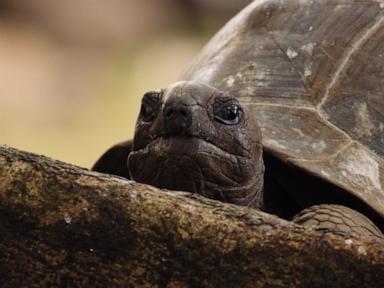
For decades, television audiences have been fed a sanitized version of the African continent. Producers love an easy narrative. They lean on sweeping helicopter shots of wildebeest herds crossing a sun-baked river, accompanied by a dramatic orchestral swelling meant to evoke a timeless, untouched Eden. It is a formula that works on ratings charts, but it profoundly misrepresents the ecological reality on the ground. When National Geographic rolled out its multiyear natural history initiative with Africa: Earth’s Wild Home, television critics rushed to publish standard preview roundups focusing on high-end camera rigs and pristine cinematography. Beneath the promotional gloss, however, lies a far more urgent documentary experiment.
The seven-part series, produced in partnership with the BBC Studios Natural History Unit and supported by Rolex’s Perpetual Planet Initiative, attempts a massive pivot. Instead of framing Africa as an open-air museum frozen for Western entertainment, the production structure is mapped around rapid ecological transformation. Water scarcity, human population pressures, and shifting weather systems dictate the behavior of every animal on screen. This is not just another wildlife showcase. It is an autopsy of a continent undergoing unprecedented environmental velocity. If you found value in this post, you might want to check out: this related article.
To understand why this series marks a departure from standard blue-chip wildlife programming, you have to look at the mechanics of modern natural history budgeting. Traditional conservation filmmaking spent years in a single location waiting for rare behavioral moments. Today, networks face intense subscription-driven demands for scale. They want multiple biomes, cinematic drone work, and immediate global streaming footprints across platforms like Disney+ and Hulu. Africa: Earth’s Wild Home satisfies that corporate appetite by spanning jungles, islands, deserts, and vast plains in a single sweep, yet it manages to avoid the trap of superficial geography.
Consider how the series handles the Sahara and other hyper-arid zones. Lesser documentaries treat deserts as static expanses of sand where camels and scorpions passively endure the heat. Here, the narrative focuses heavily on micro-climatic shifts and the sudden, violent transitions between severe drought and flash flooding. When an oasis like Chad’s Guelta d’Archei becomes a focal point, the camera does not just admire the scenery; it tracks the desperate concentration of life around shrinking water tables. It is an explicit reminder that wildlife survival in the twenty-first century is increasingly defined by bottlenecks. For another look on this story, check out the recent update from The Hollywood Reporter.
The production also deserves scrutiny for its final framing episode, Africa’s Wild Future. Natural history series have historically sidelined the human element, preferring to pretend that indigenous populations and local scientists do not exist so viewers can imagine a pristine wilderness. This project breaks that tired convention by turning its lens directly toward African conservationists, scientists, and local communities who are actively managing the friction between wildlife corridors and expanding urban settlements.
To illustrate the underlying tension, take a hypothetical scenario involving elephant migration corridors intersected by newly paved agricultural infrastructure. In older television treatments, a documentary might lament the presence of the fence while ignoring the human livelihoods that necessitated it. A modern investigative assessment requires acknowledging that conservation only succeeds when local economic security and ecological preservation intersect. By featuring grassroots researchers on the ground rather than solely relying on Western narrators parachuting in for voiceover sessions, the series shifts the center of gravity closer to the communities holding the actual keys to ecological stewardship.
Music and sound design play an equally heavy hand in shaping the viewer's psychological response. Composed by Pinar Toprak, the score avoids the heavy, synthesized jungle pastiche of twentieth-century television, opting instead for instrumentation that mirrors the rhythm of changing landscapes. Yet, executive-produced natural history always walks a tightrope between scientific accuracy and emotional manipulation. When viewers watch an infant Verreaux’s sifaka lemur clinging to its mother, the instinct is to project human sentiment onto the animal. Analysts must constantly remind audiences that adaptation is driven by brutal evolutionary calculus, not conscious narrative arcs.
The partnership with corporate sponsors like Rolex also warrants a clear-eyed look. High-budget factual television relies heavily on brand alignment with sustainability initiatives. While corporate funding enables deep-field access that independent crews could never afford, it necessitates a brand of environmentalism that remains palatable to global conglomerates. Direct systemic critiques of international resource extraction or heavy industrial footprints are rarely center-stage in programs funded by luxury watchmakers and multi-billion-dollar media houses.
Even with these structural limitations, Africa: Earth’s Wild Home succeeds because the raw footage captured by field directors cuts through the promotional packaging. When you watch the sheer volume of life compressed into the Congo Basin or observe the geological forces tearing the East African Rift apart, the visual evidence of a changing planet is undeniable. The animals are not just acting out cute behaviors for an evening television slot; they are running out of margin for error against a backdrop of rapid human expansion and climatic instability.
The true test of this multiyear franchise will not be its initial Rotten Tomatoes score or its streaming numbers on opening weekend. Success will be measured by whether it fundamentally changes how global audiences perceive the non-human world—moving away from the myth of the untouched wilderness and toward an understanding of shared, contested landscapes. As the cameras keep rolling across shifting dunes and shrinking riverbanks, the illusion of permanence fades entirely.