The sign on the gate promised a sanctuary. In the lexicon of animal rescue, "no-kill" is a holy phrase. It is a secular covenant made between the soft-hearted and the vulnerable, a guarantee that no matter how crowded the kennels get, no matter how expensive the veterinary bills mount, life will be preserved. People drove up the dirt road to the property in San Bernardino County, California, feeling a wave of relief as they handed over unwanted litters, strays with soulful eyes, and dogs that had outgrown their families' apartments. They thought they were delivering these animals to a second chance.
They were dropping them into a graveyard.
When county authorities finally breached the perimeter of the rural property, the silence was the first thing that struck them. Anyone who has ever walked into a legitimate shelter knows the sensory assault of it—the frantic, deafening chorus of barking, the scent of pine cleaner masking wet fur, the chaotic vibration of dozens of animals demanding to be seen. Here, there was only the desert wind and the heavy, unmistakable stench of decay.
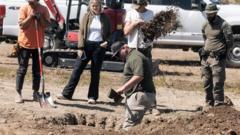
Investigators unraveled a horror that defied the very definition of the facility. They discovered the remains of 117 dogs. Some were piled in makeshift graves, others left where they collapsed. A staggering number of them had suffered a violent end that had nothing to do with humane euthanasia.
They had been shot.
The Mirage of the Second Chance
To understand how a haven becomes a slaughterhouse, you have to understand the crushing weight of the modern rescue ecosystem. The public demands a clean conscience. We want to believe that every animal can be saved, that every broken behavioral history can be loved away, and that resources are infinite.
Consider a hypothetical volunteer we will call Sarah. Sarah spends her weekends scrolling through urgent adoption lists, her heart breaking over time-stamped photos of dogs scheduled for euthanasia at municipal shelters. When a "no-kill" rescue steps in to "pull" a dog from death row, Sarah celebrates online. A digital cheer goes up across social media networks. The system worked. The dog is safe.
But this is often where the tracking stops and the transparency evaporates.
The reality behind the scenes of unmonitored private rescues is a volatile mix of compassion fatigue, financial desperation, and psychological collapse. It is a slow descent. It begins with twenty dogs, which feels manageable. Then forty. Then eighty. The food donations slow down. The veterinary bills for parvo and heartworm spiral into thousands of dollars. The neighbors start complaining about the noise, forcing the operator to move to a remote, rural pocket where no one can hear what happens behind closed doors.
When a facility operating under the banner of mercy refuses to euthanize humanely because it would ruin their "no-kill" statistics or violate their ideological brand, the pressure cooker explodes. The irony is bitter and absolute. In trying to escape the hard truth of overcrowded public shelters, some operators recreate something infinitely worse in the shadows.
The Invisible Stakes of the Shelter Trade
The tragedy in California is not an isolated incident of cruelty; it is a systemic failure of oversight. Private rescues operate in a regulatory twilight zone. While municipal shelters are subject to public records requests, strict state guidelines, and constant civilian scrutiny, a private rescue on private land can easily become a fiefdom.
The numbers tell a story that sentimentality tries to ignore. Millions of companion animals enter the American shelter system annually. The math of incoming animals versus available homes is a brutal, unrelenting ledger.
When a rescue operator realizes they cannot feed the mouths they have taken in, two things happen. First, hoarding conditions take over, leading to starvation, disease outbreaks, and severe neglect. Second, when the situation becomes completely untenable, desperate and horrific choices are made. In the case of the San Bernardino property, that choice was a firearm.
Imagine the final moments of animals that had been surrendered by owners who kissed their foreheads and believed they were sending them to a better life. These dogs did not die in a sterile clinic wrapped in a blanket while a technician stroked their ears. They died in the dirt, executed by the very people who had claimed the moral high ground.
The legal fallout will categorize this as a criminal case of animal abuse, and it is. But the cultural fallout demands that we look at our own expectations. We have incentivized the appearance of saving everything over the reality of managing animals responsibly. We praise the organizations that say "we never euthanize" without asking the uncomfortable follow-up question: Where do they all go?
Beyond the Gates
The investigation will eventually clear the property. The dirt will be turned over, the cages disassembled, and the legal briefs filed against the operators. The local community will express shock, neighbors will wonder how they missed the signs, and animal lovers will grieve the 117 lives that ended in terror.
But the real crisis outlives the crime scene. It lives in the next rural property down the road, in the next online fundraiser pulling at heartstrings with desperate prose, in the next well-meaning family handing over a leash to a stranger because the website looked professional.
We owe the victims of San Bernardino County more than tears. We owe them an end to our own naivety. True animal welfare is not a feel-good slogan or a zero-percentage statistic maintained at any cost. It is a grueling, transparent, and strictly regulated discipline that honors life by ensuring that when death must come, it comes with dignity, mercy, and peace—not from the barrel of a gun in a hidden yard.