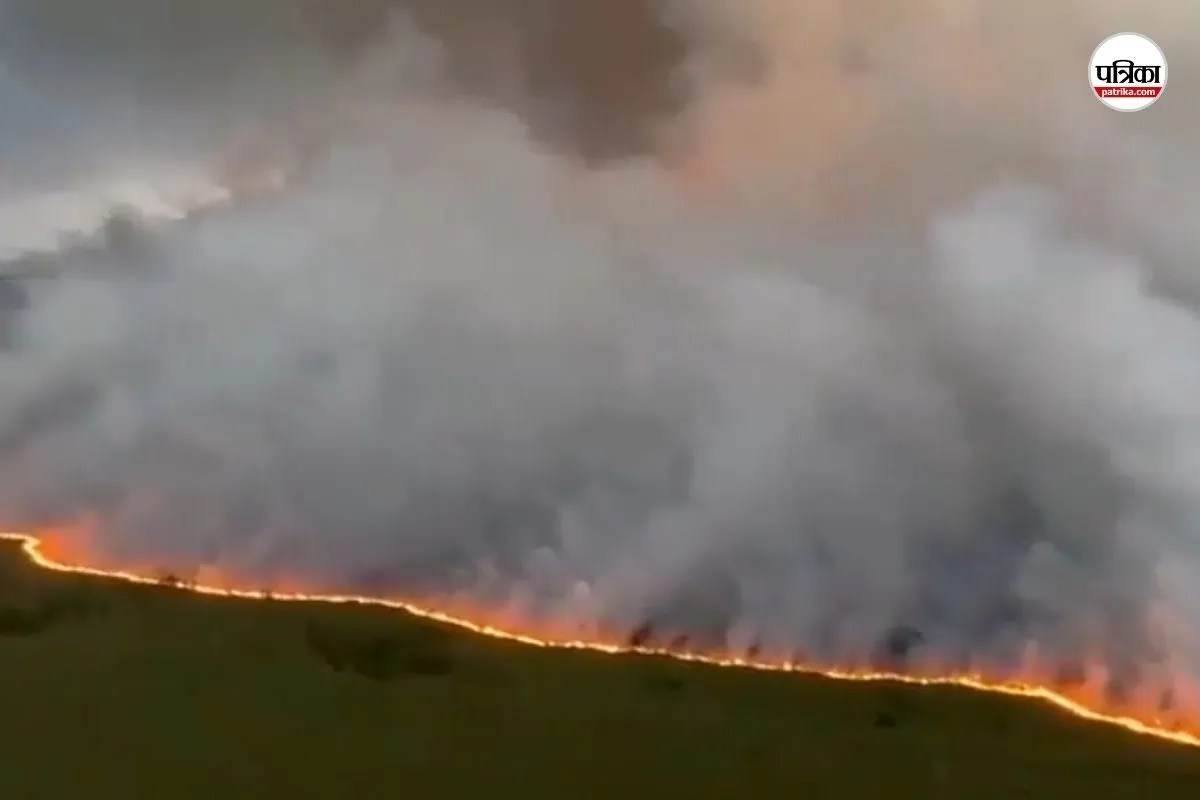
Nobody expected a wildfire of this scale in Belgium. Yet, right now, roughly 3,000 hectares of the High Fens nature reserve lie scorched, turning a quiet corner of Europe into ground zero for climate anxiety.
If you think massive, out-of-control blazes only happen in California, Australia, or southern Europe, you're missing the shifting reality on the ground. Over 600 residents evacuated from municipalities like Waimes and Bütgenbach in Liège province are still locked out of their homes. They can't go back because the danger hasn't passed. In other news, read about: What the Virginia State University Shooting Tells Us About Campus Safety.
How a Localized Outbreak Became Belgium's Biggest Fire on Record
The fire started small on a Friday inside the High Fens, a sprawling, popular hiking region featuring dense pine stands and fragile peatlands. Within hours, shifting winds and bone-dry vegetation turned a minor incident into a monster.
To put the scale into perspective, this single event has already devoured more than double the land area of Belgium's previous historical wildfire record set back in 2011, when roughly 1,400 hectares burned. Local infrastructure simply wasn't built for this. Fire brigades from more than 15 emergency zones across the country had to be mobilized, working alongside the Belgian military, local farmers, and international units from Germany and Luxembourg. Associated Press has also covered this fascinating subject in extensive detail.
Ground crews faced brutal conditions. The terrain in eastern Belgium is notoriously difficult for heavy fire engines to access, forcing responders to rely heavily on aerial support.
The International Scramble and the Threat to Germany
As the flames marched eastward, they didn't respect international borders. By the weekend, the fire front pressed dangerously close to the German frontier.
Authorities across the border in Monschau, Germany, had to advise residents living near the frontier to evacuate due to heavy, toxic smoke pollution. Belgium had to trigger the EU Civil Protection Mechanism, dragging in heavy artillery from the skies. Two Dutch Chinook helicopters—each equipped with Bambi Buckets capable of dropping roughly 7,600 liters of water at a time—joined federal police helicopters to pound the hotspots from above. Meanwhile, Swedish firefighting aircraft were placed on standby.
Why did it spread so fast? Decades of rising temperatures combined with consecutive summer heatwaves have left European ecosystems parched. Beneath the surface of the High Fens, peat has been smolenring. Peat fires are notoriously difficult to put out because they burn underground, causing unpredictable flare-ups days after surface flames appear to die down.
What Officials Get Wrong About Future Preparedness
Most emergency planning in northern Europe assumes wildfires are rare anomalies. That mindset is obsolete.
When local fire captains state they never imagined handling a disaster of this magnitude, it highlights a dangerous structural lag in policy. You can't treat climate-driven mega-fires as black swan events anymore. They are recurring hazards.
If you live near major European green spaces or woodland reserves, expect local authorities to implement stricter seasonal burn bans, mandatory brush clearing, and rapid-response aerial protocols. Governments are going to have to spend heavily on cross-border firefighting syndicates because no single small nation possesses enough specialized aircraft to handle simultaneous continent-wide heat spikes.
For the 600 displaced residents shivering in uncertainty, the immediate priority remains securing their properties and waiting for the smoke to clear. For everyone else, this disaster serves as a blunt wake-up call. The environmental rulebook has changed, and Western Europe is scrambling to catch up before the next heatwave hits.