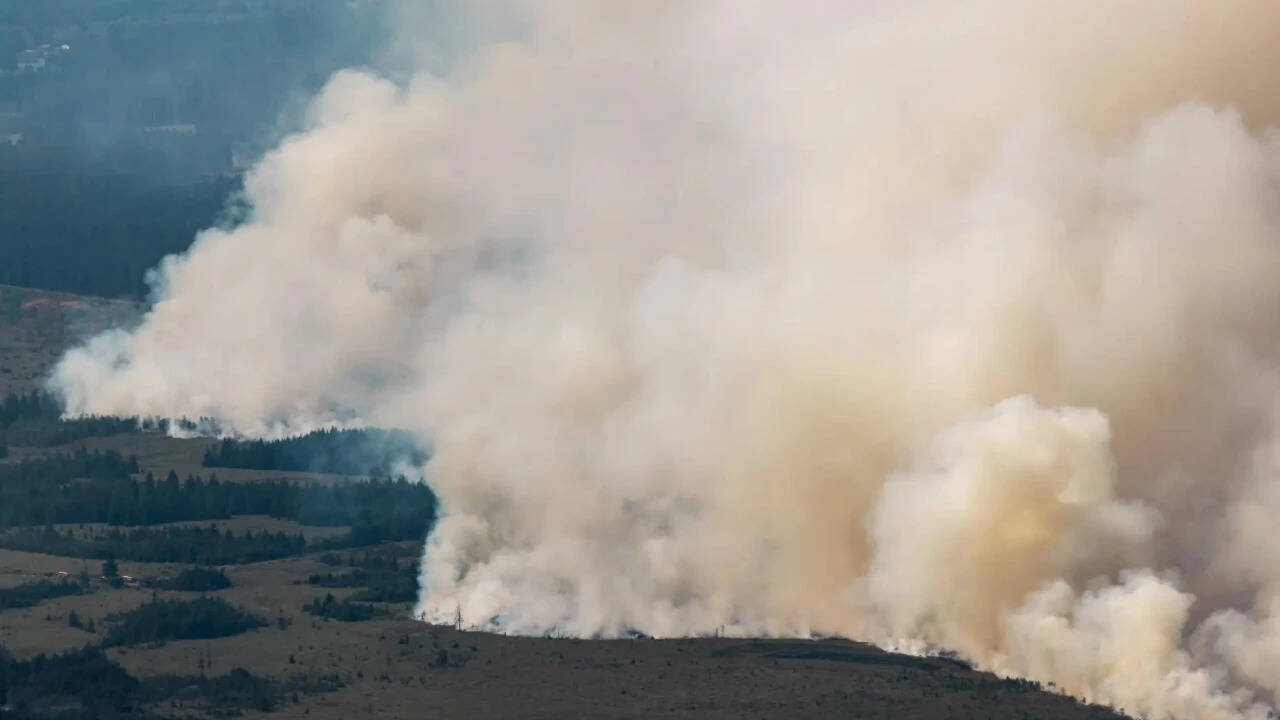
The headlines wailed about three thousand hectares turned to ash. Environmental commentators clutched their pearls, framing the record-breaking blaze in Belgium as an unmitigated ecological tragedy, a catastrophic symptom of a feverish planet, and a direct indictment of modern land management failure. Everyone agreed that stopping the fire was the only goal, and that keeping every square meter of woodland green and untouched was the ultimate conservation victory.
They are wrong. Dead wrong.
For decades, European conservation policy has operated under a romanticized, suburbanized illusion that nature is a pristine, static museum exhibit. We treat forests like pet hamsters that need to be sheltered in glass cages, wrapped in cotton wool, and protected from the very forces that built them over millions of years. When a fire sweeps through and cleans the slate, the mainstream media treats it like the apocalypse.
I have spent years watching bureaucrats and well-meaning activists throw billions of euros at suppressing fires while letting hyper-dense fuel loads pile up on the forest floor until the landscape becomes a ticking time bomb. Let us call this what it is: ecological hoarding.
The Myth of the Untouched Canopy
Walk into any protected woodland in Western Europe today and you will see a tinderbox disguised as a sanctuary. Decades of aggressive fire suppression have created an unnatural accumulation of deadwood, suffocating underbrush, and tightly packed pine monocultures planted for commercial timber generations ago.
When you eliminate natural disturbance, you do not create stability. You create fragility.
The lazy consensus among mainstream climate commentators is that every wildfire is an emergency requiring faster helicopters, bigger water bombers, and stricter prohibitions against human activity. This assumes that fire is an intruder rather than a resident architect of forest ecosystems. Species like the black woodpecker, the nightjar, and countless pyrophilic fungi and flora do not just survive fire; they depend on it. Seeds of specific pine species remain locked in resinous vaults, waiting for thermal shock to trigger germination.
By treating 3,000 burned hectares in Belgium as a disaster, we are mourning the loss of overgrown, diseased, and dying timber as if it were an ancient redwood grove. It was not. It was a dense, highly vulnerable monoculture waiting for a match.
The Bureaucratic Blind Spot in European Forestry
Forestry departments across the continent suffer from institutional cowardice. Fire prevention requires controlled burns, aggressive thinning, and the reintroduction of grazing—methods that look messy, smell smoky, and terrify suburban voters who live near the urban-wildland interface.
Imagine a scenario where a regional forestry director looks at a dense, pest-ridden spruce forest and deliberately sets fire to five hundred hectares in March under controlled conditions. The local press would crucify them. Mayors would resign. Environmental groups would sue.
So, politicians choose the path of least resistance. They do nothing, cross their fingers, and hope the weather cooperates. When a heatwave hits and an accidental spark turns the neglected undergrowth into an uncontrollable inferno, they act surprised. They blame carbon emissions alone while ignoring the local accumulation of dry fuel that made the blaze inevitable. Carbon plays a role in atmospheric warming, but fuel loads dictate where the fire goes. If you do not manage the fuel, the weather will manage it for you.
Why Suppression is the Real Arson
Every time we successfully suppress a small, low-intensity fire, we are borrowing time from the future with catastrophic interest.
Fire ecologists understand this dynamic intimately, yet public policy remains stubbornly attached to the Smoky Bear mindset. When you stop natural fires, you allow organic matter to accumulate exponentially. The canopy closes, blocking sunlight from reaching the forest floor, which stops decomposition and traps dry biomass on the ground. When a fire finally breaches the perimeter defenses—and eventually, one always does—it is no longer a cleansing surface fire that licks the bark of mature trees. It is a crown fire that scorches the soil down to the bedrock, vaporizes nutrients, and sterilizes the earth for decades.
Belgium did not suffer its biggest wildfire on record because the climate changed overnight. It suffered that record fire because the country spent fifty years stockpiling kindling in its backyards.
The Uncomfortable Truth About Forest Health
Let us dismantle another comforting delusion: the idea that nature wants everything to stay green forever.
Forests are cyclical battlegrounds. Tree mortality is not a failure of ecology; it is the engine of it. When thousands of hectares burn, sunlight floods the newly opened floor. Nutrients locked in woody biomass are returned to the soil in a matter of hours through ash, rather than decades through slow rot. Insects arrive en masse, feeding woodpeckers and small mammals. A complex, mosaic landscape of saplings, shrubs, and open patches replaces a uniform, stagnant blanket of trees.
To call the recent Belgian fire a disaster is to judge a forest by human aesthetic standards rather than biological ones. We prefer our woods to look like manicured English gardens, so we panic when they undergo the brutal, necessary reset that keeps them alive over geological timescales.
What Action Actually Looks Like
If we want to stop writing these hysterical headlines every dry summer, we have to abandon the preservationist fantasy.
First, stop criminalizing intentional management. Prescribed burns must become standard operating procedure, not radical experiments. Second, break up commercial monocultures. Plant resilient, mixed-species deciduous forests that resist crown fires naturally. Third, accept that a burned forest is not a dead forest; it is a regenerating one.
The flames in Belgium are gone, but the smoke in our policy rooms is still blinding us. Stop mourning the ash. Start fearing the overgrown canopy.


